Earlier this week, pretty much all of Portugal went on strike because the government was considering bad new labor regulations. The president had already promised to veto if it ever reached his desk, but the unions went on strike anyway just because the whole thing upset them terribly.
The country, which is poor and struggling, lost tons of commerce and tax income, and the people, who are just trying to hang on, were severely stressed. But the president cheered the action, saying it was essential for unions to “strongly express themselves.”
Conservative kooks make me want to start a vegan commune, but Liberal kooks make me want to don (no pun intended) a red hat. It's no wonder things are becoming so bifurcated; everyone is radicalizing in reaction to the "other" side's absurdity, which is actually quite symmetrical.
We don't have a "them" problem, we have an "us" problem seen through two distorted lenses.
Showing posts with label Portugal. Show all posts
Showing posts with label Portugal. Show all posts
Saturday, June 6, 2026


Friday, May 29, 2026
Abraham Lincoln in Portugal
I was recently asked why I don't hang around with American expats in Portugal. And for once I came up with an apt reply:
Something clicks and hordes are transformed into Disney princesses seeking — with dilated pupils — their FORRRRREVER HOMES, and they require constant affirmation. You did it, Thelma! (more on this here).
In my teens I played music to entertain the residents of an insane asylum. And while there were a few I got to know a bit, I discovered that friendship is impossible with a person who thinks he's Abraham Lincoln. Not because I find it deviantly distasteful, but because it's insufficient to merely tolerate their view. To be friends, you need to agree. To buy in.
And I have way too much Bill Murray/Bugs Bunny DNA. On a good day, I can politely suppress my wince, my gurgle, my aggravated sigh. But only as a one-time thing, not as an ongoing service.
"I can't be friends with people who talk about their 'Forever Home'."This is a standard conceit among Americans in Portugal. Like children in the Pashtun border zones radicalized by jihadi madrases, they've had their brains warped by cursed, infernal YouTube videos — in this case, videos produced by comely middle-aged couples brimming with wellness, inviting everyone to come live your best life in Portugal!.
Something clicks and hordes are transformed into Disney princesses seeking — with dilated pupils — their FORRRRREVER HOMES, and they require constant affirmation. You did it, Thelma! (more on this here).
In my teens I played music to entertain the residents of an insane asylum. And while there were a few I got to know a bit, I discovered that friendship is impossible with a person who thinks he's Abraham Lincoln. Not because I find it deviantly distasteful, but because it's insufficient to merely tolerate their view. To be friends, you need to agree. To buy in.
And I have way too much Bill Murray/Bugs Bunny DNA. On a good day, I can politely suppress my wince, my gurgle, my aggravated sigh. But only as a one-time thing, not as an ongoing service.
Wednesday, April 29, 2026
Instagramism
I'm finally reaching a point of clarity after 40 years of avid chowhounding — tens of thousands of restaurant meals in two dozen countries plus three years coming to grips with having gotten "what I'd wished for." Having landed on point in the epicenter of sublime grandma cooking, I've been increasingly desperate for cooking with precision and refinement.
I devour amply soulful €11 lunches daily, cooked by octogenarian Portuguese grandmas in the country's one happy town, enduring unpeeled fava beans (extract with your teeth, like artichoke leaves), un-cored baked apples (cut around it), well-done meats, and a staunchly limited repertoire referred to, in hushed religious tones, as "comida tradicional Portuguesa".
In my desperate seeking for precision and refinement, my impulse is to up-pay. Will someone who's actually trained as a chef please charge me egregiously so I can get a break from this unremitting flood of precisely what I've always wanted?
I haven't found this in Portugal. The swanky places in Lisbon feel...off. They're like photocopies of imitations of real restaurants. Thinly unconvincing attempts to wow via presentation, while the cooking has no extra nuance or touch at all. They'll gladly scoop wads of cash from your wallet, but the value-added is drizzly sauces, track lighting, and snazzy tall stacking. In a word: Instagramism.
I figured this was because Portugal is so steeped in grandma cooking that anyone aspiring to charge over 11€/cover skips other options and goes straight to Instagramism. Deliciousness means grandma, while fancy means photography.
But I'm finding this even outside of Portugal (but without the strong "grandma" stratum). And, come to think of it, this scenario was arising in America before I left. The world shot by me, and I'm only just noticing.
The age-old problem in food service has always been justifying premium. We all know that ingredients are cheap and fire is free, so the entire history of dining can be told as an increasingly elaborate effort to coax the johns into paying extra. So, really, Instagramism was present all along. Starchy linen tablecloths, well-attired fawning staff, careful plating on fine china and swanky jazz soundtracks "set a higher tone" long before the Internet arose. Such psy-ops were contrived in late 19th century France, and photogenic allure is just the latest gambit for spellbinding diners into up-paying.
But the food in linen tablecloth places used to at least sometimes be skillfully cooked, because at least a few customers — beyond preoccupation with status, trendiness and sensation — were also tasting with discernment. Now, much less so. Diners want to "bag" their photographic scores and display them like trophy mounts. While they still use the language of ingestion, it's flattened into "yum," the mindlessly visceral assessment one might translate from an eager hog deep into his feed.
Grease, check. Salt, check. Great photo. Yum!
So it's not that I'm caught in a uniquely Portuguese dining trap. It's that I'm experiencing gastronomic phantom limb pain. Because the choices now are 1. sloppy soulful (or less soulful slop), or 2. food that looks totally YUM. Ambitious operators are, naturally, drawn to the current luxury signifier: making food shiny and photogenic.
I devour amply soulful €11 lunches daily, cooked by octogenarian Portuguese grandmas in the country's one happy town, enduring unpeeled fava beans (extract with your teeth, like artichoke leaves), un-cored baked apples (cut around it), well-done meats, and a staunchly limited repertoire referred to, in hushed religious tones, as "comida tradicional Portuguesa".
In my desperate seeking for precision and refinement, my impulse is to up-pay. Will someone who's actually trained as a chef please charge me egregiously so I can get a break from this unremitting flood of precisely what I've always wanted?
I haven't found this in Portugal. The swanky places in Lisbon feel...off. They're like photocopies of imitations of real restaurants. Thinly unconvincing attempts to wow via presentation, while the cooking has no extra nuance or touch at all. They'll gladly scoop wads of cash from your wallet, but the value-added is drizzly sauces, track lighting, and snazzy tall stacking. In a word: Instagramism.
I figured this was because Portugal is so steeped in grandma cooking that anyone aspiring to charge over 11€/cover skips other options and goes straight to Instagramism. Deliciousness means grandma, while fancy means photography.
But I'm finding this even outside of Portugal (but without the strong "grandma" stratum). And, come to think of it, this scenario was arising in America before I left. The world shot by me, and I'm only just noticing.
The age-old problem in food service has always been justifying premium. We all know that ingredients are cheap and fire is free, so the entire history of dining can be told as an increasingly elaborate effort to coax the johns into paying extra. So, really, Instagramism was present all along. Starchy linen tablecloths, well-attired fawning staff, careful plating on fine china and swanky jazz soundtracks "set a higher tone" long before the Internet arose. Such psy-ops were contrived in late 19th century France, and photogenic allure is just the latest gambit for spellbinding diners into up-paying.
But the food in linen tablecloth places used to at least sometimes be skillfully cooked, because at least a few customers — beyond preoccupation with status, trendiness and sensation — were also tasting with discernment. Now, much less so. Diners want to "bag" their photographic scores and display them like trophy mounts. While they still use the language of ingestion, it's flattened into "yum," the mindlessly visceral assessment one might translate from an eager hog deep into his feed.
Grease, check. Salt, check. Great photo. Yum!
So it's not that I'm caught in a uniquely Portuguese dining trap. It's that I'm experiencing gastronomic phantom limb pain. Because the choices now are 1. sloppy soulful (or less soulful slop), or 2. food that looks totally YUM. Ambitious operators are, naturally, drawn to the current luxury signifier: making food shiny and photogenic.
Sunday, February 22, 2026
Expatriating Within the Bounds of Reality
I'm echoing this posting, but expressing it better and more leanly, and adding an expansive footnote:
I've chatted with umpteen Americans who viewed some YouTube video where some preternaturally well couple hoisted goblets of wine toward the camera, inviting them to join them in The Portuguese Lifestyle™ and thought "Yes! I want that!"
"Why not me? Why can't I be the one hoisting my goblet from the golden embrace of Mother Portugal, smiling vibrantly for the envious rabble?'
Entire Facebook groups are devoted to "We're here!" photos of random American couples ebulliently emerging from customs in Lisbon Airport with loads of luggage. It's a big moment for all of us, naturally. They actually call Portugal their "Forever Home", like fairytale princes and princesses set to live happily ever after in a magic kingdom.
If I need to tell you that it will not go well for them, then this essay won't go well for you. But enough seek out my advice that I've honed my thoughts to a very sharp edge. Obviously, it extends well beyond Portugal. But here goes:
Portugal does not give a fuck about you. Portugal will never give a fuck about you. This is not a resort where you will be welcomed and congratulated. No. No one gives a fuck. No one.
At this point, if they're still listening and haven't thrown their coffee in my face and run off down the street to get away from the bad man, we can have a conversation.
If you treat Portugal as a fresh backdrop for you to be who you already are and do what you already do, without expectation of anointment, then ok. That works. If so, there are two approaches:
1. You can preen in front of the backdrop, extending wine goblet toward camera with a glorious smile, flaunting your golden awesomeness.
You'd better be that person to begin with, because you won't transform into that via the power of make-believe.
2. Or you can lightly enjoy the fresh backdrop, generally keeping up your normal activities, no big deal.
Me, I didn't come here to preen, nor to be transformed into a preener, nor expecting welcome, support, or congratulations. I write, I play music, I cook, I eat, I watch movies, I walk, I ponder. Just like back home, only with great food and weather, low expenses, non-existent crime, and low narcissism (if I avoid American expats). I like the sound of Portuguese and share their sense of humor. I'm not able to gab full spiel, but enough to seem like part of the backdrop, and not some dropped-in astronaut bobbing languorously in zero G. And that's about it. It's not a vacation wonderland, it's just where I live.
No activities director is tasked with stoking my glee. It's more akin to, well, to actual life. It's what you make of it. You've enjoyed a minor refresh, not a systematic reset. Humans don't reset, sorry.
There are other ways to modestly swap in a new backdrop. You might be raising a family, or trying to start an online business, or drinking yourself to death. Just don't expect to become some new you because you're standing in front of a new backdrop. If you are the type who can utter the words "it's like home, but with a new backdrop" without your face falling in aggrieved disappointment, then it might work. If you can say it with amiable perkiness, then you'll be just fine.
Happiness is a simple flip of perspective: Say "This is as good as it gets" without gnashing your teeth or throwing a tantrum or retreating under the covers. Say it with sighing relief and blithe surrender to the moment—which is always lovely if you don't tell yourself stories about it (e.g. deliberately ballasting your happiness via gratuitous lamentation of your late hamster, Freddy).
If you can do that and then swap in a nice new backdrop like Portugal, it's pure delight. If you're ok as you are and where you are, you can drop in a fun new backdrop without demanding that it slake your neurotic thirsts. Being real is always an option. And even in the year of our lord 2026, reality has its rewards.
I've chatted with umpteen Americans who viewed some YouTube video where some preternaturally well couple hoisted goblets of wine toward the camera, inviting them to join them in The Portuguese Lifestyle™ and thought "Yes! I want that!"
"Why not me? Why can't I be the one hoisting my goblet from the golden embrace of Mother Portugal, smiling vibrantly for the envious rabble?'
Entire Facebook groups are devoted to "We're here!" photos of random American couples ebulliently emerging from customs in Lisbon Airport with loads of luggage. It's a big moment for all of us, naturally. They actually call Portugal their "Forever Home", like fairytale princes and princesses set to live happily ever after in a magic kingdom.
If I need to tell you that it will not go well for them, then this essay won't go well for you. But enough seek out my advice that I've honed my thoughts to a very sharp edge. Obviously, it extends well beyond Portugal. But here goes:
Portugal does not give a fuck about you. Portugal will never give a fuck about you. This is not a resort where you will be welcomed and congratulated. No. No one gives a fuck. No one.
At this point, if they're still listening and haven't thrown their coffee in my face and run off down the street to get away from the bad man, we can have a conversation.
If you treat Portugal as a fresh backdrop for you to be who you already are and do what you already do, without expectation of anointment, then ok. That works. If so, there are two approaches:
1. You can preen in front of the backdrop, extending wine goblet toward camera with a glorious smile, flaunting your golden awesomeness.
You'd better be that person to begin with, because you won't transform into that via the power of make-believe.
2. Or you can lightly enjoy the fresh backdrop, generally keeping up your normal activities, no big deal.
Me, I didn't come here to preen, nor to be transformed into a preener, nor expecting welcome, support, or congratulations. I write, I play music, I cook, I eat, I watch movies, I walk, I ponder. Just like back home, only with great food and weather, low expenses, non-existent crime, and low narcissism (if I avoid American expats). I like the sound of Portuguese and share their sense of humor. I'm not able to gab full spiel, but enough to seem like part of the backdrop, and not some dropped-in astronaut bobbing languorously in zero G. And that's about it. It's not a vacation wonderland, it's just where I live.
No activities director is tasked with stoking my glee. It's more akin to, well, to actual life. It's what you make of it. You've enjoyed a minor refresh, not a systematic reset. Humans don't reset, sorry.
There are other ways to modestly swap in a new backdrop. You might be raising a family, or trying to start an online business, or drinking yourself to death. Just don't expect to become some new you because you're standing in front of a new backdrop. If you are the type who can utter the words "it's like home, but with a new backdrop" without your face falling in aggrieved disappointment, then it might work. If you can say it with amiable perkiness, then you'll be just fine.
Happiness is a simple flip of perspective: Say "This is as good as it gets" without gnashing your teeth or throwing a tantrum or retreating under the covers. Say it with sighing relief and blithe surrender to the moment—which is always lovely if you don't tell yourself stories about it (e.g. deliberately ballasting your happiness via gratuitous lamentation of your late hamster, Freddy).
If you can do that and then swap in a nice new backdrop like Portugal, it's pure delight. If you're ok as you are and where you are, you can drop in a fun new backdrop without demanding that it slake your neurotic thirsts. Being real is always an option. And even in the year of our lord 2026, reality has its rewards.
Thursday, February 12, 2026
The Puffy Parkas of Portugal
It's 72 degrees and the sun is shining for the first time in weeks (literally), yet all my neighbors are shuffling around in puffy parkas. And I kind of love it.
I'm in polo shirt and cords, and they're all gaping at the crazy foreigner, and I deeply enjoy the whole situation. Let me map it out:
The fact that spring starts here in mid-February is a nice fact to add to the spreadsheet of positive things about (southern) Portugal. And while the parka thing may not strike you as a significant decision factor, tiny stuff like this is what counts, not spreadsheet facts.
What can I say? I'm a devoted practitioner of nano-aesthetics.
I'm in polo shirt and cords, and they're all gaping at the crazy foreigner, and I deeply enjoy the whole situation. Let me map it out:
I'm finally warm, which is great.Humans are irrational, even more so than they realize. And since sanity is not an option, one must seek the sort of irrationality one finds adorable. It's not that they're still cold. It's that they can't quite let go of the suffering so quickly.
They're warm, too, so I'm in no position to gloat.
Yet they're in parkas, which tickles me.
Triple win!
The fact that spring starts here in mid-February is a nice fact to add to the spreadsheet of positive things about (southern) Portugal. And while the parka thing may not strike you as a significant decision factor, tiny stuff like this is what counts, not spreadsheet facts.
What can I say? I'm a devoted practitioner of nano-aesthetics.
Saturday, November 29, 2025
Steeped in Portuguese Tradition
I normally patronize highly traditional bakeries, run by plucky octogenarians, which make me feel as if I've stepped out of a time machine. Here, for example, is my go-to place for glorious 20¢ bread rolls:
 Today I hammered all the way back to the 19th century. Padaria Julião is a tiny shack perched on a windswept mountaintop, and it's too suffocating for me to feel comfortable taking photos, so I've stolen these:

 This was a pilgrimmage for bolo reina, a sweet Christmas bread relatively lightly festooned with dried fruit (my blood sugar can't handle it's daunting sibling, bolo rei). The baker—who has the hollowed cheeks, dirty forehead, and gleaming eyes of a character from a Tarkovsky film—wouldn't stop emphatically pointing at the label, which said "com FAVA e BRINDE". It was printed in all-caps, with underlining, plus the baker-messiah agitatedly stabbing the letters with his coal-blackened finger.
I took home the bread, shot this quick photo after removing a slice, ...and popped it into the air fryer for a brief rewarm. Then I settled down at my computer to ask ChatGPT why "com FAVA e BRINDE" was so blazingly essential.
"Ah..." it began to reply, as I suddenly chipped a tooth.
"Flouting Portuguese and European law, they're doing this the old fashioned way, baking a fava bean and a Christmas king figurine right into the bread."
I looked down, and Hello, Santa. Yup.
 His mouth was a little bloody, just like mine, and he was also half-cocooned in plastic wrap, perhaps serving as a dental warning strip, a petite Father Christmas condom, or else the remainder of a larger clot dissolved into the crumb, i.e. macropolymers. Portugal always aims big.
What's more, I'm ashamed to admit that I prefer modern bolo reina. This wood-fired bakery is normally dynamite, but the bolo reina was dull and gummy. I suppose it's because this item is so deadpan-traditional that no one intends or expects deliciousness. Bolo Rei is like repeating the lord's prayer. You're never aiming for some new angle. You speak the words and you're done.
Ah, tradition! Sometimes it's brutish inertia, never questioned, never improved. I recall my grandparents' disdain whenever they spoke of "the old country". Between my chipped tooth and the "meh" confection, I can hear them hollering "SEE???" from beyond the grave.
For once, I wanted to get back into the time machine and dial back to present day. Maybe go find some snazzy Lisbon cafe—"Baubles, Bangles, and Bolos" or whatever—and buy a shiny and exorbitant bolo reina tarted up with dried kumquats and nutella drizzle, with Santa in plain daylight riding a marzipan fricking reindeer.


I took home the bread, shot this quick photo after removing a slice,

"Ah..." it began to reply, as I suddenly chipped a tooth.
"Flouting Portuguese and European law, they're doing this the old fashioned way, baking a fava bean and a Christmas king figurine right into the bread."
I looked down, and Hello, Santa. Yup.

What's more, I'm ashamed to admit that I prefer modern bolo reina. This wood-fired bakery is normally dynamite, but the bolo reina was dull and gummy. I suppose it's because this item is so deadpan-traditional that no one intends or expects deliciousness. Bolo Rei is like repeating the lord's prayer. You're never aiming for some new angle. You speak the words and you're done.
Ah, tradition! Sometimes it's brutish inertia, never questioned, never improved. I recall my grandparents' disdain whenever they spoke of "the old country". Between my chipped tooth and the "meh" confection, I can hear them hollering "SEE???" from beyond the grave.
For once, I wanted to get back into the time machine and dial back to present day. Maybe go find some snazzy Lisbon cafe—"Baubles, Bangles, and Bolos" or whatever—and buy a shiny and exorbitant bolo reina tarted up with dried kumquats and nutella drizzle, with Santa in plain daylight riding a marzipan fricking reindeer.
Tuesday, November 11, 2025
Pivot from Portuguese Purgatory
My waitress was slow bringing the migas and potatoes to accompany my fish. It happens. But the restaurant's wizened, cranky Portuguese owner went berserk, screaming at the kitchen while pointing at The Customer (me), who'd been forced into a low-carb lunch here in the land of starch.
At meal's end she handed me—like a smuggler proffering diamonds—a glistening handful of freshly roasted chestnuts and—as if my shocked gratitude needed another kick in the gut—a moist/crispy slab of cinnamon toast (rabanadas). It was her apology. I didn't realize the word was even in her vocabulary.
We have a history, she and I. Even stout-hearted Portuguese tremble at her notoriously brusque command, and I've never seen another foreigner in the place, which is (like every tyrannical perfectionist operation) perpetually mobbed thanks to sky-high quality. On my third visit, I pointed at a photo on the wall of a terrifying-looking day-glo orange fish, and asked if it was good. "Ah," she sighed, briefly waxing slightly less ball-busting, "Rascasso! Delicioso!"
This was where I messed up. I asked if she'd have any tomorrow, and she nodded affirmatively. Then a series of oblique signals and punishments, fanning out over the subsequent 24 months, made it clear that:
1. She'd reserved one for me, which had required breaking character and
2. I'd failed to show (I was still fresh from New York, and hadn't realized that, here, an idle few words to a restaurateur can ensnare you in a Whole Thing).
This was not a person to piss off, but I somehow endured my lengthy sentence of purgatory. And today I was granted clemency when she needed to wash her hands in the sink near the front door next to the fish tank after hawking a vat of dead sea creatures out to to the charcoal grill manned by her husband just outside the restaurant in the street. Waiting to be seated, I was blocking her way, though attempting to reduce my 6 foot bulk to an inconspicuous singularity to avoid making trouble. But before she could ask, I executed a pivot more elegant that one would ever imagine possible from someone of my age, height, and timidness. She freely waltzed to the sink, washed her hands, and began screaming at the wait staff to set a place for me. Normally she makes me wait 20 or 30 minutes even amid a glut of empty seats, but the Baryshnikovian pivot had redeemed me. I was back in good graces. And this is why she'd been particularly galled that my carbs were delayed.
Groaning painfully after ingesting an entire charcoal-roasted sea bream, a large platter of migas (sautéed bread crumb stuffing), boiled potatoes, boiled sweet potatoes, salad, and wine (16€), she demanded I consume the chestnuts and the cinnamon toast, together, and stood over me gloweringly awaiting my reaction. When I convulsed in pleasure, she nodded authoritatively and strode away. Shortly after, I paid the bill and told her, in my unreliable Portuguese, “Estou matado de alegre.” (hopefully "I've been killed with pleasure"). Apparently I nailed the Portuguese, though the syntax was just off-kilter enough to provoke a semi-grin. I think.
 Her tray of rabanadas, which only emerged once nearly all customers had left. Like the chestnuts, it was staff-only. I've won at Portugal.
At meal's end she handed me—like a smuggler proffering diamonds—a glistening handful of freshly roasted chestnuts and—as if my shocked gratitude needed another kick in the gut—a moist/crispy slab of cinnamon toast (rabanadas). It was her apology. I didn't realize the word was even in her vocabulary.
We have a history, she and I. Even stout-hearted Portuguese tremble at her notoriously brusque command, and I've never seen another foreigner in the place, which is (like every tyrannical perfectionist operation) perpetually mobbed thanks to sky-high quality. On my third visit, I pointed at a photo on the wall of a terrifying-looking day-glo orange fish, and asked if it was good. "Ah," she sighed, briefly waxing slightly less ball-busting, "Rascasso! Delicioso!"
This was where I messed up. I asked if she'd have any tomorrow, and she nodded affirmatively. Then a series of oblique signals and punishments, fanning out over the subsequent 24 months, made it clear that:
1. She'd reserved one for me, which had required breaking character and
2. I'd failed to show (I was still fresh from New York, and hadn't realized that, here, an idle few words to a restaurateur can ensnare you in a Whole Thing).
This was not a person to piss off, but I somehow endured my lengthy sentence of purgatory. And today I was granted clemency when she needed to wash her hands in the sink near the front door next to the fish tank after hawking a vat of dead sea creatures out to to the charcoal grill manned by her husband just outside the restaurant in the street. Waiting to be seated, I was blocking her way, though attempting to reduce my 6 foot bulk to an inconspicuous singularity to avoid making trouble. But before she could ask, I executed a pivot more elegant that one would ever imagine possible from someone of my age, height, and timidness. She freely waltzed to the sink, washed her hands, and began screaming at the wait staff to set a place for me. Normally she makes me wait 20 or 30 minutes even amid a glut of empty seats, but the Baryshnikovian pivot had redeemed me. I was back in good graces. And this is why she'd been particularly galled that my carbs were delayed.
Groaning painfully after ingesting an entire charcoal-roasted sea bream, a large platter of migas (sautéed bread crumb stuffing), boiled potatoes, boiled sweet potatoes, salad, and wine (16€), she demanded I consume the chestnuts and the cinnamon toast, together, and stood over me gloweringly awaiting my reaction. When I convulsed in pleasure, she nodded authoritatively and strode away. Shortly after, I paid the bill and told her, in my unreliable Portuguese, “Estou matado de alegre.” (hopefully "I've been killed with pleasure"). Apparently I nailed the Portuguese, though the syntax was just off-kilter enough to provoke a semi-grin. I think.
Friday, July 25, 2025
Relocating Sanely
I posted this a couple of years ago to a forum for American expats in Portugal, where it went viral. This pleased me, because it induces a helpful shift of perspective, and I haven't met many Americans here who are even marginally sane. They're mostly starring in movies in their heads about their Marvelous Portuguese Adventure Where They're Living Happily Ever After And Isn't It—And Aren't They—Marvelous??? Once the ditzy mania wears off, they tend to quietly sell everything and slink back to Tampa or Cleveland.
Early on, I was lucky enough to settle into a framing which has worked beautifully, and puts me in a completely different world than any of my fellow expats: I've swapped in a better/cooler backdrop. That's all. Life continues as before, only sunnier and with better food and much nicer people and lower expenses. Same life, new backdrop. A modest change, in the end, but a very welcome one.
Every day, I go outside and enjoy the backdrop, and it never gets old. I don't have to mentally place myself in the picture ("It's me doing that thing!"). This isn't some exciting chapter in my Life Trajectory. It's still the same me living the same life, only now it smells like garlic and grilled fish and it's sunny. Nice!
If you ever do a move like this, this is how to frame it for optimal mental health.
I'd like to help immunize newer arrivals against a potential peril.
Once the initial giddiness subsides, and you've explored environs and chilled in the plaza and strolled by the ocean and consumed 45 plates of bacalhau a bras, you'll experience a lull. You'll feel oddly reluctant to seize the day. You'll want to lazily surf YouTube pet videos or whatever. You suddenly lack motivation to Celebrate Portugal.
And you'll recognize that Portugal's not going to celebrate you, either. It all just keeps rolling out there, obliviously. Yikes.
If you've been harboring grand cinematic views of your sweeping expatriation narrative (i.e. your "Forever Home" or whatever), you will feel gut-punched by this return-to-earth. This is just another place! You frantically re-list the benefits, but pastel de nata and fado, alas, do not fill all gaps. You're bored. You're small. You're stalled. What am I doing here? Was this a mistake?
There is an antidote to such moments; a reframing I'd suggest you keep handy:
How scintillating were your previous environs? Were you perpetually stimulated and delighted? No! That's not what home is like! And you're experiencing Portugal as home.
Home isn't scintillating. Vacations are scintillating. And vacations are not eternal. If this were a few weeks of visiting sunny Portugal, you could expect unflagging excitement. But home isn't always exciting. So at some point you need to step down (like a voltage converter) from tourist eagerness to everyday life-living. It's not deflation. It's not a stall. This is just what home is like.
And if the lull persists, remember you're a 30€ roundtrip flight from Milan. The greatest tapas on the planet are a four hour drive. Such diversity at your fingertips! Living in Akron or Seattle, you'd need to go to vast trouble and expense to change your channel. So don't forget to take vacations - once being in Portugal stops feeling like a vacation of its own. Which it will!
I didn't include this in my posting, but if you have no life - if you've been nothing aside from your job and/or your relationships and you haven't cultivated a sense of self beneath the facade and beyond the roleplay—then don't move to a place like this. Unless, that is, you have the social wherewithal to re-contruct or transpose the facade, or create a new one. A new locale will not supply you with a story for yourself (at least not one that endures for more than a few months). A place is just a place.
Me, I don't need a story to tell myself about myself. I'm not doing roleplay or starring in a movie. But apparently that's rare. 🤷🏻
Early on, I was lucky enough to settle into a framing which has worked beautifully, and puts me in a completely different world than any of my fellow expats: I've swapped in a better/cooler backdrop. That's all. Life continues as before, only sunnier and with better food and much nicer people and lower expenses. Same life, new backdrop. A modest change, in the end, but a very welcome one.
Every day, I go outside and enjoy the backdrop, and it never gets old. I don't have to mentally place myself in the picture ("It's me doing that thing!"). This isn't some exciting chapter in my Life Trajectory. It's still the same me living the same life, only now it smells like garlic and grilled fish and it's sunny. Nice!
If you ever do a move like this, this is how to frame it for optimal mental health.
I'd like to help immunize newer arrivals against a potential peril.
Once the initial giddiness subsides, and you've explored environs and chilled in the plaza and strolled by the ocean and consumed 45 plates of bacalhau a bras, you'll experience a lull. You'll feel oddly reluctant to seize the day. You'll want to lazily surf YouTube pet videos or whatever. You suddenly lack motivation to Celebrate Portugal.
And you'll recognize that Portugal's not going to celebrate you, either. It all just keeps rolling out there, obliviously. Yikes.
If you've been harboring grand cinematic views of your sweeping expatriation narrative (i.e. your "Forever Home" or whatever), you will feel gut-punched by this return-to-earth. This is just another place! You frantically re-list the benefits, but pastel de nata and fado, alas, do not fill all gaps. You're bored. You're small. You're stalled. What am I doing here? Was this a mistake?
There is an antidote to such moments; a reframing I'd suggest you keep handy:
How scintillating were your previous environs? Were you perpetually stimulated and delighted? No! That's not what home is like! And you're experiencing Portugal as home.
Home isn't scintillating. Vacations are scintillating. And vacations are not eternal. If this were a few weeks of visiting sunny Portugal, you could expect unflagging excitement. But home isn't always exciting. So at some point you need to step down (like a voltage converter) from tourist eagerness to everyday life-living. It's not deflation. It's not a stall. This is just what home is like.
And if the lull persists, remember you're a 30€ roundtrip flight from Milan. The greatest tapas on the planet are a four hour drive. Such diversity at your fingertips! Living in Akron or Seattle, you'd need to go to vast trouble and expense to change your channel. So don't forget to take vacations - once being in Portugal stops feeling like a vacation of its own. Which it will!
I didn't include this in my posting, but if you have no life - if you've been nothing aside from your job and/or your relationships and you haven't cultivated a sense of self beneath the facade and beyond the roleplay—then don't move to a place like this. Unless, that is, you have the social wherewithal to re-contruct or transpose the facade, or create a new one. A new locale will not supply you with a story for yourself (at least not one that endures for more than a few months). A place is just a place.
Me, I don't need a story to tell myself about myself. I'm not doing roleplay or starring in a movie. But apparently that's rare. 🤷🏻
Thursday, June 19, 2025
Should

Not "must", like everywhere else. Should.
Miniscule cultural differences are the important cultural differences.
This message is brought to you by the First Church of Nano-Aesthetics.
Thursday, April 17, 2025
A Treasury of Selected Recent Baked Apples
Pastel de nata is for tourists. Head into the side streets, to the lunch counters where limping pensioners feast for pennies (I've been covering them on Facebook, per this constantly updating list), and it's all about the baked apples.
And so I proudly offer, as a downloadable PDF photo book, "A Treasury of Selected Recent Baked Apples"
And so I proudly offer, as a downloadable PDF photo book, "A Treasury of Selected Recent Baked Apples"
Thursday, April 10, 2025
Chowhounding Évora (Portugal), Part 2
Continuing from Part 1...
Vinho e Noz
Vinho e Noz (click title, above, for link), despite being hidden way out of the town center on a scary residential street, was so stuffed with American tourists that the waiter couldn't speak to me in Portuguese—he was 100% in English language mode. But the food is real, traditional, non-pandering. Is it touristic? I'm confused!
 Nice shroomy throwaway.
We need to talk about the cilantro. Portugal loves cilantro, but Alentejo worships it. They use more of it, and in mysterious ways. An Alentejan chef does things with cilantro that Thai, Vietnamese and Mexican chefs could scarcely imagine. I tried to capture it in a photo. Behold cilantro as biomass:
 I'm digging into a holy grail. I remember açorda from my music tours of Portugal in the early 90s when you'd get a thin soup full of garlic and strewn with some bread cubes, much like Castilian garlic soup. These days, when you ask for açorda you get wet migas—a thick gruel of bready stuffing. I've been trying to score old-style açorda, and a few elderly folks have pointed me to Alentejo. And here I am, doin' it!
 This is not a great açorda. It tasted like faded glory. A dish from a past generation. I need to get out into the countryside and find a staunchly traditional village where I might find a more vibrant version, and perhaps even one with fish eggs—the apotheosis of classical açorda.
But I'm awfully glad to have emerged from the gaslighting, having confirmed that my memory of açorda wasn't manufactured by my fevered imagination!
Taberna Tipica Quarta-Feira
Taberna Tipica Quarta-Feira ("Typical Wednesday Tavern") is the world’s kindest, most diligent, and principled rip-off. They tout their high-concept service: a lengthy tasting menu with many daily-rotating dishes—just show up and eat, no decisions required. They bring course after course of basically traditional Portuguese food, with just enough quirks to sustain the “tasting menu” conceit.
It’s all really good, and a few things are awesome, and far more food than anyone can eat, like fattening hogs. Then they charge 57.50€/person, a king’s ransom in Portugal, even in a presumptuous restaurant town like Évora.
There’s no question that you receive value, both in quality and in sheer quantity. But I felt like someone sold me twelve printer cartridges. I don’t need twelve printer cartridges. Nobody does. And while it might be a fair price for twelve printer cartridges, it’s still a lot of damned money when, again, no one needs twelve printer cartridges.
But it was delicious, everyone left happy, and the staff is lovely. They speak perfect English, as they must—it’s nearly all Americans, because no Portuguese person would spend 57.50€ on lunch. In the end, they won me over with the world’s kindest, most diligent, and principled rip-off. And great food.

 Folhada de queijo. About as good as it gets.
 Beautiful "black pig" presunto.
 Tongue sliders with a relish of chopped pig ear and rabbit. Edgy! But by no means a false note. It's both innovative yet organically Alentejan. No pandering here.
 Exquisite calamari, decent bacon-wrapped dates (ala Better Homes & Gardens canapés circa 1965).
 Thin sliced slow cooked pumpkin (HOW DID IT NOT DISSOLVE? THIS IS MAGIC!) with onions, oxtail rice, and actually good Belgian-style fries. Still a million miles from pandersville. They're not betraying Portugal by making Belgian-style fries. Fries are everywhere, and they're just doing them right.
 Ultra slow-cooked pork neck. The best thing. With spinach migas.
 Dessert for four. yeah, as if!
Those shot glasses are "frozen mojito". Again, forgivable. It's not like a Sriracha jello boilermaker. They've managed to be clever without pandering. Évora restaurants have mastered the impossible, none more than these guys. They walk the line with grace and aplomb. It's real. And it's good.
Note: the waiter told me "I don't taste coriander, really." He meant it in the same way that a Thai doesn't taste chili heat. This statement was the essence of Alentejo, and I was honored to receive it. I wear the insight like a medal.
 Yikes!
Dom Joaquim
 Dom Joaquim is a historical, weighty, dignified old-school place, as you can see from the dining room. Though even here they offer (in addition to a weighty leather bound tome of a la carte offerings no one looks at) revolving plates-of-the-day specials at lunch (catch up on that culture via my explanation).
 I went for ovos rotos ("broken eggs") with mushrooms (self-explanatory from the photos, below):

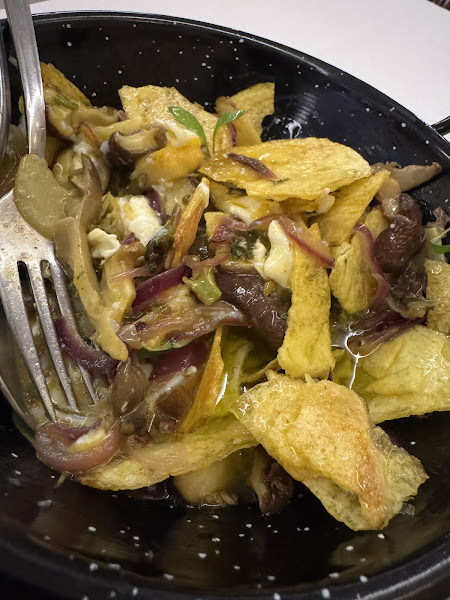
 ...and deer and wild boar stew with chestnuts, with migas featuring delicate wild asparagus, a local craze that only appears for a brief few weeks per year.
 Staunchly traditional cooking with no shortcuts. Nice.
 For dessert, I often fall into the "which of these things is unlike the others", and I'd never had sericá before, which they describe as milk/sugar/flour/cinnamon pudding accompanied by conserved plum. But it turns out I know it under a different spelling, Srikaya, which always intrigued me due to its random and unintentional Thai correspondence. Wikipedia has it as sericaia. Not sure what's up with all these spellings. In any case, you can't get the full vibe from a single portion, so check out this photo from Wikipedia:

 Oof!
Oof!
Padaria Arte Antiga
 Quick random bakery stop at Padaria Arte Antiga, which is nothing special but centrally located and had some interesting local stuff.
At 6 o'clock, that's doce de grão, a fried patty stuffed with sweet chickpea filling. If sugar + chickpea strikes you as strange, just remember how in East Asia all beans are prepared sweet for dessert. It works.
At 11 o'clock, a big discovery for me. Argolas de azeite are crunchy baked bread rings, with plenty of olive oil baked in, very much like a number of Genoese and Tuscan bread-stick adjacent items. This really got under my skin.
The bratwursty pastry at 4 o'clock was stuffed with sweetened sweet potato (they also make them with jam or with pumpkin/walnut marmelada). It would be too doughy/heavy anywhere else, but the local bread is so tasty that you could polish off five pounds of these lickety-split. They're called popias (aka alcôncoras, aka poa de espécie). I never saw anything like them, but found this explanation online (translated into English):
Snack Bar Portugal
The ultimate honor is a return visit, and so I lunched again at my proudest obscure find (I actually stumbled into it a year ago), where I admire everything so much. This meal couldn't match the supernal watercress soup and majestic feijoada de choclo, but the caldo verde and cação com amêijoas—dogfish shark with clams and mashed potatoes—was homey wonderment. The caldo verde did not contain the traditional slice of choriço, and the owner declared "meat in soup is disgusting!" Well, all right then!


 That was a new dessert for me, farófias. I normally steer clear of the bright orange heritage Portuguese desserts devised to use up egg yolks left over by the hordes of nuns using egg whites to wash their habits. Farófias comes from the other side of the coin, an example of Portugal's meringue-fluffy egg white desserts, this one with crème anglaise at the bottom and a psychoactive quantity of cinnamon atop.
Ginja Gouge
I asked for quality ginja (sour cherry liquor) at a hotel bar. They poured me this 2011 reserva, and it wasn't until they'd rung my card up that I realized it cost an obscene 29€. I later found it online at €44 for a whole bottle. So, yeah, I finally hit the tourism wall full-force. But even so, it was real good ginja, so I couldn’t bear too deep a grudge.

Ruínas Fingidas
These ruins are part of the sprawling public garden (Jardim Público) in the city center. The town describes it as a "folly", having repurposed an old convent and its grounds into quirky civic parkland. In this photo uppity pea hens peer down on their lessers—specifically, peacocks courting from below.


Redux
Even though I hit mostly lesser-known sidestreety places (Taberna Tipica Quarta-Feira a big exception), the food was, obviously, expensive. Plus they're filled with American tourists. Yet I ate great, and detected no pandering whatsoever. I was mugged only once, though I'd have made out worse if I'd patronized the main-drag joints with colorful umbrellas (colorful umbrellas places are the sign of death in South Europe) serving as traps for spring breaking kids and groovy middle-aged American couples feeling "adventurous".
Well, here's all I've got: Évora, unlike Setúbal, is "on the map". They have Unesco World Heritage status, which inexorably lures the groovy. It's also not far from the obscenity of "Melides" (don't speak it out loud), the Alenetejan beach community where George Clooney and his shiny pals bask in local culture by turning everything into the French Riviera. But while all world regions are proud of their cuisine, Alentejo is pugnaciously, religiously so, which might make pandering viscerally impossible. The food's got to be real, even as the economic wheels spin.
That's my theory, anyway.
Vinho e Noz (click title, above, for link), despite being hidden way out of the town center on a scary residential street, was so stuffed with American tourists that the waiter couldn't speak to me in Portuguese—he was 100% in English language mode. But the food is real, traditional, non-pandering. Is it touristic? I'm confused!

We need to talk about the cilantro. Portugal loves cilantro, but Alentejo worships it. They use more of it, and in mysterious ways. An Alentejan chef does things with cilantro that Thai, Vietnamese and Mexican chefs could scarcely imagine. I tried to capture it in a photo. Behold cilantro as biomass:


But I'm awfully glad to have emerged from the gaslighting, having confirmed that my memory of açorda wasn't manufactured by my fevered imagination!
Taberna Tipica Quarta-Feira ("Typical Wednesday Tavern") is the world’s kindest, most diligent, and principled rip-off. They tout their high-concept service: a lengthy tasting menu with many daily-rotating dishes—just show up and eat, no decisions required. They bring course after course of basically traditional Portuguese food, with just enough quirks to sustain the “tasting menu” conceit.
It’s all really good, and a few things are awesome, and far more food than anyone can eat, like fattening hogs. Then they charge 57.50€/person, a king’s ransom in Portugal, even in a presumptuous restaurant town like Évora.
There’s no question that you receive value, both in quality and in sheer quantity. But I felt like someone sold me twelve printer cartridges. I don’t need twelve printer cartridges. Nobody does. And while it might be a fair price for twelve printer cartridges, it’s still a lot of damned money when, again, no one needs twelve printer cartridges.
But it was delicious, everyone left happy, and the staff is lovely. They speak perfect English, as they must—it’s nearly all Americans, because no Portuguese person would spend 57.50€ on lunch. In the end, they won me over with the world’s kindest, most diligent, and principled rip-off. And great food.


Those shot glasses are "frozen mojito". Again, forgivable. It's not like a Sriracha jello boilermaker. They've managed to be clever without pandering. Évora restaurants have mastered the impossible, none more than these guys. They walk the line with grace and aplomb. It's real. And it's good.
Note: the waiter told me "I don't taste coriander, really." He meant it in the same way that a Thai doesn't taste chili heat. This statement was the essence of Alentejo, and I was honored to receive it. I wear the insight like a medal.


At 6 o'clock, that's doce de grão, a fried patty stuffed with sweet chickpea filling. If sugar + chickpea strikes you as strange, just remember how in East Asia all beans are prepared sweet for dessert. It works.
At 11 o'clock, a big discovery for me. Argolas de azeite are crunchy baked bread rings, with plenty of olive oil baked in, very much like a number of Genoese and Tuscan bread-stick adjacent items. This really got under my skin.
The bratwursty pastry at 4 o'clock was stuffed with sweetened sweet potato (they also make them with jam or with pumpkin/walnut marmelada). It would be too doughy/heavy anywhere else, but the local bread is so tasty that you could polish off five pounds of these lickety-split. They're called popias (aka alcôncoras, aka poa de espécie). I never saw anything like them, but found this explanation online (translated into English):
At first glance it looks like a dry cake, but then the filling is surprising and delicious, based on honey, sugar and olive oil cooked in the light until it forms a dough. This dough is then wrapped in a thin, sugar-free dough and goes into the oven to bake for about 15 minutes. It's a typical cake from the Odemira area.I'm lucky; turns out there's a food fair in Odemira in three weeks where selected ancient grandmas converge to bake these. I'm giddy. I'll report back.
The ultimate honor is a return visit, and so I lunched again at my proudest obscure find (I actually stumbled into it a year ago), where I admire everything so much. This meal couldn't match the supernal watercress soup and majestic feijoada de choclo, but the caldo verde and cação com amêijoas—dogfish shark with clams and mashed potatoes—was homey wonderment. The caldo verde did not contain the traditional slice of choriço, and the owner declared "meat in soup is disgusting!" Well, all right then!


I asked for quality ginja (sour cherry liquor) at a hotel bar. They poured me this 2011 reserva, and it wasn't until they'd rung my card up that I realized it cost an obscene 29€. I later found it online at €44 for a whole bottle. So, yeah, I finally hit the tourism wall full-force. But even so, it was real good ginja, so I couldn’t bear too deep a grudge.

These ruins are part of the sprawling public garden (Jardim Público) in the city center. The town describes it as a "folly", having repurposed an old convent and its grounds into quirky civic parkland. In this photo uppity pea hens peer down on their lessers—specifically, peacocks courting from below.


Even though I hit mostly lesser-known sidestreety places (Taberna Tipica Quarta-Feira a big exception), the food was, obviously, expensive. Plus they're filled with American tourists. Yet I ate great, and detected no pandering whatsoever. I was mugged only once, though I'd have made out worse if I'd patronized the main-drag joints with colorful umbrellas (colorful umbrellas places are the sign of death in South Europe) serving as traps for spring breaking kids and groovy middle-aged American couples feeling "adventurous".
Well, here's all I've got: Évora, unlike Setúbal, is "on the map". They have Unesco World Heritage status, which inexorably lures the groovy. It's also not far from the obscenity of "Melides" (don't speak it out loud), the Alenetejan beach community where George Clooney and his shiny pals bask in local culture by turning everything into the French Riviera. But while all world regions are proud of their cuisine, Alentejo is pugnaciously, religiously so, which might make pandering viscerally impossible. The food's got to be real, even as the economic wheels spin.
That's my theory, anyway.
Wednesday, April 9, 2025
Chowhounding Évora (Portugal), Part 1
There is an evil genie aspect to life in Setúbal. I'm a huge booster of soulful grandma cooking. But when that's all there is, months of unremitting peasant fare will leave a hound yearning for precision, refinement, and even mild pretension. One needs some goddam yang to counterbalance the smothering yin.
My desperation has driven me as far as London (which is like Pittsburgh from here - $75 round trip flights), but it turns out that I just needed to drive an hour south to the neighboring state of Alentejo—which I could practically spit at from my balcony—and to its capital, Évora.
The Évora food scene is like night and day. The menus are similar (Alentejo has a distinct cuisine, but, like Punjabi food in India, it's worked into the national consciousness). The difference is the profusion of restaurants that are actually restaurants, not grim lunch pots run by cigarette-dangling wizardly grandmas who can't be bothered to skin the fava beans or core the apples. There are captivating winkles and touches. There is care and subtlety. It's The Answer to My Prayers.
It's also expensive. In Setúbal you can't eat well above 15€ (pricier places exist, but they're clip joints). But if you want a special occasion meal, there's no need to fly to London (aka Pittsburgh). Just head south to Évora. I've never been so happy to fork over €30 or €40 for a meal. You get solid value...at least if you choose good places.
But it's not easy! The most anonymous lunch joint in Setúbal is damned good, but in Evora, you must choose wisely. Let's start with a high note.
Sal Grosso
My top find: Sal Grosso (click the titles, e.g. above, for links) was like manna to my tears. Lemonade for a sleeping bee. It's every mixed metaphor rolled into a giant soufflé.
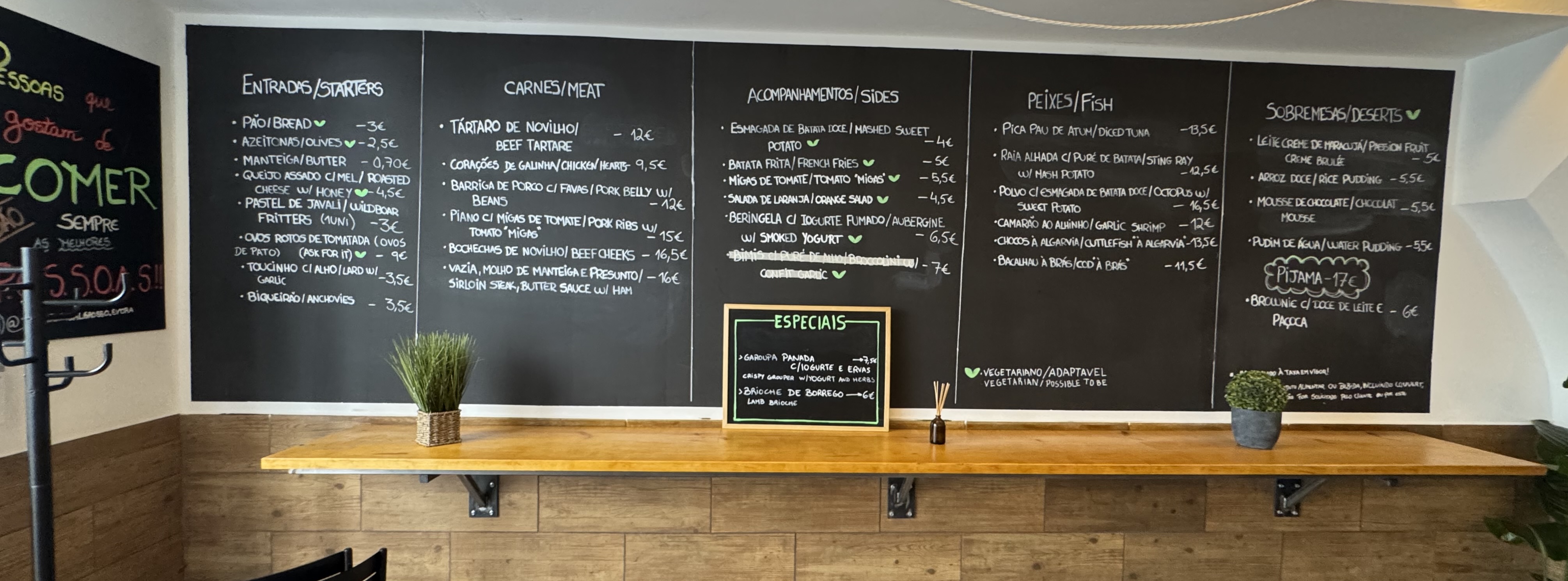
Sal Grosso is a restaurant restaurant. This may sound like nonsense for those who haven't spent months eating grandma pot lunches, but Sal Grosso has pace, bustle and excitement. The staff knows it's bad-ass, and the customers feel lucky to be there, and the chalkboard menu (largest I've ever seen) is packed with enough choices to stoke anxiety—the good kind. I'd almost forgotten what that's like (normally, I trudge through a dank doorway grunting boa tarde, and a sea of limping pensioners moans back indistinctly while harried Grandma hip checks me out of the way to rush stew to someone's table).
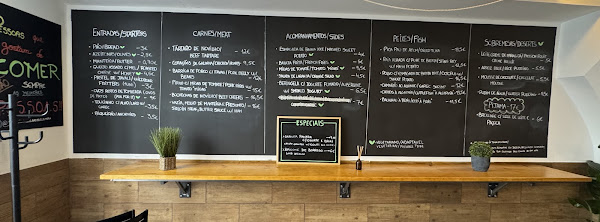

 I'm eating meat here, obviously. Pork cheeks, to be specific. And those are migas alongside. No one translates it as "stuffing", but it's moistened seasoned bread crumb, so...yep. This one's tomato flavored and colored, and the acidic sharpness cuts like a knife, perfect counterbalance to the unctuous cheeks.
Big takeaway: Setúbal is for fish—Évora natives envy the quality our grilled fish—but Évora's about meat, further heightening the yin/yang aspect. If you ever visit Portugal, hit Setúbal for fish, Evora for meat...and let Lisbon be your souvenir shop.
 Bread's great everywhere in Portugal, but better in Alentejo, and better still here. Yeah, the yellow one is broa de milho, the Portuguese cornbread that is, alas, mostly found in the north.
 This was the first salad I've had in two years that didn't come with greasy bottles of oil and vinegar for self-dressing. Fancy!
 Pudim de água. "Water pudding" might not sound exciting, but just look at that! Those almond flakes are not throwaway. They're super fresh and careful.
 Dangerously high prices compared to my €8 complete lunches back home. But entirely worth it.
A Choupana
Right next door to buzzy Sal Grosso, give or take a century, is A Choupana.
 You figure this is the quintessential cozy Portuguese lunch room, right? Straight out of our collective unconscious! Ah, Portugal!
No. None of that's true. Nothing like this exists, aside from this one unicorn. Counter seating is unknown here. The hobbit hole coziness is aberrant. This is not, at all, what Portugal is like.
I desperately want to come back and eat here. My eye is very much on the ensopado de galinha do campo, country hen stew. Not a normal offering, but totally Alentejan (for more on all things hen, see my trip notes from El Salvador). I love counter seating. Table seating makes me feel like I'm on display. For many people, that's a feature, not a bug. But, me, I'm in it for the food. I am not a decor element.
Menu shots:


Recanto
I actually started the trip at Recanto, which I did not fully trust despite its sterling reputation. Online photos had sent up warning flares. But I figured they'd know what they're doing, having earned senior status in a solid restaurant town.
Nyuh-uh.
 Welcome to fricking Instagram.
 Behold overcooked duck with unrendered rubbery fat strewn with molar-busting pretzel salt, plus a multilayered vaguely Frenchy potato slab reheated to the puckered point, served with a zippy raspberry sauce with strong shampoo vibes. Ugh.
You can fail here. This isn't Montreal (where even crap restaurants are like blessings from some benevolent god).
Snack Bar Portugal
 I was here on my one previous visit, and Snack Bar Portugal remains my proudest Évora discovery. No one here knows about it outside its small die-hard clientele, all Portuguese. By contrast, literally every other restaurant was full of Americans, which we'll ponder in an upcoming installment.
 This is one of Évora's humblest restaurants, but it's a great restaurant. Cheery, clean, the owner and his family are full of positivity and kindness, and the food has both the grandma soul you'd expect in a humble lunch room, but also some magic.
 This watercress soup tasted like saffron. Which makes no sense, because it's not often used here, and certainly never in a cheap canteen. I asked the waitress, and the older Portuguese wife sitting two feet from my right elbow, who'd just eaten an entire meal without saying a single word to her husband, broke in to explain the culinary alchemy that yielded the saffron flavor via a 2000 word soliloquy I 40% understood. None of this would happen in Setúbal, where I don't think anyone even knows what saffron is, and where the wives stay home.
In any case, this was one of the great soups of my life.


 Then feijoada do choco. Beans and cuttlefish. Kicked the ass of the versions I've had back home. This was downright magisterial.
 Finally, bobo de caramelo, caramel custard. Nothing deep or refined, but all balances nailed. What a meal. I left glowing.
To be continued...
My desperation has driven me as far as London (which is like Pittsburgh from here - $75 round trip flights), but it turns out that I just needed to drive an hour south to the neighboring state of Alentejo—which I could practically spit at from my balcony—and to its capital, Évora.
The Évora food scene is like night and day. The menus are similar (Alentejo has a distinct cuisine, but, like Punjabi food in India, it's worked into the national consciousness). The difference is the profusion of restaurants that are actually restaurants, not grim lunch pots run by cigarette-dangling wizardly grandmas who can't be bothered to skin the fava beans or core the apples. There are captivating winkles and touches. There is care and subtlety. It's The Answer to My Prayers.
It's also expensive. In Setúbal you can't eat well above 15€ (pricier places exist, but they're clip joints). But if you want a special occasion meal, there's no need to fly to London (aka Pittsburgh). Just head south to Évora. I've never been so happy to fork over €30 or €40 for a meal. You get solid value...at least if you choose good places.
But it's not easy! The most anonymous lunch joint in Setúbal is damned good, but in Evora, you must choose wisely. Let's start with a high note.
My top find: Sal Grosso (click the titles, e.g. above, for links) was like manna to my tears. Lemonade for a sleeping bee. It's every mixed metaphor rolled into a giant soufflé.
Sal Grosso is a restaurant restaurant. This may sound like nonsense for those who haven't spent months eating grandma pot lunches, but Sal Grosso has pace, bustle and excitement. The staff knows it's bad-ass, and the customers feel lucky to be there, and the chalkboard menu (largest I've ever seen) is packed with enough choices to stoke anxiety—the good kind. I'd almost forgotten what that's like (normally, I trudge through a dank doorway grunting boa tarde, and a sea of limping pensioners moans back indistinctly while harried Grandma hip checks me out of the way to rush stew to someone's table).


Big takeaway: Setúbal is for fish—Évora natives envy the quality our grilled fish—but Évora's about meat, further heightening the yin/yang aspect. If you ever visit Portugal, hit Setúbal for fish, Evora for meat...and let Lisbon be your souvenir shop.


Right next door to buzzy Sal Grosso, give or take a century, is A Choupana.

No. None of that's true. Nothing like this exists, aside from this one unicorn. Counter seating is unknown here. The hobbit hole coziness is aberrant. This is not, at all, what Portugal is like.
I desperately want to come back and eat here. My eye is very much on the ensopado de galinha do campo, country hen stew. Not a normal offering, but totally Alentejan (for more on all things hen, see my trip notes from El Salvador). I love counter seating. Table seating makes me feel like I'm on display. For many people, that's a feature, not a bug. But, me, I'm in it for the food. I am not a decor element.
Menu shots:


I actually started the trip at Recanto, which I did not fully trust despite its sterling reputation. Online photos had sent up warning flares. But I figured they'd know what they're doing, having earned senior status in a solid restaurant town.
Nyuh-uh.


You can fail here. This isn't Montreal (where even crap restaurants are like blessings from some benevolent god).


In any case, this was one of the great soups of my life.


To be continued...
Subscribe to:
Posts (Atom)