Showing posts with label autism. Show all posts
Showing posts with label autism. Show all posts
Wednesday, January 24, 2024


Wednesday, June 7, 2023
Gambling
I'm a gambler.
This week, an old friend of mine, who didn't have a depressive bone in his body, threw himself in front of a train. I understood why he did it (it was this). But that's not my topic today. I’m here to confess that I did a horrendous and shameful thing. I sent an email to his widow outlining my thinking. This was - let me choose terms carefully - "Audacious"? "Atrocious"?
It illustrates why some people think I lean towards the Asperger/Austism spectrum. It goes almost without saying that I’ve been obliviously un-empathic. What sort of shithead peppers a grieving widow with his breathless "theories"?
But there was nothing oblivious about it. Nothing impulsive or thoughtless. I'm self-aware, and fully understood that my gesture might fail to click. If so, I'd have sparked a burst of antipathy (excruciating for me, but surely not day-wrecking for her). Fun fact: I actually do not enjoy upsetting grieving widows. Or losing relationships. Though I’ve lost more friends than I can count because I'm willing to take hits on the slim chance I might substantially help. I don’t lack for empathy, but the "seeming" versus "being" distinction has already discussed to death here. True, deep empathy can superficially resemble a lack of same.
But, again, sometimes it helps. Sometimes a lot, though the other person has no way of knowing this history, leaving my motives opaque. And the potential benefit (for them) of helping someone in extremis vastly outweighs the social risk (for me).
This week, an old friend of mine, who didn't have a depressive bone in his body, threw himself in front of a train. I understood why he did it (it was this). But that's not my topic today. I’m here to confess that I did a horrendous and shameful thing. I sent an email to his widow outlining my thinking. This was - let me choose terms carefully - "Audacious"? "Atrocious"?
It illustrates why some people think I lean towards the Asperger/Austism spectrum. It goes almost without saying that I’ve been obliviously un-empathic. What sort of shithead peppers a grieving widow with his breathless "theories"?
But there was nothing oblivious about it. Nothing impulsive or thoughtless. I'm self-aware, and fully understood that my gesture might fail to click. If so, I'd have sparked a burst of antipathy (excruciating for me, but surely not day-wrecking for her). Fun fact: I actually do not enjoy upsetting grieving widows. Or losing relationships. Though I’ve lost more friends than I can count because I'm willing to take hits on the slim chance I might substantially help. I don’t lack for empathy, but the "seeming" versus "being" distinction has already discussed to death here. True, deep empathy can superficially resemble a lack of same.
But, again, sometimes it helps. Sometimes a lot, though the other person has no way of knowing this history, leaving my motives opaque. And the potential benefit (for them) of helping someone in extremis vastly outweighs the social risk (for me).
FWIW, this time it worked:
I haven't raised the issue of whether my thoughts are usually right or not. But they are. I'd never send banal bullshit. I do know the difference, and I think long and hard (and self-skeptically!) to decide whether I'm offering substantial nutritional value, and not just some clever blah-blah-blah. I'm really not, as it happens, an oblivious asshole. So the issue here isn't rightness. It's appropriateness. And helpfulness. I'd much rather be helpful than appropriate, so I’ll take my lumps and likely be deemed an asshole on the chance that I might be of service. I am, in other words, a gambler.
I am so grateful you reached out. I don’t have time to write much more but I just wanted to tell you that your insightful ideas gave me a large amount of clarity.I'm not here to boast. I'm focused on the gamble, not the outcome. For the opportunity to provide a devastated, bewildered widow with even a small amount of clarity, I'm willing to be punched in the mouth a bunch of times. I don't have many teeth left at this point. My face is like a smashed cauliflower. But sometimes it helps...so I deem it worth it. Fool that I am.
I haven't raised the issue of whether my thoughts are usually right or not. But they are. I'd never send banal bullshit. I do know the difference, and I think long and hard (and self-skeptically!) to decide whether I'm offering substantial nutritional value, and not just some clever blah-blah-blah. I'm really not, as it happens, an oblivious asshole. So the issue here isn't rightness. It's appropriateness. And helpfulness. I'd much rather be helpful than appropriate, so I’ll take my lumps and likely be deemed an asshole on the chance that I might be of service. I am, in other words, a gambler.
Thursday, November 3, 2022
Love Theater
A few months ago I wrote "Post-Covid Narcissism: The Unnecessary Extra Effort of Custom-Tailoring", fleshing out my frequent observation that we're too narcissistic to notice how narcissistic everyone's become. My problem is that, having forcibly pruned myself back to mere 99.1% narcissism, I do notice.
I described a brief conversation where a friend failed to take into account who I was.
In that same posting, I upped the ante with a brief recollection that, if you're paying attention, should challenge a lot of your assumptions regarding social interaction:
When you spot your mom doing it, you're helpfully forced to recognize that this is a really real thing!
Most people mostly view other people, including those close to them, as cartoons. We may periodically wake up and pay attention, registering them as fully real and unique, but mostly only during moments of reflection and assessment. Less so amid the tumult of dynamic engagement, where we easily slip back into deeming a given person "PEOPLE".
This, among other things, explains why people turn so easily. And why you're only as good as your last ____.
We are mostly blips on people's screens, even if (especially if) they frequently declare their effusive esteem/gratitude/etc. I'm not being bitter, I've simply accepted the rules of engagement. This is not a deep planet, and that's ok; we have home fries and iPads and tons of nurturing sunlight and oxygen! And, anyway, most of the tears shed over this predicament are strictly unilateral. Few of us rue our own fickle ingratitude.
You might imagine that falling in love would be the antithesis of this cartooning process. Another person becomes elevated into being THE person! Certainly not "people"! But, no, love, in most instances, is an even more egregious denial of individual humanity; an even more obvious demonstration of narcissism. That's why the divorce rate is so high. And why break-ups are often so acrimonious. Let me explain.
"I thought I knew him!"
No, you didn't. And that's on you, not him.
You were casting around for Prince Charming, and this person was nice to you, and attractive for you, and reflected back your attraction to create a rapport. This fortuitous rapport felt not just enjoyable, but significant. "It's happening! HERE HE IS!"
This narrative, which I'm mocking, like a shmuck, is considered the pinnacle of interpersonal relations. Love! Not just love, but narrative love, epic love, STORYBOOK love.
It has little to do with the actuality of the other person, who's flattened into a two-dimensional love service provider, fulfilling fantasy and enabling destiny.
Pleasant aspects of the other person's individuality are celebrated as they appear, and get spun into the STORYBOOK tale. The flaws and horrors, less so. Initially overlooked (as part of the suspension-of-disbelief critical for any dramatic narrative), they eventually penetrate the haze of endorphins, and love begins to suffer the death of a thousand cuts. "My god, this is just some freaking person. Is that what he's been all along?"
Yes. He was a person all along. The towering elevation was always phony; an artifact of opportunistic rapport and biological engineering. But it was your choice to compress three-dimensionality into a two-dimensional scripted fantasy costar. You even deemed that dehumanization profoundly beautiful!
By reducing the totality of a person into the embodiment of a scripted role you've nurtured in your head (spurred by Hollywood), you've made a cartoon of that person. Yes, you are bestowing the most elevated and privileged status of cartoon character, but that's not the honor you imagine it to be.
As you consider yourself more deeply connected and generously expressive than ever, your narcissism is peaking. Widen the frame and see that you are performing love theater with the most treasured figurine in your glass menagerie. There's only you; Narcissus peering delightedly at her reflection.
"If I love you," asked Goethe, "what business is it of yours?”
Other people are not cartoons, and you are not the only real person, and no one exists to serve as a character in your movie, speaking the lines and running the gauntlet of your dramatic narrative. If that's how you do love (and, alas, most do), then eventually - inevitably - emergent characteristics and petty irritations will compile into a revelation that the project was miscast from the start. A "poor fit". The person was never the cartoon you'd imagined. But no one ever will be, because people are not cartoons.
We never question whether the other person would/should enjoy being turned into a cartoon. After all, we're bestowing the highest possible cartoon status! Such anointment being our greatest gift, it couldn't possibly be anything but delightedly accepted. And as any such delight wanes, and as an actual human being emerges, well, that's the unthinkable worst result from an unthinkably horrible person.
"This is reality and other people are real." That strikes me as incontestable, however it reveals a diagnosable mental health issue on my end. I'm not full-out autistic, but I do have a streak (or, at least, a dangerous sympathy), and it's emerging here. Autism is a refusal (in some cases the inability) to play along with hollow drama. (More here and here)
I described a brief conversation where a friend failed to take into account who I was.
I urged a friend to check out a TV series called "Patriot" (here’s why).I hovered, as an individual, in a foggy mental slurry for her, 90% generic person (aka "People") and 10% specifically me. I'm mostly "people", and only partly and occasionally "person".
This friend has known me for 30 years. She has a rich sense of who I am and what I enjoy, and of my reliability when it comes to recommending specific things for specific people. A lot of my tips have become her most-cherished things.
"I'm not really into high-testosterone entertainment."
"Why would you think it's that?"
"The title."
"So your gut reaction to the show title supersedes all your experience with me and my recommendations?"
Short answer: yup, she absolutely prioritizes her gut reaction above the massive evidence of a 30 year personal relationship.
In that same posting, I upped the ante with a brief recollection that, if you're paying attention, should challenge a lot of your assumptions regarding social interaction:
It's like 2000 and [my family is] in Memphis for a wedding. Having finished a rehearsal thing, we're standing around a parking lot discussing dinner options. I pipe up: "I know a place, not too far!" A cousin replies, haughty and dubious, "Is it good?"Another family example. I'm one of three siblings. My two sisters share some personality characteristics which I happen not to. And while my mother, at some level, recognized the distinction from decades of direct and prolonged experience, she seldom managed to maintain that distinction. It was too much work. Easier to bundle "the kids" into a single thing (to her credit, the math supported her, given that 67% does constitute a majority). So in any given circumstance, she'd assume I was motivated by the sort of thinking that drives my sisters, because I was a member of a grouping characterized by such thinking.
When you spot your mom doing it, you're helpfully forced to recognize that this is a really real thing!
Most people mostly view other people, including those close to them, as cartoons. We may periodically wake up and pay attention, registering them as fully real and unique, but mostly only during moments of reflection and assessment. Less so amid the tumult of dynamic engagement, where we easily slip back into deeming a given person "PEOPLE".
This, among other things, explains why people turn so easily. And why you're only as good as your last ____.
We are mostly blips on people's screens, even if (especially if) they frequently declare their effusive esteem/gratitude/etc. I'm not being bitter, I've simply accepted the rules of engagement. This is not a deep planet, and that's ok; we have home fries and iPads and tons of nurturing sunlight and oxygen! And, anyway, most of the tears shed over this predicament are strictly unilateral. Few of us rue our own fickle ingratitude.
You might imagine that falling in love would be the antithesis of this cartooning process. Another person becomes elevated into being THE person! Certainly not "people"! But, no, love, in most instances, is an even more egregious denial of individual humanity; an even more obvious demonstration of narcissism. That's why the divorce rate is so high. And why break-ups are often so acrimonious. Let me explain.
"I thought I knew him!"
No, you didn't. And that's on you, not him.
You were casting around for Prince Charming, and this person was nice to you, and attractive for you, and reflected back your attraction to create a rapport. This fortuitous rapport felt not just enjoyable, but significant. "It's happening! HERE HE IS!"
This narrative, which I'm mocking, like a shmuck, is considered the pinnacle of interpersonal relations. Love! Not just love, but narrative love, epic love, STORYBOOK love.
It has little to do with the actuality of the other person, who's flattened into a two-dimensional love service provider, fulfilling fantasy and enabling destiny.
Pleasant aspects of the other person's individuality are celebrated as they appear, and get spun into the STORYBOOK tale. The flaws and horrors, less so. Initially overlooked (as part of the suspension-of-disbelief critical for any dramatic narrative), they eventually penetrate the haze of endorphins, and love begins to suffer the death of a thousand cuts. "My god, this is just some freaking person. Is that what he's been all along?"
Yes. He was a person all along. The towering elevation was always phony; an artifact of opportunistic rapport and biological engineering. But it was your choice to compress three-dimensionality into a two-dimensional scripted fantasy costar. You even deemed that dehumanization profoundly beautiful!
By reducing the totality of a person into the embodiment of a scripted role you've nurtured in your head (spurred by Hollywood), you've made a cartoon of that person. Yes, you are bestowing the most elevated and privileged status of cartoon character, but that's not the honor you imagine it to be.
As you consider yourself more deeply connected and generously expressive than ever, your narcissism is peaking. Widen the frame and see that you are performing love theater with the most treasured figurine in your glass menagerie. There's only you; Narcissus peering delightedly at her reflection.
"If I love you," asked Goethe, "what business is it of yours?”
Other people are not cartoons, and you are not the only real person, and no one exists to serve as a character in your movie, speaking the lines and running the gauntlet of your dramatic narrative. If that's how you do love (and, alas, most do), then eventually - inevitably - emergent characteristics and petty irritations will compile into a revelation that the project was miscast from the start. A "poor fit". The person was never the cartoon you'd imagined. But no one ever will be, because people are not cartoons.
We never question whether the other person would/should enjoy being turned into a cartoon. After all, we're bestowing the highest possible cartoon status! Such anointment being our greatest gift, it couldn't possibly be anything but delightedly accepted. And as any such delight wanes, and as an actual human being emerges, well, that's the unthinkable worst result from an unthinkably horrible person.
What’s more, as this un-delighting progresses bilaterally, the negative rapport makes antithetical (villanous) cartoons out of both parties via the precise same process. That's how your most-favorite-person becomes your least-favorite-person.As we begin to notice the humanity - the off-script three-dimensionality of our idealized costar - we don't like it. It abrades the perfection. But it's entirely our fault. Not for having miscast - anointing the wrong glass figurine. The problem was the impulse to turn a three dimensional unique individual into a flat dramatic character for acting out love theater with in the first place. This is not a movie. This is reality and other people are real.
It's always an option to humanize humans rather than compress them into cartoons - noble or villainous. Many of us forget that option. It's a framing problem.
"This is reality and other people are real." That strikes me as incontestable, however it reveals a diagnosable mental health issue on my end. I'm not full-out autistic, but I do have a streak (or, at least, a dangerous sympathy), and it's emerging here. Autism is a refusal (in some cases the inability) to play along with hollow drama. (More here and here)
Saturday, August 20, 2022
The Pose is Usually a Cover
A few weeks ago, I explained the pervasive role of poseurs in society. They are the rule, not the exception. Seemers always win, so posing's become so pervasive that doers - the genuine article - are spurned. Actuality has no value when we're fully occupied by posing.
Consider homophobes, who think about gay people an awful lot, which is not something heterosexuals do. In fact, there's a word for people who think about gayness a lot, and, I'll give you a hint: it begins with a "G".
Such people don't trust their impulses. And this insecurity drives them to turn the amp up to eleven, making themselves so extremely ungay that there's no question.
Super ungay people reveal their impulses and insecurities. Straight people don't make such effort to seem ungay. Which can, in turn, make them seem gay. Because people buy the pose more than the actuality. Extra ungay-seeming people are the apotheosis of heterosexuality, it goes without saying!
Me, I don't have the slightest doubt about my preference, so I never lift a finger to seem ungay. This makes some homophobes suspect - or even insist - that I'm gay. While I'm daydreaming about female secondary sexual characteristics, these guys, consumed by their obsession with gayness, parse my disinclination to conform to the prescribed super-ungay behaviors. This supposedly makes me the gay one.
It's insufficient to be straight. One must also go to lengths to seem straight; to demark oneself as ungay. Because the "seeming" is what matters. And it's hard, because suppressed gay homophobes have really raised the bar, having spent years painstakingly honing their super ungay posing. How could a merely straight dude like me ever hope to compete?
It's a familiar paradox to me. In the above-linked article on posing, I complain about being forced to compete with highly-accomplished poseurs to pass for the sort of person I actually am:
This revealed that it was all a pose all along. Beneath their flamboyant alpha patriotic barking, they were always submissive, impotent, spineless weasels - the antithesis of their pose. That's precisely why they've been posing so long and so hard all this time. Real strong people don't feel compelled to act strong. They ARE strong.
People who aren't racist simply aren't racist. People who grab the mantle of Anti-Racism - who spend their leisure time uncovering shlubs unwise enough to have attended 1965 Halloween parties in blackface so they can CALL THEM OUT - such people are insecure about their own impulses, so they turn the amp up to eleven, making themselves so extremely anti-racist that there's no question.
Consider my definition of racism, and consider how many loudmouths comically trap themselves in that net. In fact, strident anti-racism (remember, we live in a Taoist world) is racism.
This is why severe autistics get so disoriented, twirling themselves into oblivion. They don't understand posing, so their whole experience here feels like being trapped inside an asylum. Which it is.Seemers are not only a different breed from doers; they're usually the very opposite thing. It took me a lifetime to figure this out (which shows how hypnotized we are).
Consider homophobes, who think about gay people an awful lot, which is not something heterosexuals do. In fact, there's a word for people who think about gayness a lot, and, I'll give you a hint: it begins with a "G".
Such people don't trust their impulses. And this insecurity drives them to turn the amp up to eleven, making themselves so extremely ungay that there's no question.
Super ungay people reveal their impulses and insecurities. Straight people don't make such effort to seem ungay. Which can, in turn, make them seem gay. Because people buy the pose more than the actuality. Extra ungay-seeming people are the apotheosis of heterosexuality, it goes without saying!
Me, I don't have the slightest doubt about my preference, so I never lift a finger to seem ungay. This makes some homophobes suspect - or even insist - that I'm gay. While I'm daydreaming about female secondary sexual characteristics, these guys, consumed by their obsession with gayness, parse my disinclination to conform to the prescribed super-ungay behaviors. This supposedly makes me the gay one.
It's insufficient to be straight. One must also go to lengths to seem straight; to demark oneself as ungay. Because the "seeming" is what matters. And it's hard, because suppressed gay homophobes have really raised the bar, having spent years painstakingly honing their super ungay posing. How could a merely straight dude like me ever hope to compete?
It's a familiar paradox to me. In the above-linked article on posing, I complain about being forced to compete with highly-accomplished poseurs to pass for the sort of person I actually am:
Having been successful in a half dozen unrelated fields, with my name on a bunch of books and records and media stuff, having inspired a generation of Spanish and Portuguese jazz musicians and had some minor rippling effect on how folks think and write about food and use the Internet, is it also incumbent on me to seem like that person? Have I ignored a critical chunk along the way? Am I going around obliviously without my pants on? Do I need to fix this?I'm amazed more people haven't fully awakened to this craziness, because we've all just experienced a massive reveal. After watching generations of Conservative leaders waving the Constitution over their heads, pounding their chests in devotion to the red, white, and blue, and proclaiming themselves super patriots and stiff-spined tyrant obliterators, the moment a two-bit con-man real estate guy started riling up the yahoos, every one of those ham-fisted brawny he-men shrunk into mini Neville Chamberlains. Meekly terrified of losing their jobs or elected positions or Fox News exposure or fundraising streams, they quivered and quaked, kowtowed and appeased, all while quietly recognizing the immense peril to the republic.
I can't imagine anything more foolish than posing as the sort of person I actually am. Isn't that backwards? One dons an aloof "That Guy" persona - too busy with important importance to do whatever - if one is a bluffer who hasn't done much but wants to seem like he has. I get why people strike that pose, but why would we expect the genuine to match the pose; to imitate the imitators?
Why would I pose as me? The question makes my head explode. None of my insight re: human psychology helps. And the awful and dopey truth is that even if I put effort into posing as someone like me - to look the part, whatever that even means - I'd surely wind up in the lower 20th percentile of me-posers. I'd be terrible at it!
I'm quite good at doing things, but horrendously bad at posing as a thing-doer. There are specialists for that! Thousands of them! And they're good! They can do something I can't, and I truly admire them! Me, I could never fool anyone into imagining I could do something notable. Even if I actually have.
This revealed that it was all a pose all along. Beneath their flamboyant alpha patriotic barking, they were always submissive, impotent, spineless weasels - the antithesis of their pose. That's precisely why they've been posing so long and so hard all this time. Real strong people don't feel compelled to act strong. They ARE strong.
People who aren't racist simply aren't racist. People who grab the mantle of Anti-Racism - who spend their leisure time uncovering shlubs unwise enough to have attended 1965 Halloween parties in blackface so they can CALL THEM OUT - such people are insecure about their own impulses, so they turn the amp up to eleven, making themselves so extremely anti-racist that there's no question.
Consider my definition of racism, and consider how many loudmouths comically trap themselves in that net. In fact, strident anti-racism (remember, we live in a Taoist world) is racism.
Saturday, July 2, 2022
Seemers Always Win: Posing as Someone Like You
I have pondered the following several times here on the Slog. This time, maybe I'll cough up a novel insight. Or, at least express it more vividly, so you can ponder it, yourself.
Wait, YOU founded that website????
Whenever I meet someone new who recognizes "Chowhound" if it comes up in discussion, I always get the same disbelieving reaction:
To me, I'm a shmuck who's done cool things. I'm "crew", not "talent". I'm the shlubby and put-upon director juggling a thousand plates, not the composed and preened movie star oozing charisma. I'm busy doing stuff. I create pizazz, I don't exude it.
Most singers become singers because they want to be singers, not because they want to sing. And I really care deeply about the singing (so to speak). So much so that I don't waste a nano-speck of energy trying to seem like it. Or to seem like anything, really. If you're doing, with all your heart, who's got time to seem?
I never receive a satisfactory answer. It's not that they expected me to travel with a security team, or to address them with smug condescension. They don't have any particular image in mind. Just certainly not that.
Instead of putting 6000% of myself into making Chowhound good, I suppose I should have reserved some energy for making myself look the part. Maybe coif yourself better. Jaunty blazers and expensive Italian loafers. Don't move your head animatedly. Act your age, and your "station" - snidely complacent and redolent of cologne and gravitas. Most of all, never give others your full attention. In the wolf pack, this signals beta status, making you smell needy and subservient. Weakly reactive. It's the antithesis of the manly man plotting bold courses and kicking ass. That guy hardly has time to devote to the likes of you. Sorry, bud, but I got people to fry!
Being and Seeming
So here's the question. Having been successful in a half dozen unrelated fields, with my name on a bunch of books and records and media stuff, having inspired a generation of Spanish and Portuguese jazz musicians and had some minor rippling effect on how folks think and write about food and use the Internet, is it also incumbent on me to seem like that person? Have I ignored a critical chunk along the way? Am I going around obliviously without my pants on? Do I need to fix this?
I can't imagine anything more foolish than posing as the sort of person I actually am. Isn't that backwards? One dons an aloof "That Guy" persona - too busy with important importance to do whatever - if one is a bluffer who hasn't done much but wants to seem like he has. I get why people strike that pose, but why would we expect the genuine to match the pose; to imitate the imitators?
Why would I pose as me? The question makes my head explode. None of my insight re: human psychology helps. And the awful and dopey truth is that even if I put effort into posing as someone like me - to look the part, whatever that even means - I'd surely wind up in the lower 20th percentile of me-posers. I'd be terrible at it!
I'm quite good at doing things, but horrendously bad at posing as a thing-doer. There are specialists for that! Thousands of them! And they're good! They can do something I can't, and I truly admire them! Me, I could never fool anyone into imagining I could do something notable. Even if I actually have.
Seemers always win!
Nice Guy
The same applies in many other realms. For example, I don't seem like a nice guy.
I'm not diffidently soft-spoken. I don't massage your shoulders while telling you how awesome you are. I don't bend over backwards to never contradict you. I don't do any of the standard things Nice Guys do, and am therefore widely considered ornery and irascible.
Yet I'll do nearly anything to help almost anyone. If you call me at 3:30 am needing to be picked up on the Jersey Turnpike, I'll be there with delicious chocolate I'd desperately hoped to hog for myself. I'll mull stranger's problems with the same determination I devote to my own (I don't even make a distinction). I am very far from being "Mr. Wonderful", but you'd think I'd earned, at least, "nice".
It's even worse than that. Friends who've been on the receiving end of my helpfulness, and spent years watching me extend myself, still don't think of me as a particularly nice guy. Because Nice Guy status is earned not by being nice but by seeming nice. A nice guy rubs your shoulders, modulates his voice, never contradicts anything, and tells you you're awesome (note: that guy will never, ever come get you at 3am, though he’ll leave you feeling fantastic about yourself as he hangs up the phone and rolls back to sleep). I could sell all my belongings and live naked in the woods to give some random taxi driver a better life for his family and still never earn that sobriquet. Because it's 100% about the seeming. Again, seemers always win.
Paramours and Potheads
So many other examples. For example, I'm a funny-looking dude - the anti-Brad Pitt, if you will - and yet I've recruited, in my time, a succession of quite glamorous girlfriends, all oddly enamored. Yet no one - including those who witnessed that procession - would ever imagine that I might have boyfriending skills. We know what desirable boyfriends are like. Leather pants and coiled abs. Steely gazes and strong jawlines. It ought to be a clue that guys with those womanizing attributes often turn out to be gay. But even the other side of that coin - geez, that shlubby trombonist seems awfully popular! - never moves the needle.
"Him?!? That guy???"
Seemers always win.
One more. I was recently standing with a gaggle of acquaintances passing around a joint. One of them - who actually knew that I'd spent decades as a funky horn player for great jazz, blues, funk, ska, and Latin bands...
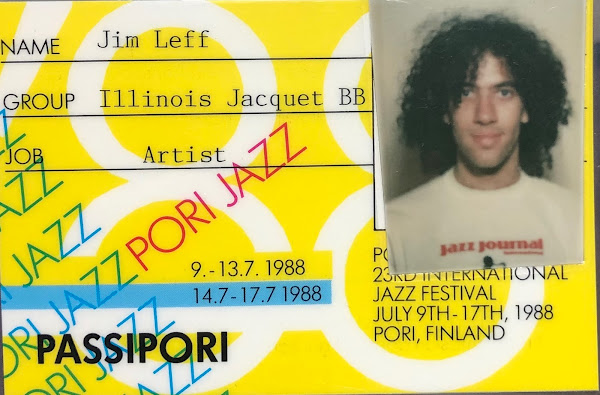
Me in 1988
....passed the joint not to me, but past me to the next guy. "What gives?" I asked. "Sorry...I assumed you wouldn't be interested". He knew who and what I was. But he couldn't help acting on how I seem.
Empathy Theater
I once proposed a radical new view of autism, suggesting it's not a dysfunction but an evolutionary improvement (like all improvements, bringing along certain drawbacks, particularly marked in severe "cases").
In that article, I recalled discussing this with a school psychologist. I'd asked her to consider that just because someone isn't acting empathic - engaging in "empathy theater", i.e. spouting empathic-sounding platitudes and composing facial features in empathic-seeming configurations - doesn't mean there's no empathy. In my experience, autistics are more empathic, not less. They just don't engage in (or even understand) empathy theater. They're not seemers.
She asked the salient question: If they don't externalize their feelings - say the words and make the gestures and act the part - how could we possibly know how they feel?
To me, it's abundantly clear. Ye shall know them by their fruits. Their actions. Because platitudes, as we all know, can easily be faked.
Fake Jim Leff didn't build a cool web site.
Fake Nice Guy won't come get you at 3am.
Fake Don Juan shares her Brad Pitt fascination.
Empathy theatrics are as significant as a shot of Botox.
Why would anyone pay credence to empty cliché and stock gesture? How could such tropes parse as genuine, when they're so easily faked? Time and again, we see empty posing and manipulation. Yet "Seeming" remains the sine non qua of genuineness, while "Actuality" barely budges most people's spidey sense. Are we really so certain that autistics are the dysfunctional ones?
Read my autism post, and ask yourself this: isn't it smarter, deeper, better - and way less dishonest, manipulative and shallowly craptastic - to Do than to Seem? To be The Person Who Does The Thing than rather than to pose as a Thing-Doer? Who would you rather listen to: a singer who became a singer because she wanted to be a singer, or one who became a singer because she wanted to sing?
Alas, no fresh insight to offer. Well, wait. That's not true. The giving-others-full-attention-makes-you-look-subservient is a fresh chunk. Anyway, I'll try again.
Whenever I meet someone new who recognizes "Chowhound" if it comes up in discussion, I always get the same disbelieving reaction:
Huh? Hold on. That was you? YOU?!?At this point, I stop the conversation and beg the bewildered, skeptical person to explain what, exactly, they expected. It's not that I'm being defensive or confrontational. It's that I genuinely don't know how a Jim Leff is supposed to look or act! No one ever taught me how to act like someone like me!
To me, I'm a shmuck who's done cool things. I'm "crew", not "talent". I'm the shlubby and put-upon director juggling a thousand plates, not the composed and preened movie star oozing charisma. I'm busy doing stuff. I create pizazz, I don't exude it.
Most singers become singers because they want to be singers, not because they want to sing. And I really care deeply about the singing (so to speak). So much so that I don't waste a nano-speck of energy trying to seem like it. Or to seem like anything, really. If you're doing, with all your heart, who's got time to seem?
I never receive a satisfactory answer. It's not that they expected me to travel with a security team, or to address them with smug condescension. They don't have any particular image in mind. Just certainly not that.
Instead of putting 6000% of myself into making Chowhound good, I suppose I should have reserved some energy for making myself look the part. Maybe coif yourself better. Jaunty blazers and expensive Italian loafers. Don't move your head animatedly. Act your age, and your "station" - snidely complacent and redolent of cologne and gravitas. Most of all, never give others your full attention. In the wolf pack, this signals beta status, making you smell needy and subservient. Weakly reactive. It's the antithesis of the manly man plotting bold courses and kicking ass. That guy hardly has time to devote to the likes of you. Sorry, bud, but I got people to fry!
So here's the question. Having been successful in a half dozen unrelated fields, with my name on a bunch of books and records and media stuff, having inspired a generation of Spanish and Portuguese jazz musicians and had some minor rippling effect on how folks think and write about food and use the Internet, is it also incumbent on me to seem like that person? Have I ignored a critical chunk along the way? Am I going around obliviously without my pants on? Do I need to fix this?
I can't imagine anything more foolish than posing as the sort of person I actually am. Isn't that backwards? One dons an aloof "That Guy" persona - too busy with important importance to do whatever - if one is a bluffer who hasn't done much but wants to seem like he has. I get why people strike that pose, but why would we expect the genuine to match the pose; to imitate the imitators?
Why would I pose as me? The question makes my head explode. None of my insight re: human psychology helps. And the awful and dopey truth is that even if I put effort into posing as someone like me - to look the part, whatever that even means - I'd surely wind up in the lower 20th percentile of me-posers. I'd be terrible at it!
I'm quite good at doing things, but horrendously bad at posing as a thing-doer. There are specialists for that! Thousands of them! And they're good! They can do something I can't, and I truly admire them! Me, I could never fool anyone into imagining I could do something notable. Even if I actually have.
Seemers always win!
The same applies in many other realms. For example, I don't seem like a nice guy.
I'm not diffidently soft-spoken. I don't massage your shoulders while telling you how awesome you are. I don't bend over backwards to never contradict you. I don't do any of the standard things Nice Guys do, and am therefore widely considered ornery and irascible.
Yet I'll do nearly anything to help almost anyone. If you call me at 3:30 am needing to be picked up on the Jersey Turnpike, I'll be there with delicious chocolate I'd desperately hoped to hog for myself. I'll mull stranger's problems with the same determination I devote to my own (I don't even make a distinction). I am very far from being "Mr. Wonderful", but you'd think I'd earned, at least, "nice".
It's even worse than that. Friends who've been on the receiving end of my helpfulness, and spent years watching me extend myself, still don't think of me as a particularly nice guy. Because Nice Guy status is earned not by being nice but by seeming nice. A nice guy rubs your shoulders, modulates his voice, never contradicts anything, and tells you you're awesome (note: that guy will never, ever come get you at 3am, though he’ll leave you feeling fantastic about yourself as he hangs up the phone and rolls back to sleep). I could sell all my belongings and live naked in the woods to give some random taxi driver a better life for his family and still never earn that sobriquet. Because it's 100% about the seeming. Again, seemers always win.
Most singers become singers because they want to be singers, not because they want to sing.
So many other examples. For example, I'm a funny-looking dude - the anti-Brad Pitt, if you will - and yet I've recruited, in my time, a succession of quite glamorous girlfriends, all oddly enamored. Yet no one - including those who witnessed that procession - would ever imagine that I might have boyfriending skills. We know what desirable boyfriends are like. Leather pants and coiled abs. Steely gazes and strong jawlines. It ought to be a clue that guys with those womanizing attributes often turn out to be gay. But even the other side of that coin - geez, that shlubby trombonist seems awfully popular! - never moves the needle.
"Him?!? That guy???"
Seemers always win.
One more. I was recently standing with a gaggle of acquaintances passing around a joint. One of them - who actually knew that I'd spent decades as a funky horn player for great jazz, blues, funk, ska, and Latin bands...

....passed the joint not to me, but past me to the next guy. "What gives?" I asked. "Sorry...I assumed you wouldn't be interested". He knew who and what I was. But he couldn't help acting on how I seem.
I once proposed a radical new view of autism, suggesting it's not a dysfunction but an evolutionary improvement (like all improvements, bringing along certain drawbacks, particularly marked in severe "cases").
In that article, I recalled discussing this with a school psychologist. I'd asked her to consider that just because someone isn't acting empathic - engaging in "empathy theater", i.e. spouting empathic-sounding platitudes and composing facial features in empathic-seeming configurations - doesn't mean there's no empathy. In my experience, autistics are more empathic, not less. They just don't engage in (or even understand) empathy theater. They're not seemers.
She asked the salient question: If they don't externalize their feelings - say the words and make the gestures and act the part - how could we possibly know how they feel?
To me, it's abundantly clear. Ye shall know them by their fruits. Their actions. Because platitudes, as we all know, can easily be faked.
Fake Jim Leff didn't build a cool web site.
Fake Nice Guy won't come get you at 3am.
Fake Don Juan shares her Brad Pitt fascination.
Empathy theatrics are as significant as a shot of Botox.
Why would anyone pay credence to empty cliché and stock gesture? How could such tropes parse as genuine, when they're so easily faked? Time and again, we see empty posing and manipulation. Yet "Seeming" remains the sine non qua of genuineness, while "Actuality" barely budges most people's spidey sense. Are we really so certain that autistics are the dysfunctional ones?
Read my autism post, and ask yourself this: isn't it smarter, deeper, better - and way less dishonest, manipulative and shallowly craptastic - to Do than to Seem? To be The Person Who Does The Thing than rather than to pose as a Thing-Doer? Who would you rather listen to: a singer who became a singer because she wanted to be a singer, or one who became a singer because she wanted to sing?
Alas, no fresh insight to offer. Well, wait. That's not true. The giving-others-full-attention-makes-you-look-subservient is a fresh chunk. Anyway, I'll try again.
Saturday, May 29, 2021
The Nourishing Song of Autistic Shrieks
A severely autistic kid, who I've never met, lives up the hill from my house. And for several hours per day, he blasts piercing owl-like hoots and shrieks down the hill. The volume is remarkable. When guests visit, they're startled when he launches his latest program. Are aliens invading?
You might think it would be hard to sleep, or write, or think with this as my sonic background, day after day, year after year. But it's not. You may have read my theory that, despite their inability to participate in empathy theater, autistic people are actually more empathic than normal. They're aware, and they care (deeply), but they couldn't imagine displaying the usual performative indicators. They're too busy caring to arrange expression and body english, and utter the clichés, that make people seem caring. The supposed dysfunction of autism amounts to a seemingly opaque condition of utter genuineness. Being caring, they couldn't fathom how to - or why to - seem caring.
So while my neighbors hear disturbing shrieks of haunted dysfunction, I frame it differently. I hear singing; an effort to blanket the hill and all its inhabitants with exactly the sounds this person has decided we require for nourishment. And I trust him.
You might argue that I've simply "gotten used to" the shrieking. And there may be an element of that. But that, too, is a process of reframing. Reframing is the same thing as a shift of perspective, and perspective shifts via placement of attention. Attention is instinctively directed to the unfamiliar, and familiarity accrues with experience. We deprecate needful attention to things which previously have proved themselves harmless and unproductive (attention will always be rivetted by, say, frying onions or angry dogs, despite their familiarity, but the yadda-yadda fades into background). The unfamiliar is gradually reframed into mundanity.
I suspect that my neighbors never get used to it, because they've chosen to associate this sound with anguish rather than benevolence, and chosen to deem it a rude disturbance; a daily torment. Such instilled emotions are destined to be freshly triggered every time, attracting heightened, rather than diminished, attention. We distinguish our frying onions and angry dogs from our fading mundane yadda yadda via engrained patterns of emotional response. We frame internally, though we nuttily imagine that external factors frame us (very short poem, please give a quick read).
So the process of "getting used to" something is just another process of reframing. Our entire experience of the world, in fact, is the culmination of sequential framing shifts (an inner process that we project outward...remember the golden retriever!), mostly instinctual and unconscious, but, per my repeated urgings, also potentially volitional if you're playful enough to flex atrophied muscles. For example, by reframing a shrieking kid as a benevolent protector.
You might think it would be hard to sleep, or write, or think with this as my sonic background, day after day, year after year. But it's not. You may have read my theory that, despite their inability to participate in empathy theater, autistic people are actually more empathic than normal. They're aware, and they care (deeply), but they couldn't imagine displaying the usual performative indicators. They're too busy caring to arrange expression and body english, and utter the clichés, that make people seem caring. The supposed dysfunction of autism amounts to a seemingly opaque condition of utter genuineness. Being caring, they couldn't fathom how to - or why to - seem caring.
So while my neighbors hear disturbing shrieks of haunted dysfunction, I frame it differently. I hear singing; an effort to blanket the hill and all its inhabitants with exactly the sounds this person has decided we require for nourishment. And I trust him.
You might argue that I've simply "gotten used to" the shrieking. And there may be an element of that. But that, too, is a process of reframing. Reframing is the same thing as a shift of perspective, and perspective shifts via placement of attention. Attention is instinctively directed to the unfamiliar, and familiarity accrues with experience. We deprecate needful attention to things which previously have proved themselves harmless and unproductive (attention will always be rivetted by, say, frying onions or angry dogs, despite their familiarity, but the yadda-yadda fades into background). The unfamiliar is gradually reframed into mundanity.
I suspect that my neighbors never get used to it, because they've chosen to associate this sound with anguish rather than benevolence, and chosen to deem it a rude disturbance; a daily torment. Such instilled emotions are destined to be freshly triggered every time, attracting heightened, rather than diminished, attention. We distinguish our frying onions and angry dogs from our fading mundane yadda yadda via engrained patterns of emotional response. We frame internally, though we nuttily imagine that external factors frame us (very short poem, please give a quick read).
So the process of "getting used to" something is just another process of reframing. Our entire experience of the world, in fact, is the culmination of sequential framing shifts (an inner process that we project outward...remember the golden retriever!), mostly instinctual and unconscious, but, per my repeated urgings, also potentially volitional if you're playful enough to flex atrophied muscles. For example, by reframing a shrieking kid as a benevolent protector.
Friday, August 14, 2020
A New Explanation of Autism
I've had an intuitive feeling about Autism for a while: that it's not what it seems; it's not necessarily a bad thing; it might be the next evolutionary leap; the deficiency is not in autistics' inability to connect, but in everyone else's inability to recognize connection without blatant gesturing.
Because it was strictly intuitive, I've been unable to articulate it in any coherent way. And I can't do much with purely intuitive understanding. Unless my rationality understands the thing I know in my gut, it's useless to me (this posting helps explain why that is). I flounder and flail. This is one reason I'm a writer - I have a strong drive to try to make lucid sense of things.
To that end, I've been teaching myself stuff all my life. A voice in my head explains things to me in third person. I frame it as rehearsal for eventually teaching others, but, really, this is just the way I process gut intuition into useful comprehension. It's a process of self-translation.
In 2008, I began to externalize that inner process via this Slog. And it all began to accelerate. I discovered that it helps to formalize; to not just piece it out, but to go the extra mile of whipping it into camera-ready fluency. I'd previously been content with the mental equivalent of a hasty first draft, but the writing process hones my understanding. Thinking it is better than knowing it; saying it is better than thinking it; and writing it is better than saying it (and, subsequently, reading it - reading my own stuff, like my talking-to-myself teaching method only far more lucid - is best of all). Lucidity is the prize, and it gobbles vast resources. Fine by me; I wouldn’t expect it to come cheaply.
"Necessity is the mother of invention" is one of those aphorisms that's deeper than it seems. It’s a shortcut. My intuitive gut-level understanding becomes more available under real-world pressure. The process of translation-to-lucidity accelerates wildly when actual need arises. So when a friend recently told me he was dismayed about likely being on the autistic spectrum. I intuited that dismay might not be the proper reaction, and the verbalization just sort of happened.
So while it's fresh, I'm dumping out a transcript (the discussion was via text message), along with some sidebars. It's long and repetitive (I circle around my point, shooting from different angles, hoping to score a direct hit). But if you suspect you're on “the spectrum,” it may transform how you think about yourself, or at least explain some of the gaslighting.
Dialog
Friend: I always wondered if I was slightly autistic. I don't really understand empathy.
Me: Well, first, I'm not convinced autism's a bad thing. I suspect it might be a positive evolutionary step, though disruptive to current social norms. There's evidence suggesting that even severe cases (totally non-communicative, etc) have quite rich inner lives and are highly empathic, even though they don't outwardly express it.
And, on the other side of the equation, I rarely see much true empathy out there among non-autistics. Mostly just displays of empathy. Empathy theater, if you will.
Friend: Empathy requires effort. It takes a lot of work to do the theater aspect.
Me: I don't observe that you lack empathy. You're always eager to help, and you care what people go through. You just lack empathy theater. You don’t make a flamboyant display of it.
Friend: But the display helps get other people to the right place sometimes.
Me: Perhaps. But let's talk about you. My point is that autism, if it's a malady (and I'm not sure it is) is a malady of display. And so the vast majority of the population, which confuses display with reality, assume autistics lack empathy because they can't/don't make a show of it. I.e. they feel it, but don't display it. It's the opposite of a psychopath, who only displays but never feels.
You never pet people like bunnies. Yet you never fail to step up whenever you can be helpful. Empathy displayers, by contrast, rarely step up! All about the display, they usually don't have the actual goods. So perhaps the malady really lies on the other side!
Parroting
I once wrote, on Quora, in my explanation of "How to Spot Intelligence":
In this posting, I wrote:
In fact, autistics' hearts may overflow. But most people traffic in gestures and indications, so the reality is beside the point. It seems obvious, at least to me, that display is cheesy and empty, and can easily be faked, while actuality is deep and beautiful and genuine. To me there’s hardly any choice at all.
Autistics struggle with the notion of plastering on a cheap "seeming" layer after they’ve already kindled the "being". Why would you invest effort into seeming smart once you know you genuinely are smart; contriving to seem compassionate when you already actually are compassionate; stating canned lovey platitudes when you truly are in love? It requires an odd sort of downshift to pretend to be what you actually already are.
To the rest of the world, an absence of gesture, display, and platitude indicates an absence of the actual thing. If your toddler isn’t uttering the magic words, that can only point to their tragic inability to love. While most people categorically mistake the sizzle for the steak, autistics traffic in steak alone, and don't even really understand sizzle. Though they have trouble coping, socially, within an insane society, they are the sane ones.
Opting out of empathy theater - of grand displays of this or that - doesn't make you emotionally vacant. It just makes you dramatically vacant.
The Crux
I once offered this interpretation to a child psychologist. Perhaps because she was working through her fourth craft beer at the time, she was surprisingly receptive. Giving me benefit of doubt, she asked the inevitable, critical question; one that's echoed in my head for a few years:
To me, empathy is demonstrated by actually making yourself helpful. I do so more than most people, but it's rarely noticed. In fact, many are irritated by helpfulness. They don't have real problems, they are doing Problem Theater, so they're seeking not solution but an audience for their performance. They want to be petted with the standard empathy platitudes. They want to be the bunny - to perform that scene - and if you don't play along, reading from the standard dramatic script, you're ruining everything. You're cold and unfeeling. Unempathic!
This makes my head want to explode. But that's only because I have a foot in each framing, giving me perspective both ways. Autistics simply can't parse it. This is utterly beyond their grasp. They're drama-impaired. All they take away is that they're doing it wrong. Again, they’re endlessly gaslit into feeling deficient.
Here's a disquieting thought: emojis might not be banal shortcuts after all. What if they're as deep as most people can actually go?
Reader: I love you! So so so so much! I truly do! I just typed those characters; how could I possibly have done that if it weren't true?
Admit it: you felt a twinge. Me being a wise ass, spewing canned phrases with all the soulful authenticity of a parakeet, can still deliver a slight twinge. It would not give autistics, who are falsely deemed cold, any twinge at all. They know there's nothing like the real thing, baby.
So here's the proposition from normals: “Those who fail to ape standard gestures and social tropes must lack feeling. We need to fix them so they start parroting normally.” This, alas, is the majoritarian view. So if you can't beat 'em, join 'em. Learn to parrot the damned words! Be more like a psychopath! I love you so much! I do!

Dialog Continues
Friend: Re: empathy, I have to put myself in other peoples' shoes to figure out how to deal with them or help them. And that's hard. So that feels like a deficit on my end.
Me: If they have a bona fide problem, you help, no questions asked. Because you're empathic! But if they have a big dramatic kerfuffle going on in their heads, and they need you to provide some patterned response, that's not lack of empathy on your part. That's, again, lack of empathy theater. You just don't pretend well enough, so there’s nothing to relate to. And I'm not convinced that that's a bad thing.
Friend: I should at least better understand their motivation
Me: But that motivation, with the rest of it, takes place within a cinematic frame. It's fake!
If an old woman falls down shopping, you'll gather her grocieries and help her up, right?
Friend: Of course!
Me: While all the supposedly “empathic” people stand there passively, murmuring to convey their sense of concern?
Friend: Yeah, helping comes easily.
Me: So you're doing reality. The other stuff is pure whimsy.
Friend: I guess it's dealing with folks with mental health issues etc that's hard
Me: That's a whole other thing.
Friend: Yep.
Me: Your tight gravitational tie to reality, i.e. your sanity, creates a clash. You're unable to join flights of fancy. With the mentally ill, such flights are more severe, but it's still all conjured up.
The fact that you're even trying to understand them demonstrates your empathy! Un-empathic people wouldn't feel bad; wouldn't have this conversation or entertain these thoughts! You are highly empathic, but, lacking the drama gene, you can't commiserate with someone over fake drama. And if that makes them falsely conclude that you're un-empathic, that’s not on you.
Friend: My reaction is: Why are they freaking out when things are fine???"
Me: that strikes me as a patently reasonable question! But note that an unempathetic person would ask “Why are they freaking out when things are fine for ME?" But that's not what you're saying, right?
Friend: Yes.
Me: There's no lack of actual empathy. Just non-theatricality. Being well-grounded in reality, you can't take fake emotional trips. But if they drop the groceries, you'll help. I pronounce you healthy and normal; please pay the girl on your way out!
Severe Autism
Let's consider severe autism, where a person offers zero feedback to other humans. Perhaps they whirl around, hollering. They appear disconnected; off in some nowhere-land.
But what if they're extraordinarily grounded in the here and now, and caring a great deal about you, but unable to create the usual facade of composure? What if they see and feel with utmost wisdom and clarity, but don't feel any call whatsoever to seem like it?
I'm not saying such a condition isn't problematic, but, again, the real problem may not be their inability to express grossly, but our inability to perceive subtly. For those lost in abstraction - the dramatic, gestural, empty emblemization of it all - non-emblematic people seem existentially disconnected. But that doesn't mean such people aren't supremely present and deeply connected within themselves. They just can’t understand why you’d need them to not only be that way, and feel that way, but to also work to seem like it.
I can relate to this. I think a number of people can. Those who can’t (e.g. the tipsy shrink) ought to consider whether the dysfunction might be bilateral.
Slog Connection
Peering into this framing, much of this Slog could be seen as a defense and explanation of an autistic's world view. I've written a lot about the difference between real problems and fake ones, and about how we lose ourselves in fluffy drama. We obsess over fake drama until we're gripped by depression, explaining why our unprecedentedly wealthy, comfortable society is massively unhappy and depressed, and why every New Year's eve we kick the previous horribly awful year right in the ass.
I also talk a lot about "seeming"; about authenticity versus imagery. As I often note, "Most singers become singers because they want to be singers, not because they want to sing." The poseur perspective is what gives this world its slightly washed-out photocopy affect. It's why we're so seldom surprised. It's why most cooking is so inert. Everyone is utterly transfixed by surfaces; by appearance rather than actuality.
Seeming-rather-than-being is why so many of us eagerly make themselves clones of a certain type of person (have you never noticed there are only a few dozen models of people?). It's how iconoclasm and nonconformity manage to congeal into cliché. It’s why we make parrots out of our kids.
Call me autistic, but I’m not super into the seeming, either. I absolutely don't "seem" like an Internet pioneer, or a yogi, or a hipped-out musician, or like anyone insightful. In fact, I don't seem like any of the people I am! I'm too busy actually being those people! If you've got the goods, why waste effort on the "seeming"?
Is that really so crazy a perspective? Apparently so. By failing to self-signify, I appear to strangers like a goofy hapless loser. When I meet Chowhound fans or Slog readers, I watch with amusement as they struggle to reconcile my unaffectedness. That guy? Really?
The autistic, god bless them, don't get within a light year of "seeming". Being 100% genuine, they appear as blank ciphers to the shallow and superficial. But their only deficiency is their incapacity for fluffy delusion!
Dialog Continues
Friend: I often think to myself: I have no idea what they're feeling but if I do something right, maybe I can somehow help put out the fire!
Me: Look at the level of actuality. If there's something real, you know what to do. Get to work! If not, it's surely best to detach a bit. But don't be surprised if you present as detached!
Friend: Knowing what to do in such cases is a learned response on my part, it's not natural.
Me: Nor is their behavior natural. They are drumming up big feelings for themselves, to make themselves feel something. It's the same reason we go on rollercoasters. To feel more extremely!
So, yes, you can develop learned responses to fit into fake emotional vignettes, but it's not really necessary, because it's their movie, not yours. Just admire their show! Who are you in all this? An engaged and sympathetic spectator, nothing more. So just patiently enjoy the star's carrying-on. That's sufficient. That's what they want from you: to view them like a movie, periodically murmuring to convey your supportiveness or whatever.
I suppose that's the "cure" for autism (at least the mild sort). Learn to recognize that most people watch themselves on a movie screen. So observe their scene passively. Read-only. You're not in it. It's their movie, and you're the audience (or a non-player character). There will be Big Feelings, but it's flaunting, not actionable. Suspend disbelief and react with delight. It's easy, really. Just don't mistake it for anything actually happening (much less needful of any action on your end).
Eschewing Froth
In a society mired in drama, to be firmly grounded in reality (the very definition of sanity) and unable to accompany people on flights of fancy, makes one seem unempathetic. But the inability to fake-sympathize with fake drama does not represent a lack of empathy. Just a lack of empathy theater.
The odd irony is that, on the other side of the equation, the flamboyantly empathic may present a good game but it's normally mostly froth. Don't expect them to lift a finger to actually help, beyond rote gestural affirmation. As I've previously observed, people don't actually do anything.
Autistics don't comprehend frothy drama. They have deep feelings (deeper than normal, I believe), but feel no compulsion to externalize them via gestural display. Meanwhile, most everyone else believes that gestural display is all there is. No reality, only gesture. Their feet never touch the floor.
Over the years, I've made an informal study of Great Guys. You know, the people with thousands of social media friends, who everyone considers a "Great Guy!" Here's the thing about Great Guys: If you've broken down on the Jersey Turnpike at 3am, the Great Guy in your life will never come and get you. You can call him, and he'll remind you how fantastic you are, and how bravely you're handling this very traumatic situation, and after he's gracefully gotten you off the phone, you'll be left feeling terrific about yourself, but it's cranky, un-demonstrative guys like me and my dialog friend who'd actually get dressed and come get you.
People like us don't pet people like bunnies. We don't hang out a shingle broadcasting our niceness. We lack the vanity and manipulation to try to convince people. But if you need us, hey, you've got us. Hardly anyone thinks of me as a "Great Guy". I lack the shingle, and the shingle’s everything.
The Right likes to taunt the Left's "Virtue signalling", and it's a keen observation. But it goes way deeper than politics, and is equally popular on both sides of the cultural divide. In a society that's all about seeming rather than being (most singers become singers because they want to be singers, not because they want to sing), is it any wonder that those who reject the Seeming are deemed repulsively deficient?
It’s essential to understand that an autistic wouldn’t fathom any of this explanation. Everything I'm saying is 100% cuckoo talk. Autistics won’t throw their heads back in revelation, crying “Ah, that’s what’s going on with the world!” They're empathic, but they're not drama-empathic, so they have no vaguely similar impulses they can plumb in order to relate. They just don't get it, period. If you reread the dialogs, my friend wasn’t really registering the distinction I was making; he just kept restating the same bafflement (and impression of self-inadequacy). The disjoint is particularly clear in the final dialog snippet, below. But, first, one last sidebar.
On "Seeming"
I want to reinforce the steep, sharp difference between "seeming" and "being", which I see as critical for understanding autism (or, conversely, so-called normality). I once wrote:
Final Dialog
My ability to fully relate to autistic framing only goes so far.
In a follow-up discussion, I raised what I thought was an interesting and telling question. It was answered exactly as I'd expected, but I couldn't coax my friend to look where I was pointing. We talked past each other. The gaping chasm came clearly into focus:
Me: Do you lose yourself in movies? When the lights come on, do you need to briefly recompose yourself?
Friend: Nope
Me: That's the same phenomenon, no?
Friend: Usually I get out my phone and check stuff. 🤣
Me: Are you always aware you're you, in a body, in a seat, in a theater, watching a screen, for the full 90 mins?
Friend: It sort of flickers in and out.
Me: Mostly in or mostly out?
Friend: Hard to say. Depends on how engrossing the movie is.
Me: Can you flicker into someone's dramatic/emotional trip for a while? It's like a movie. Same thing, right?
Friend: Usually it's the plot that draws me into a movie.
Me: I mean in the everyday world with people.
Friend: Like I'm trying to guess the murder suspect.
Me: Yep, got it.
Friend: I remember guessing the twist in The Sixth Sense.
Me: Great movie.
Friend: I still enjoyed it.
Me: Sure.
[end of discussion]
Failing to parse the more abstract, less concrete meta-issue says it all. The side-stepping reveals everything discussed above.
When you lack whimsy, some baby gets lost along with the bathwater. It's useful to be able to think in a looser, more capricious way. Reverie - a light theatricality - has its place, but it's summarily unavailable to autistics, who are confined to literality (or, at best, carefully literalized subtext). My observations, above, don’t describe mere preference or tendency. It's incapacity. An unyielding blind spot.
But everyone has blind spots. And I still feel that this condition will eventually be seen as more of a feature than a bug. For now, it suffices to observe that sanity has arisen...and, predictably, deemed a malady.
One last tie-in. I've been working on hacking insomnia for some time (this posting is overdue for an update). The primary hindrance to falling sleep is logical, linear thinking. If you're pondering your to-do list, you'll never drift into sleep. One's mind must blurrily let go into daisy flakes and dixie cups to make the necessary shift. It's not something I'd think autistics would be good at, and, sure enough, insomnia is an enormous problem for them.
More practical examples.
Because it was strictly intuitive, I've been unable to articulate it in any coherent way. And I can't do much with purely intuitive understanding. Unless my rationality understands the thing I know in my gut, it's useless to me (this posting helps explain why that is). I flounder and flail. This is one reason I'm a writer - I have a strong drive to try to make lucid sense of things.
To that end, I've been teaching myself stuff all my life. A voice in my head explains things to me in third person. I frame it as rehearsal for eventually teaching others, but, really, this is just the way I process gut intuition into useful comprehension. It's a process of self-translation.
In 2008, I began to externalize that inner process via this Slog. And it all began to accelerate. I discovered that it helps to formalize; to not just piece it out, but to go the extra mile of whipping it into camera-ready fluency. I'd previously been content with the mental equivalent of a hasty first draft, but the writing process hones my understanding. Thinking it is better than knowing it; saying it is better than thinking it; and writing it is better than saying it (and, subsequently, reading it - reading my own stuff, like my talking-to-myself teaching method only far more lucid - is best of all). Lucidity is the prize, and it gobbles vast resources. Fine by me; I wouldn’t expect it to come cheaply.
"Necessity is the mother of invention" is one of those aphorisms that's deeper than it seems. It’s a shortcut. My intuitive gut-level understanding becomes more available under real-world pressure. The process of translation-to-lucidity accelerates wildly when actual need arises. So when a friend recently told me he was dismayed about likely being on the autistic spectrum. I intuited that dismay might not be the proper reaction, and the verbalization just sort of happened.
So while it's fresh, I'm dumping out a transcript (the discussion was via text message), along with some sidebars. It's long and repetitive (I circle around my point, shooting from different angles, hoping to score a direct hit). But if you suspect you're on “the spectrum,” it may transform how you think about yourself, or at least explain some of the gaslighting.
If my understanding of autism is correct, the autistic experience is one of nonstop gaslighting by society at large.If this material doesn't pertain to you or to a loved one, it may still be interesting because it ties together several major Slog themes. I'm far too extroverted to be deeply in "the spectrum", myself, yet, as I observe below, much of this Slog could be seen as a defense and explanation of an autistic's world view.
Friend: I always wondered if I was slightly autistic. I don't really understand empathy.
Me: Well, first, I'm not convinced autism's a bad thing. I suspect it might be a positive evolutionary step, though disruptive to current social norms. There's evidence suggesting that even severe cases (totally non-communicative, etc) have quite rich inner lives and are highly empathic, even though they don't outwardly express it.
And, on the other side of the equation, I rarely see much true empathy out there among non-autistics. Mostly just displays of empathy. Empathy theater, if you will.
Friend: Empathy requires effort. It takes a lot of work to do the theater aspect.
Me: I don't observe that you lack empathy. You're always eager to help, and you care what people go through. You just lack empathy theater. You don’t make a flamboyant display of it.
Friend: But the display helps get other people to the right place sometimes.
Me: Perhaps. But let's talk about you. My point is that autism, if it's a malady (and I'm not sure it is) is a malady of display. And so the vast majority of the population, which confuses display with reality, assume autistics lack empathy because they can't/don't make a show of it. I.e. they feel it, but don't display it. It's the opposite of a psychopath, who only displays but never feels.
You never pet people like bunnies. Yet you never fail to step up whenever you can be helpful. Empathy displayers, by contrast, rarely step up! All about the display, they usually don't have the actual goods. So perhaps the malady really lies on the other side!
I once wrote, on Quora, in my explanation of "How to Spot Intelligence":
The most impressive intellects are not always fast or flashy. Not, in other words, impressive-seeming. In fact, most truly intelligent people I've met haven't been very impressive-seeming, because if you've got the goods, you tend not to waste effort on the "seeming" end of it. Watch out for seemers!Autistics are entirely disconnected from Seeming. They would never think to adopt empty gestures and indicators. They don't erect a facade, nor do they parse other people's facades in a "normal" manner.
In this posting, I wrote:
I know several mothers who trained their toddlers, early on, to rotely utter "I love you, Mommy," encouraging this behavior via standard psychological feedback actions (none was so gauche as to hand out cookies, like rewarding a dog for heeling, but they all came awfully close).This would be utterly inexplicable to an autistic. And, perhaps it's because I'm slightly autistic, myself, but if I had to judge sanity, I'd go with the one rejecting empty display. Disinclination for posing and play-acting strikes me as a feature rather than a bug.
In fact, autistics' hearts may overflow. But most people traffic in gestures and indications, so the reality is beside the point. It seems obvious, at least to me, that display is cheesy and empty, and can easily be faked, while actuality is deep and beautiful and genuine. To me there’s hardly any choice at all.
Autistics struggle with the notion of plastering on a cheap "seeming" layer after they’ve already kindled the "being". Why would you invest effort into seeming smart once you know you genuinely are smart; contriving to seem compassionate when you already actually are compassionate; stating canned lovey platitudes when you truly are in love? It requires an odd sort of downshift to pretend to be what you actually already are.
To the rest of the world, an absence of gesture, display, and platitude indicates an absence of the actual thing. If your toddler isn’t uttering the magic words, that can only point to their tragic inability to love. While most people categorically mistake the sizzle for the steak, autistics traffic in steak alone, and don't even really understand sizzle. Though they have trouble coping, socially, within an insane society, they are the sane ones.
Opting out of empathy theater - of grand displays of this or that - doesn't make you emotionally vacant. It just makes you dramatically vacant.
I once offered this interpretation to a child psychologist. Perhaps because she was working through her fourth craft beer at the time, she was surprisingly receptive. Giving me benefit of doubt, she asked the inevitable, critical question; one that's echoed in my head for a few years:
Ok, but if you care about people, but don’t do the familiar gestures, how can anyone possibly know?I felt disgusted by the question. But I did see her logic. She'd expressed the crux of the issue. There is dysfunction here, but it's on the other end; in non-autistic people's inability to parse with any depth of subtlety. If your toddler doesn't mindlessly parrot "I love you Mommy," how would you possibly know there's love there? With no shiny label, how does one gauge the contents? Gross signifiers are all most people can go on! It's shocking!
To me, empathy is demonstrated by actually making yourself helpful. I do so more than most people, but it's rarely noticed. In fact, many are irritated by helpfulness. They don't have real problems, they are doing Problem Theater, so they're seeking not solution but an audience for their performance. They want to be petted with the standard empathy platitudes. They want to be the bunny - to perform that scene - and if you don't play along, reading from the standard dramatic script, you're ruining everything. You're cold and unfeeling. Unempathic!
This makes my head want to explode. But that's only because I have a foot in each framing, giving me perspective both ways. Autistics simply can't parse it. This is utterly beyond their grasp. They're drama-impaired. All they take away is that they're doing it wrong. Again, they’re endlessly gaslit into feeling deficient.
Incidence of autism appears to be accelerating wildly. Simultaneously, the prevalence of drama in everyday life has been accelerating wildly. I believe the two are connected. A forking is taking place - humans are gravitating toward either the Actual or the Seeming.Wired to register other people's inner lives entirely via shallow, gross gestures, and lacking any emotional intuition, “normal” people have a devil of a time gauging what's really what and who's really who. Strip away stock facial expressions and catch phrases, withhold dramatics and flamboyant gesturing, and they will behold only a mound of flesh, unable to discern any inner flicker; any human essence. To me, that's eerily inhuman. Who, exactly, is the debilitated one?
For now, the latter is deemed normal and the former dysfunctional. But I predict this will flip. Hence my statement that autism is the next evolutionary leap.
Here's a disquieting thought: emojis might not be banal shortcuts after all. What if they're as deep as most people can actually go?

Reader: I love you! So so so so much! I truly do! I just typed those characters; how could I possibly have done that if it weren't true?
Admit it: you felt a twinge. Me being a wise ass, spewing canned phrases with all the soulful authenticity of a parakeet, can still deliver a slight twinge. It would not give autistics, who are falsely deemed cold, any twinge at all. They know there's nothing like the real thing, baby.
So here's the proposition from normals: “Those who fail to ape standard gestures and social tropes must lack feeling. We need to fix them so they start parroting normally.” This, alas, is the majoritarian view. So if you can't beat 'em, join 'em. Learn to parrot the damned words! Be more like a psychopath! I love you so much! I do!

Friend: Re: empathy, I have to put myself in other peoples' shoes to figure out how to deal with them or help them. And that's hard. So that feels like a deficit on my end.
Me: If they have a bona fide problem, you help, no questions asked. Because you're empathic! But if they have a big dramatic kerfuffle going on in their heads, and they need you to provide some patterned response, that's not lack of empathy on your part. That's, again, lack of empathy theater. You just don't pretend well enough, so there’s nothing to relate to. And I'm not convinced that that's a bad thing.
Friend: I should at least better understand their motivation
Me: But that motivation, with the rest of it, takes place within a cinematic frame. It's fake!
If an old woman falls down shopping, you'll gather her grocieries and help her up, right?
Friend: Of course!
Me: While all the supposedly “empathic” people stand there passively, murmuring to convey their sense of concern?
Friend: Yeah, helping comes easily.
Me: So you're doing reality. The other stuff is pure whimsy.
Friend: I guess it's dealing with folks with mental health issues etc that's hard
Me: That's a whole other thing.
Friend: Yep.
Me: Your tight gravitational tie to reality, i.e. your sanity, creates a clash. You're unable to join flights of fancy. With the mentally ill, such flights are more severe, but it's still all conjured up.
The fact that you're even trying to understand them demonstrates your empathy! Un-empathic people wouldn't feel bad; wouldn't have this conversation or entertain these thoughts! You are highly empathic, but, lacking the drama gene, you can't commiserate with someone over fake drama. And if that makes them falsely conclude that you're un-empathic, that’s not on you.
Friend: My reaction is: Why are they freaking out when things are fine???"
Me: that strikes me as a patently reasonable question! But note that an unempathetic person would ask “Why are they freaking out when things are fine for ME?" But that's not what you're saying, right?
Friend: Yes.
Me: There's no lack of actual empathy. Just non-theatricality. Being well-grounded in reality, you can't take fake emotional trips. But if they drop the groceries, you'll help. I pronounce you healthy and normal; please pay the girl on your way out!
Let's consider severe autism, where a person offers zero feedback to other humans. Perhaps they whirl around, hollering. They appear disconnected; off in some nowhere-land.
But what if they're extraordinarily grounded in the here and now, and caring a great deal about you, but unable to create the usual facade of composure? What if they see and feel with utmost wisdom and clarity, but don't feel any call whatsoever to seem like it?
I'm not saying such a condition isn't problematic, but, again, the real problem may not be their inability to express grossly, but our inability to perceive subtly. For those lost in abstraction - the dramatic, gestural, empty emblemization of it all - non-emblematic people seem existentially disconnected. But that doesn't mean such people aren't supremely present and deeply connected within themselves. They just can’t understand why you’d need them to not only be that way, and feel that way, but to also work to seem like it.
I can relate to this. I think a number of people can. Those who can’t (e.g. the tipsy shrink) ought to consider whether the dysfunction might be bilateral.
Peering into this framing, much of this Slog could be seen as a defense and explanation of an autistic's world view. I've written a lot about the difference between real problems and fake ones, and about how we lose ourselves in fluffy drama. We obsess over fake drama until we're gripped by depression, explaining why our unprecedentedly wealthy, comfortable society is massively unhappy and depressed, and why every New Year's eve we kick the previous horribly awful year right in the ass.
I also talk a lot about "seeming"; about authenticity versus imagery. As I often note, "Most singers become singers because they want to be singers, not because they want to sing." The poseur perspective is what gives this world its slightly washed-out photocopy affect. It's why we're so seldom surprised. It's why most cooking is so inert. Everyone is utterly transfixed by surfaces; by appearance rather than actuality.
Seeming-rather-than-being is why so many of us eagerly make themselves clones of a certain type of person (have you never noticed there are only a few dozen models of people?). It's how iconoclasm and nonconformity manage to congeal into cliché. It’s why we make parrots out of our kids.
Call me autistic, but I’m not super into the seeming, either. I absolutely don't "seem" like an Internet pioneer, or a yogi, or a hipped-out musician, or like anyone insightful. In fact, I don't seem like any of the people I am! I'm too busy actually being those people! If you've got the goods, why waste effort on the "seeming"?
Is that really so crazy a perspective? Apparently so. By failing to self-signify, I appear to strangers like a goofy hapless loser. When I meet Chowhound fans or Slog readers, I watch with amusement as they struggle to reconcile my unaffectedness. That guy? Really?
The autistic, god bless them, don't get within a light year of "seeming". Being 100% genuine, they appear as blank ciphers to the shallow and superficial. But their only deficiency is their incapacity for fluffy delusion!
Friend: I often think to myself: I have no idea what they're feeling but if I do something right, maybe I can somehow help put out the fire!
Me: Look at the level of actuality. If there's something real, you know what to do. Get to work! If not, it's surely best to detach a bit. But don't be surprised if you present as detached!
Friend: Knowing what to do in such cases is a learned response on my part, it's not natural.
Me: Nor is their behavior natural. They are drumming up big feelings for themselves, to make themselves feel something. It's the same reason we go on rollercoasters. To feel more extremely!
So, yes, you can develop learned responses to fit into fake emotional vignettes, but it's not really necessary, because it's their movie, not yours. Just admire their show! Who are you in all this? An engaged and sympathetic spectator, nothing more. So just patiently enjoy the star's carrying-on. That's sufficient. That's what they want from you: to view them like a movie, periodically murmuring to convey your supportiveness or whatever.
I suppose that's the "cure" for autism (at least the mild sort). Learn to recognize that most people watch themselves on a movie screen. So observe their scene passively. Read-only. You're not in it. It's their movie, and you're the audience (or a non-player character). There will be Big Feelings, but it's flaunting, not actionable. Suspend disbelief and react with delight. It's easy, really. Just don't mistake it for anything actually happening (much less needful of any action on your end).
In a society mired in drama, to be firmly grounded in reality (the very definition of sanity) and unable to accompany people on flights of fancy, makes one seem unempathetic. But the inability to fake-sympathize with fake drama does not represent a lack of empathy. Just a lack of empathy theater.
The odd irony is that, on the other side of the equation, the flamboyantly empathic may present a good game but it's normally mostly froth. Don't expect them to lift a finger to actually help, beyond rote gestural affirmation. As I've previously observed, people don't actually do anything.
Autistics don't comprehend frothy drama. They have deep feelings (deeper than normal, I believe), but feel no compulsion to externalize them via gestural display. Meanwhile, most everyone else believes that gestural display is all there is. No reality, only gesture. Their feet never touch the floor.
Over the years, I've made an informal study of Great Guys. You know, the people with thousands of social media friends, who everyone considers a "Great Guy!" Here's the thing about Great Guys: If you've broken down on the Jersey Turnpike at 3am, the Great Guy in your life will never come and get you. You can call him, and he'll remind you how fantastic you are, and how bravely you're handling this very traumatic situation, and after he's gracefully gotten you off the phone, you'll be left feeling terrific about yourself, but it's cranky, un-demonstrative guys like me and my dialog friend who'd actually get dressed and come get you.
People like us don't pet people like bunnies. We don't hang out a shingle broadcasting our niceness. We lack the vanity and manipulation to try to convince people. But if you need us, hey, you've got us. Hardly anyone thinks of me as a "Great Guy". I lack the shingle, and the shingle’s everything.
The Right likes to taunt the Left's "Virtue signalling", and it's a keen observation. But it goes way deeper than politics, and is equally popular on both sides of the cultural divide. In a society that's all about seeming rather than being (most singers become singers because they want to be singers, not because they want to sing), is it any wonder that those who reject the Seeming are deemed repulsively deficient?
It’s essential to understand that an autistic wouldn’t fathom any of this explanation. Everything I'm saying is 100% cuckoo talk. Autistics won’t throw their heads back in revelation, crying “Ah, that’s what’s going on with the world!” They're empathic, but they're not drama-empathic, so they have no vaguely similar impulses they can plumb in order to relate. They just don't get it, period. If you reread the dialogs, my friend wasn’t really registering the distinction I was making; he just kept restating the same bafflement (and impression of self-inadequacy). The disjoint is particularly clear in the final dialog snippet, below. But, first, one last sidebar.
I want to reinforce the steep, sharp difference between "seeming" and "being", which I see as critical for understanding autism (or, conversely, so-called normality). I once wrote:
I recently overheard people trying to figure out where to eat. They didn't want chains, they didn't want obvious big names, they prefer "ethnic" and need something really great. Geez, if only there were a leading expert nearby! [Note for newcomers: I’m pretty much The Guy for that. Loads of books, etc, etc.]
I broke in shyly and offered to advise. I didn't reveal myself with suave confidence; I certainly didn't start with "This must be your lucky day!" As their eyes focused on me, I saw them mentally scanning and assessing some random dude who doesn't look like anyone they'd normally socialize with. Is he hitting on us? Is he nuts? Is this a marketing come-on? What does he want? The scanning ended - the assessment unflattering - and they excused themselves with quasi-politeness and walked off.
This happens reasonably often, with food and other topics where I might have more to offer than anyone they'll likely meet. I suppose I could have summoned my polished TV voice and bowled them over with self-confidence, boasting of my accomplishments, and signaling via sparkly eyes that, hoo, boy, you've really found That Person! Your lucky day! Yes, I'm exactly the guy you need, the one with answers, here for you and asking nothing in return. That magical person with the million dollar smile and impeccable tuxedo. It's happening! It's really happening!
But no. Seeing is believing, and one sees only a random, tuxedo-less nobody.
People who work on "seeming" are a very different breed from people who work on "knowing", though absolutely no one seems to realize this. While awaiting Seemers, we grind out our cigarettes on the Knowers. You can recognize them from the countless burn marks.
My ability to fully relate to autistic framing only goes so far.
In a follow-up discussion, I raised what I thought was an interesting and telling question. It was answered exactly as I'd expected, but I couldn't coax my friend to look where I was pointing. We talked past each other. The gaping chasm came clearly into focus:
Me: Do you lose yourself in movies? When the lights come on, do you need to briefly recompose yourself?
Friend: Nope
Me: That's the same phenomenon, no?
Friend: Usually I get out my phone and check stuff. 🤣
Me: Are you always aware you're you, in a body, in a seat, in a theater, watching a screen, for the full 90 mins?
Friend: It sort of flickers in and out.
Me: Mostly in or mostly out?
Friend: Hard to say. Depends on how engrossing the movie is.
Me: Can you flicker into someone's dramatic/emotional trip for a while? It's like a movie. Same thing, right?
Friend: Usually it's the plot that draws me into a movie.
Me: I mean in the everyday world with people.
Friend: Like I'm trying to guess the murder suspect.
Me: Yep, got it.
Friend: I remember guessing the twist in The Sixth Sense.
Me: Great movie.
Friend: I still enjoyed it.
Me: Sure.
[end of discussion]
Failing to parse the more abstract, less concrete meta-issue says it all. The side-stepping reveals everything discussed above.
When you lack whimsy, some baby gets lost along with the bathwater. It's useful to be able to think in a looser, more capricious way. Reverie - a light theatricality - has its place, but it's summarily unavailable to autistics, who are confined to literality (or, at best, carefully literalized subtext). My observations, above, don’t describe mere preference or tendency. It's incapacity. An unyielding blind spot.
But everyone has blind spots. And I still feel that this condition will eventually be seen as more of a feature than a bug. For now, it suffices to observe that sanity has arisen...and, predictably, deemed a malady.
One last tie-in. I've been working on hacking insomnia for some time (this posting is overdue for an update). The primary hindrance to falling sleep is logical, linear thinking. If you're pondering your to-do list, you'll never drift into sleep. One's mind must blurrily let go into daisy flakes and dixie cups to make the necessary shift. It's not something I'd think autistics would be good at, and, sure enough, insomnia is an enormous problem for them.
More practical examples.
Subscribe to:
Posts (Atom)