There's a bit of business that inevitably comes up whenever a friend or acquaintance experiences some level of fame. I hear something like this:
"Sure, I'm just a golf columnist [or singer/songwriter or ceramicist or small town mayor or juicing blogger], but sometimes I find that I actually made a difference. For example, I received an email [or text or YouTube comment or photograph of a tattoo] from someone whose blah-blah-blah was devastated with blah-blah-blah, and they told me that the sheer blah-blah-blah of my blah-blah-blah gave them the strength to get through."
I've been through this more than a dozen times with other people (and more often on my own paltry steam), and I know my prescribed response. "My God," I'm supposed to reply. "That's FANTASTIC! You! Are! Fantastic!"
But I can't manage it with conviction, because I'm crawling out of my skin with embarrassment knowing that anyone remotely prominent gets these stories by the bucketload. They're so formulaic that they seem mass-produced, but no. It's a certain sort of person with a certain goal.
If you ever met Chris Rock or Michael Phelps or Ruth Reichl, and told them "You're greeeeat. You're soooo greeeeat," you can easily anticipate receiving a glassy-eyed "thanks" at best. Adulation inflation is a thing, so if you want to have A Real Moment with the celebrity, you must cut through with something more galvanizing than "you inspired me".
And that's what this is. Cutting through.
Everyone who takes this route imagines they found a unique penetration tactic. But, no, it's utterly formulaic. Let's render it in MadLibs™:
Your [noun] inspired my [related person] to [verb] in a moment when [related person] was [adjective].
My quandary is this: do I tell them? Or let them swell their self-regard to turgid magnificence by buying into this hackneyed form of 21st century fawning?
But how, you might ask, does this apply to Natalie Harp, the president's constant fawning companion?
Here's how author Michael Wolff (who first broke the story of her outsized influence three years ago) explains her "rise":
"She had a story in which she had...a serious cancer that would likely kill her...This story has a lot of holes.
"She then maintained that she had been cured of this cancer because in the first administration there was a Trump supported bill that gave greater access to experimental treatments. So she maintained that because of access to those treatments, her cancer was cured. This then made her claim 'Trump saved my life.'
"And that gave her a speaking berth during the Republican convention in 2020. She was given television time to say "Donald Trump saved my life." This then gave her more access to Trump world, and, in fact, got her a job."
Tying together a slew of Slog themes which are obviously related, though I'm too slow to have previously noticed...
I was famous for a while and didn't like it. This is because one can't be famous. Your name can be famous, and some superficial facet of you can be famous, but not you you. It's a thinly-sketched cartoon-you. This disjoint makes encounters with fans strange at best and calamitous at worst, and explains why it's best not to meet heroes - who impertinently fail to embody the cartoon you assume them to be.
Then I wasn't famous. But as my circle drastically shrunk, I felt a queasy recognition that I wasn't any better "seen". I was just famous (i.e. cartoon-ized) for fewer people. And as I've surpassed Kafka on the existential shrinking scale, this remains true.
People are lost in their heads, terribly occupied with orchestrating an imagined cinematic journey for themselves. The rest of us won't occupy much attention. We're side players - colorful additions to enhance a protagonistic narrative; transactional units given emotional stakes via cinematic gesture. The montage flashes by: The Love Interest! The Pal! The Frenemy! The Boss! It's no wonder sensitive humans perennially feel alienated, feeling like cartoon cut-out characters serving other people's narcisissistic mental contrivances.
But that realization alone isn't worth much. Spotting delusion doesn't mean you're sane; it just means you're observant. It's a huge clue that we only ever rue alienation in the first person. No one pays a lick of attention to how they alienate others. Awakening to omnipresent narcissism is only a tentative first step toward recognizing that you, yourself, are the problem.
It always amazes me to see people mystified by behavior they themselves exemplify. You are the greatest source of information on why people do what they do! I keep flashing back to how my parents were perpetually indignant about how, as they kept moving further eastward on Long Island, the assholes from Brooklyn kept following them and ruining the rural landscape. They never realized that we, ourselves, were the Brooklyn assholes who kept moving eastward and ruining things!
Our thin, washed-out, unrealistic and cartoonish way of viewing celebrities is not a phenomenon of fame. For a narcissist - and nearly everyone in the First World is one - all relationships are cartoonish. Everyone we know is thinly famous - reduced to a prominent characteristic or two.
We warn each other to "never meet your heroes" because as soon as one steps out of character (not their actual character, but the character we've contrived for them), they've committed existential atrocity. Same problem for people in one's immediate circle. Everyone is counting on you to be That Guy - to embody the cartoon you're perceived to represent. Lock in, or else!
This is all leading to a confession of error. I've always expressed contempt for people who model themselves as a Type.
There are a few dozen clone lines in any society, no more. People are types, which is adaptive behavior because it lubricates social interaction. When you meet a brassy lady with a gravelly voice and energetic good humor, you feel that you know that person. Love her or hate her, you can deal with her comfortably due to long experience with her clone line. Same for the aloofly ponderous academic. Or the BAD BOY. No one's born as these things. The personas are adopted via modeling, these days mostly via movie and TV actors. In the old days, one modeled the persona of a family member or another local "role models" (turn that phrase around in your mind for a moment!).
We really commit to the role. A person never feels more expressively uniquely himself than when he's being most flagrantly clone-ish. That's exactly how the millions driving VW bugs or listening to "indie rock" manage to feel fiercely nonconformist. "Hey, I'm a free-thinking type! Yeah, one of those!"
I must admit defeat, acknowledging that the person who chooses a type, and sticks to it through hell and high water, wins. That's how you win. Me? I've worked hard to ensure I'm uniquely useful. Don't do that. You know who wins? Freddie Miles wins. Here's Freddie:
Freddie Miles wins. Freddie Miles, who is 1000% affectation and smugness and swaggering ballsy confidence. Freddie Miles is working too hard to embody this superficial cartoon to have any inner life, but it's not his superficiality that makes him, it's his unshakable commitment to the bit.
This is not a deep world. Committing to the bit - and making sure it's a contagious one - is literally all that's called for. That, after all, is the golden ticket. That's the answer. Game over.
Most of us collapse, for no good reason, into an unappealing off-the-rack bit/type/cartoon. Consciously or not, we bought a ticket and then we took the ride. But same for anyone like me who decided to remain an earnest, unaffected eleven year old. No points are awarded for that. Freddie Miles is doing it right. If the world compels you to be a cartoon cut-out character serving other people's narcisissistic mental contrivances, at least lean into it. Relish it. And force the card.
I anticipate your objection. After viewing that clip, you think, "Well, Freddie Miles is sharp! Freddie Miles has energy! Not everyone can be Freddie Miles!"
Wrong. That's just you falling for it, exactly like everyone falls for it. Consider, please, that Freddie Miles was played by a pale fat depressed schlub named Philip (also immensely talented and a beautiful human being, but that's irrelevant) who felt so ill-fitting in this world that he eventually cashed his own ticket.
If Philip Seymour Hoffman can summon an inner Freddie Miles (or some other mass-appealing cartoon), anyone can. And you've just seen Philip Seymour Hoffman literally - not metaphorically! - playing Freddie Miles. It wouldn't have been the worst thing in the world if he'd kept it up! It might not be "true", but there's no deeper truth in the social strata. Truth is a matter for one's inner life, not one's persona. A persona is a persona is a persona. Choose a flavor. Nothing deep.
Don't spurn cartoonishness because it's thin and superficial and annoying and pretentious. Just select a good one. And cling to it for dear life. All while nurturing and kindling your inner life behind the firewall. That's how you do it. Freddy's right; I was wrong.
It's too late for me; I'm all-in on developing inner strata. But I've come around from my initial compulsion to wince at pretension and to "see through" smugness. I realize that we need those people to make the world interesting. A world needs performers. It can't all be spectators!
For example, I've learned to appreciate good-looking people who've invested 10,000 hours in front of mirrors, learning to compose themselves; to committing to that good-looking bit. It's not anything like Art or Insight or Creativity or Quality, the commodities which delight and inspire me. But it serves a good purpose, and it's an interesting challenge to pull off, and one I'm unable to provide (I had potential once, but chose a different path).
And if Downey were in a hurry that night (or had just received some bad news, or his back hurt, or if the guy were less polite), and had just kept walking, we'd all be talking about what an ASSHOLE Robert Downey is. The story would ripple outward like news.
The all-time greatest depiction of this was (as discussed here) the telephone scene in Woody Allen's "Stardust Memories". That film depicted a number of types from my taxonomy of fans.
It happens periodically, and never fails to shock: A total stranger pipes up to tell me they like my writing. And therefore we need to meet and be friends.
They offer nothing. No paint chip sample card of who they are or what they're like. No indication of what they do well, which might be of interest to me. No banter, no rapport. No conceivable reason for me to engage, much less submit to instant-on friendship.
Their unilateral appreciation strikes them as quite sufficient. They've decided, and the notion of me as an independent soul existing outside their head would never occur to them. By having invested their attention in me, a relationship has already been kindled. They've done their part; now it's time for me to do mine!
I had my first taste of this mindset (framing!) back when an early ex-girlfriend, shortly after I'd told her we needed to give it a rest, replied "You can't break up with me! I love you!" That was her entire pitch, and for her it seemed suficient (this was also the declaration that started me pondering what love actually is...at least for most of us).
It becomes clearer and clearer that one human calling another "narcissistic" is like birds calling each other "flighty". The narcissism on this planet is hilariously thick, and we only miss it because we're all too narcissistic to notice how narcissistic everyone is! To notice the narcissism, you'd need to have a vague notion of other people as other people!
A lot of readers seem to like my posting about what it's like to have fans.
I figured out a great analogy for something I previously found impossible to explain. But it will take a minute to set up (especially with the self-indulgent digressions).
I was talking to a friend about the Slog. I said I'm never unaware that one day a lot of people might read through the backlog.
Totally Understandable Reply: Jim, only a very small number of people will ever have a taste for this sort of thing, and be willing to take deep dives through convoluted and deliberately counterintuitive thoughts. This is hardly a mainstream undertaking, and, I hate to break it to you, but that's unlikely to change.
My reply: In the 1990s everyone I knew thought I was out of my mind for devoting so much time and effort to hunting down great eats. And I seemed like an embarrassing hippy for practicing yoga. And I was downright demented to hold out for obscure imported beers when Bud's perfectly fine. I tried to interest my friends in the Internet, but they assured me that "computer stuff" was strictly for nerds like me.
I could go on. Hoo, boy, could I go on! This has been the pattern for my whole life. So I reject the notion that I'm a contrarian doting on esoterica; a golden retriever fallen rapturously in love with random sticks and squeaky toys; an eccentric destined to remain as marginal tomorrow as I seem today. My kooky interests always - always! - blow up into enormity. And yet the slate wipes clear every damned time. I move on to my next fascination, and even those who've paid attention continue to view me as oddly beguiled. At some level, I've come to believe it, myself.
The stuff I write here isn't so difficult or convoluted or intellectual. It's just hard to choke down while firmly locked into the assumptions and framings of our era. There will be a reframing, and my insights will seem absolutely "duh" for a swath of society (this series of postings will take the longest to strike a chord, but we'll get there, as we finally did with relativity - which many of us still don't really understand, but we're at least past considering it silly hogwash). So I write as if a bona fide crowd might one day read. Even though it's highly unlikely.
To be sure, people never go back to consider how things started. No one ever raked through my ancient beer writing so they could shake my hand for being super early. The craft beer craze sailed right past me like a train. My name's not engraved in The Annals of Beer. It doesn't work that way. And there were no public apologies from folks who deemed me overheated on the subject way back when. Redemption is not a thing. And that's fine, I'm not looking for medals. I'm just delighted to be awash in great beer. The future is awesome!
So while I can acknowledge that, to contemporary eyes, the Slog seems like eccentric writing on esoteric shit, I know that 1. the world will move closer to my perspective (not through any actions of mine - the first popping kernel doesn't make the other kernels pop), and 2. I won't be noticed or remembered when it does. However...a few stragglers might randomly bump into the Slog and spread word to a world better prepared to pay attention to these sorts of observations. That's possible, though by no means probable.
A kooky, marginal project of mine drew mass attention once. Suddenly, I didn't seem so kooky or marginal. In Chowhound's early days, I occasionally imagined what it might be like if it blew up big, but those were cartoonish fantasies, invested with very little reality. The humble beginnings and the imagined outcome were two unrelated things, separated by twelve light years of space.
From the reverse perspective, they are one thing, barely separated at all. The humble origin remained quite real for me. I'm sure that Steve Jobs and Steve Wozniak never stopped associating Apple with Jobs' parents' garage, despite the success and scaling. Having lived through a marginal thing drawing wide attention (at a lower order of magnitude than Apple, of course), I'm always mildly cognizant of the possibility. To me, it's not twelve light years of distance from origin to outcome. I've learned that it's half an inch, even if it never happens.
That last part is unrelatable for most people, which is why I've long strained for an analogy. And I've finally got one! Here goes:
As a child, you fantasized about being an adult. And that fantasy was cartoonish and unreal. Origin and outcome were two separate things, 12 light years apart. But looking backward, it's only half an inch, right? Aren't you much less distant from your childhood right now than your adulthood seemed back then?
So here I am I working in obscurity, plying a pursuit that will likely remain obscure. Fine. If a few people benefit, great. If it's only me here, alone, working out answers, that's great, too. But it all takes place a comfortable half-inch from mass attention, because I learned, once, that that's the truth.
Consider if you were to relive childhood. The second time, adulthood wouldn't feel like a grand goal or preoccupation. You'd recognize that your fingerpaintings are more than a silly childish proxy for fine art painting. Smart, sensitive kids perpetually feel themselves to be engaged in silly childish proxies for proper adult accomplishments. "Kid-sized meals" and "children's books" and "G" ratings, etc. But, the second time around, you might recognize that fingerpaintings are beautiful and perfect in and of themselves. You'd take the here-and-now more seriously, and have more fun, and be in less of an impatient rush. You certainly wouldn't idealize adulthood.
In fact, it would hardly enter your mind at all.
So I'm not praying to Cheeses that THIS TIME I'll cook up an insight that might draw mass attention AND I'LL BE SOMEBODY AGAIN! That mindset is for people for whom that result is a distant two-dimensional cartoon, twelve light years away. No, I putter in my garage, fully immersed in the doing, bemused by a mild awareness of both origin and potential. When the two are separated by a mere half inch, you sense no gap, and proceed full-heartedly.
Of course, it’s gotta be genuinely good (I can vouch, at least, for the postings listed in the left margin). I don’t register a potential for tour groups to one day file in and out of my house to view my sock drawer. I mean, yeah, it’s a pretty good sock drawer. I’m not un-proud of it. But I’m no lunatic. I don’t harbor delusions of sock grandeur. I know my frickin’ limits.
A meaningful percentage of my food writing fans harbored an eager desire to eat with me. In their minds that would have been "the ultimate."
I never understood this. You know what "the ultimate" is? Reading the words I bled through my pores for hours and hours to arrange as artfully as I possibly could. That's the ultimate. Me using every nano-joule of energy and talent and commitment to offer the most sparkling, captivating, and nutritiously useful output I could possibly contrive.
But some viewed the writing as a mere after-report of something awesome that went down during the consumption of the grapefruit. A photocopy of some deeper thing. And they wanted the deeper thing.
Eating with me - hearing me make oddly opaque small talk, observing my poor table manners, and sitting patiently while I frown and strain to gather my impressions and try to identify that goddam spice - felt very much like eating with anybody, only a little worse. But a number of people imagined that's where the shining glory was.
Similarly, I always found it perplexing that people kept asking Stanley Kubrick to explain the ending of 2001. As if the really GOOD part of the film experience comes when you sidle up to the bedraggled, chubby director and engage him in conversation. That's the gold ring right there. That's the good stuff.
The $20M film he spent three years shredding his adrenal glands to bring into existence? That's just some movie. A fussy arty confection. The real deal about the ending can be gotten by asking him about it.
I know I haven't done a great job of connecting this to the "Seeming versus Being" puzzle. But I'm sure these observations stem from the same delusion.
I used to assume that people who thought highly of me saw the real me. Women who smiled at me saw something deeper. People who satisfied my needs were good solid people.
Those who took a dim eye to me, or refused to give me what I needed, just didn't get it. They didn't get me. They were too occupied with their own narcissism to see clearly. To see me.
I'm not sure, but I think this is universal. And it's self-obviously cuckoo-for-cocoa-puffs.
[Fame can feel] quite disturbing and artificial. For one thing, it's never truly directed at you; it focuses on a facet of a layer of a static image which happens to have your name affixed to it. And you play little part in choosing which facet of which layer of which image is focused upon. The assignment process is remarkably similar to the way children get dubbed with nicknames.
The first three paragraphs, above, explain why many people are nonetheless quite happy with fame. The whole world - by virtue of a fuzzily imprecise, intrinsically fickle positive predisposition to the letters of your name - appears to really GET you!
During the years I spent with that perspective, it never occurred to me that I was the narcissist; too occupied in my own head to recognize that people don't need to see me correctly, or clearly, or even at all, much less smile or meet my needs. You're just another turkey in this farm, bub.
Eventually, I caught on (I'm slow). And my comprehension helped immeasurably. I'm far more accepting of being ignored, distrusted, or disliked. I respect everyone's right to hold whimsical preferences and to ignore vast swathes of the world. I myself do it all the time!
But there's a downside (in this binary zero-sum world, there's always a downside): by learning to blithely accept neutral and negative reaction, I've lost my zeal for positive reaction. I no longer project fine and noble qualities onto those who agree with me, like me, smile at me, etc. I don't feel better "seen" by such people.
In fact, some of my most unpleasant life experiences have been with people who a few moments prior pronounced me AWESOME.
It doesn't take penetrating observation to recognize that, for most people, AWESOME is one chain link from ASSHOLE. Neither is a very meaningful assessment. AWESOME is when I just said something you agree with. Or told you you're right. Or smiled at you. And ASSHOLE means I didn't.
Under the hood, it's truly that goofy and superficial. People are actually that narcissistic. And I strive for consistency, so, when I learned to blithely accept "ASSHOLE", I felt obliged to become equally blithe about "AWESOME". In either case, it's just stuff they're saying. Human assessment is not super meaningful! Just relax into it and take it all lightly!
So where do I go from here? There are people for whom I feel genuine respect. They are magicians who can conjure wholes greater than the sum of their parts. Or they're courageous, doing the right thing even when it's hard or counter to self-interest. They're risers-abovers. Or they're just quick-witted or interesting. And I can't help but smile at them, and say nice things to them...which, quite unavoidably (and unintentionally on my end), makes them find me awesome. So I let that assessment blow right past me, but still stick around because, again, I respect them. That's the best I can navigate this house of mirrors.
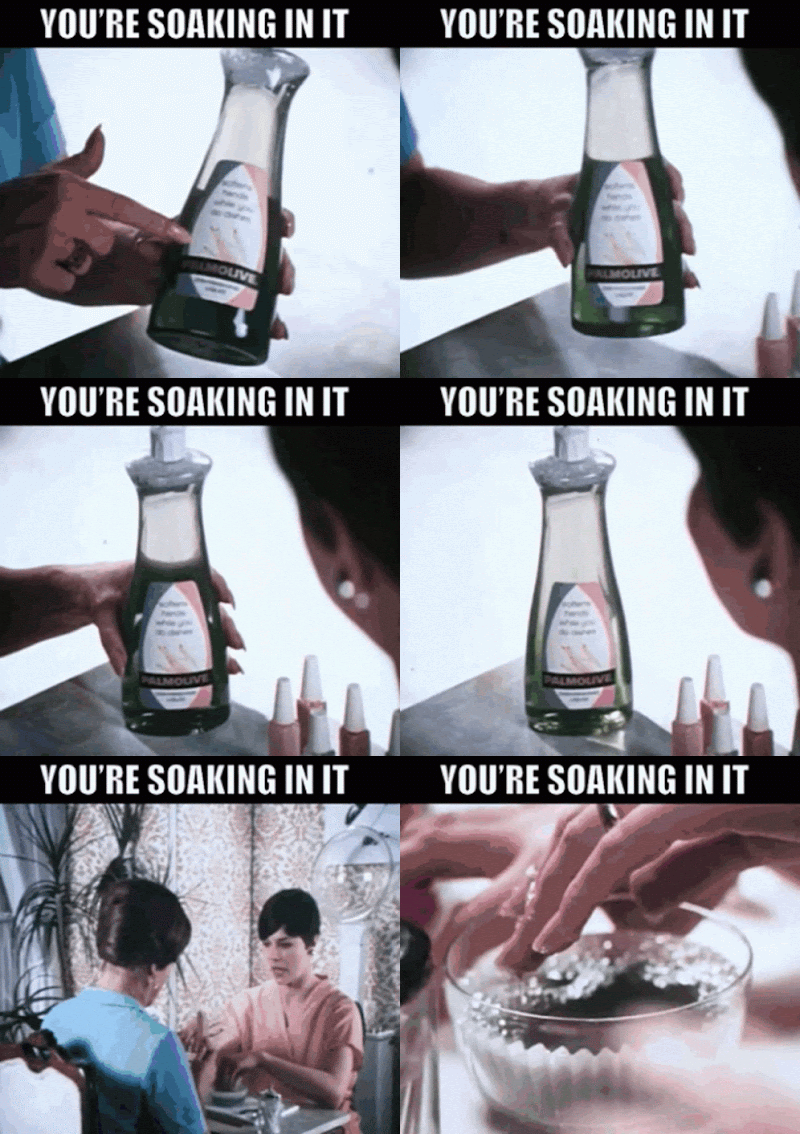
But what about love? Well, per the old Palmolive commercial, we're soaking in it. That's the default state, period. All the drama and the rich people problems and the egoic neediness and willfully frozen perspective - all the games we play and movies we pretend to star in help us forget that we're soaking in an eternal and infinite field of love. That's what the sunlight is. That's what the oxygen is. That's what it all is.
And, in fact, we are not foreign objects in that field. We are in it and of it, radiating while basking. Disgustingly sappy though it sounds, the truth is that at our foundation - beneath the pretending and the stories and the grippy fear and stress - we are love loving love.
But that's not what you meant. You were asking about earthly love. Red pill choosers: pray proceed.
I may be the only human who registers that when someone says "I love you" it has nothing to do with you. It's a statement of mere preference. And while it's a very nice feeling to be on the receiving end of the news that you're someone's preferred thing, that nice feeling is also impersonal and autonomous. Parallel lines all the way.
The best human beings can do is to say "You're my favorite figurine in my glass menagerie", and, if they're very lucky, the other person will declare them their favorite figurine in their glass menagerie. That's the height of human relationship. The best it can apparently get.
It's even more troubling than "parallel lines". It's co-narcissism, like binary stars self-servingly leveraging each other's gravity to accommodate their respective trajectories. "She says she loves me, and it feels nice, and to be loved is to be seen and understood, because people who think highly of me see the real me."
Why did I love the women I loved? In retrospect, I have no idea. They were attractive, they smiled at me, and they told me I was their favorite. Honestly, I think that's about it ("Isn't that enough??"). I felt seen, because I ran on the conviction that those thinking highly of me saw the real me. They were good solid people! So those who made me their very favorite figurine, well, those people were, obviously, paragons.
Am I renouncing love? No way! Again, we're soaking in it!
Dale Carnegie deconstructed things rather nicely, but did not go far enough. If you keep pulling the thread he found, the whole thing unravels. Which, again, is fine. This is not a deep ride. It's a light and delightfully varied entertainment (our baseline - eternal sea of infinite love - gets boring), and we literally wouldn't have it any other way.
If you're notable for something (you don't need to be a full-fledged celeb), there's a weird thing that happens: 100% of long-lost people claiming to want to reconnect are actually trying to connect you to someone else.
I've seen it happen over...and over...and over again. Most often, it's that a long-lost person (LLP) recently became friends with a fan of yours, who mentioned your name in conversation, prompting LLP to say they know you and can introduce you...and their new friend holds them to the promise. Or an ex-girlfriend has pushed a more neutral LLP to profer reconnection. Whenever LLPs get in touch, there's always a third party waiting in the wings. It never fails.
Notable or not, friends don't breezily (i.e. without some stated purpose) reconnect out of the blue beyond a certain point. A vague "Hey, just wondering how you are, let's catch up!" might happen after a gap of a few months or years, but never after 5 years. 5 years is a threshold past which out-of-the-blue LLPs have some agenda beyond the breezy catch-up they claim to seek.
Private message to one particular reader: I'm sorry for your loss and wish you the best, but I'm unfortunately not interested in what you're interested in, and I've seen through your effort to connect via the Ruskies.
First of all, a person can't be famous, as I argued here.
But if you've read that and still dream of fame - i.e. to hear your name uttered widely, with or without the use of trained parakeets - then consider this.
I'm quietly friends with a major Twitter celebrity. You've likely heard of him. He's really, really, no, really busy and overextended, and I understand what that's like, so I pretty much leave him alone. I know he won't come to me much; I go to him, and only infrequently. If I delight him, he’ll return the best he can offer: a nano second of attention in the form of some ragged snatch of communication that sounds like it was composed in a war zone but contains a faint but detectable degree of Personal Touch that, from him, required herculean effort. It's the equivalent of a normal person cooking an ambitious banquet for your entire family, or shoveling your driveway after a blizzard. Everything's relative.
We're friends because we're both no-bullshit and we both Know Stuff. We'd never insult each other by expressing the obvious. I send him chancy stuff that would infuriate most people. Candid advice, feeder ideas, and criticism when he screws up, e.g. needs to work his stuff more diligently because frantic pace skewed his judgement.
I'm the only one who does this for him, and he appreciates it especially because of (not despite) the fact that I do so extraordinarily tersely and bluntly, respecting his time. His vast ocean of peeps indiscriminately adore everything he says or does, and he's smart enough to see the danger. I get it, and he gets that I get it. We have an understanding.
Some time ago, I sent a missive, and he didn't reply. He never doesn't reply. Like most super-saturated people, he usually gets back in milliseconds. It's the only way to stay ahead of the tidal wave. But this time...nada. I figured my message got past him. There's a point where even friends get filtered. I get it. But a few weeks later, I sent another and heard nothing. And I concluded that our friendship was over.
Perhaps I'd been overly blunt. Or he'd grown tired of the straight talk. Or I simply stopped being a person who passed his ever-tightening process of human triage. No problem. But I certainly wasn't going to try a third time. I'm not the most prideful person, but I am way too cool to join the mob of fans frantically vying for attention.
I was wrong, it turned out, though I only found out accidentally (again, he's not someone who's, like, checking in much). From his perspective, he just missed a couple emails. C'mon, man, I'm overwhelmed. You know this. Don't be so quick to give up! I thought we were friends!
He's right. But so was I. From my perspective, our friendship was already squishy. A real friend is someone you can send random goofy crap to and they'll put up with it, not someone keeping you (intentionally or not) on tenterhooks re: justifying precious access via judiciously infrequent extra-succulent offerings. Such a friendship seems tenuous to begin with, so if you throw in a couple non-replies, geez, what's left, really?
When Chowhound hit big, and I got mega-slammed, I stopped engaging in much goofy stuff. I grew terser, and became spottily incommunicado with friends, who were hair-trigged to assume I'd evolved into some unfathomable higher-level thing, ala Gary Lockwood in Star Trek.
Depending on their own insecurity levels, I was somewhere between "Busy doing his thing and no longer accessible; oh well, g'bye!", or "The jackass who thinks he's too good for the likes of me." Few emailed a second time after non-reply, and none a third. They felt, understandably, too cool to join the mob of fans vying for my attention, so they "took the cue" and walked away. All are long gone. Some might be prodded to uneasily come out for a beer or a bite, exactly once, from sheer lookie-loo curiosity (maybe I'd show up in a Bentley with a uniformed driver or whatever; handing out shiny nickels to adoring children and evading paparazzi). But they've all moved on. It was a shock to discover this upon finally leaving CNET, with, at long last, some free time. Ready to hang out. Hey, where is everybody?
How'd you like everyone you know, and nice people you'd want to know, to be hair-triggered to walk away forever if you ever missed a text or two? Everyone else gets away with it. But if you're the least bit well-known, every move seems significant. You appear to send messages via your actions and inactions. One communications slip-up and folks feel dismissed and cross you off their list. And, of course, the tumult of fame (even the Z-list minor-league celebrity I once experienced), plus whatever blood-sucking monster generates your notoriety, ensures plenty of slips. Way more slips than most people. So many slips.
So are you sure you'd want to be famous?
By the same token, if you're famous and are the least bit not-totally-friendly-and-engaging to anyone anywhere ever, you'll forever be stamped as That Asshole. Other people can have bad days, but when eyes are tightly upon you, it's like NASCAR. They're watching and waiting for a bloody crash. They're thirsty for it. This is why big time celebs do that cheery hand wave and jump in the limo. Fans give them the willies.
Every once in a while some long-term otherwise silent Slog reader will pipe up to aggressively tell me how idiotically wrong I was about something.
(As I've often noted, I enjoy being told when I'm wrong, but 1. I could do without the aggression, and 2. I need to actually be wrong...which I am sometimes, though, maddeningly, people seldom notice.)
This is all I ever hear. No "hey, nice job figuring out the multiverse!". No "y'know, I think you're right about why God lets kids get cancer!" No "your theories about George and Kelly Ann Conway’s Marriage were hilarious!" Just these errant blips of tart disapprobation, odd coming from people who've stuck around here for years when there are 180 quadrillion web pages to choose from.
The same thing used to happen on Chowhound. In the blurry and feverish mental collage serving as my memory of the period, a framed needlepoint homily hangs warmly above it all, reading "HEY MORON YOUR FAVORITE PIZZA SUX". I quote not random trolls but people whose lives were improved by my restaurant finds, and who spent countless hours enjoying the friendly, useful community built by my adrenal glands. Some of them achieved modest repute imitating my writing style on, like, Tumblr or whatever. And at some point - it never failed - they'd offer heartfelt payback via marvelously brusque critique.
I've finally solved the mystery.
Mike Tyson goes into a bar. And some guy inevitably tries to pick a fight. Not because he dislikes Tyson. He reveres him, demonstrating his respect by the desire to match skill, challenge supremacy, swing dicks, etc.. It wouldn't occur to him to consider how any of this might affect Tyson. This, after all, is what Tyson's for. This is the function of a champion: to serve as the ideal against which we measure our own skills, so we can finally extend our arms into the air as champions, ourselves. Frickin’ cycle of life, bruh. Nothing personal.
If you think interrupting Mike's quiet conversation to make fun of his voice and tattoos makes me a disrespectful asshole, then you're the asshole, asshole! I wouldn't do this if Iron Mike wasn't the KING. Did you hear me? I think he's THE KING! Long live the king...as I do my best to provoke the motherfucker, ruin his night, and ideally beat him to a pulp.
Ah, the elevation of the hero...even hapless dudes quietly offering cool little magic tricks for the unrequited delight of total strangers*.
* - Those background circumstances are utterly beside the point, because we're not people to people. We're thin static images in their heads. Nothing's ever about you as full-fledged You. That's why we elevate birthdays. On your "special day", those around you adhere to a ritualized series of timeworn actions and canned utterances in supposed recognition of the real, unique, not-just-in-my-head you. That's the apex*!
* - This observation is only dark and depressing if you choose to dramatize and frame it as such. Disenchantment need not be a permanent state. It is, by its nature, merely transitional. Peer not ruefully back at vanquished illusion but forward to the unremitting love permeating the eternal actual now.
No One Loves You Like a Hater Does
A large team of workers manages the day-to-day operation of Chowhound.com's discussion forums. I haven't moderated the site in six years or so, yet haters continue to flatter me with their persistent misimpression of my omnipresence - i.e. assuming that I've personally deleted their postings. Crackpot blogs frequently make such statements (often with Nazi imagery).
Sanity check: Chowhound receives upwards of three thousand postings per day. Phalanxes of moderators work day and night to vet a mere fraction of it all (our users pick up the slack by reporting missed problems). And yet I still exist for some individuals as an all-seeing Dr. No, ensconced in my acrid star chamber, relishing my power (pause here to suck air through flaring, vindictive nostrils) as I delete their postings when they act like shmucks - as people sometimes do in online communities (me too; I occasionally get deleted, as well).
No one I actually know would ever mistake me for omnipresent. And no mere fan would deem me capable of such awesomeness. No one admires you, respects you, loves you, like a hater does.
I'll never forget the time one of the most piqued of the lot, a man I'd never met, sent me a profanity-laced email expressing in most damning terms what a "self-absorbed holier than thou sociopath" I am. He concluded with an earnest invitation to come to dinner with him and his wife the next weekend (he also once guessed my instant message screen name and popped up to say a chipper "Hi!"). It wasn't the first such invitation I've gotten over the years.
I ran into an old friend who's a bit famous now and appears to desperately crave more fame. Unable to control myself, I offered a provocative observation.
"You can't ever be famous."
Of course, he received this in the least thoughtful way, and began to explain how, dude, he's already famous.
"Which part of you is famous, though? Your elbows? Your ear lobes? Are your armpits famous?"
He thought it over, and replied "All of me!"
"No. Not all of you. Hardly even part of you. All that can be famous is your name. The label. And you're not the label. You're a three-dimensional person with an inner life and complex backstory. You're not your nametag (weren't you you before you had a name?), and only your name can be famous."
"My name is famous because of who I am and what I've done!"
"Are you sure of that? Let me ask you something. Are you a film fan?"
"No, not really."
"Good! You've heard of Ingmar Bergman, of course."
"Yes."
"Have you seen any of his filmes?"
"Nope."
"Good! Ok, say you're at a dinner part and Ingmar Bergman turned out to be sitting next to you. Would you be excited?"
"Sure! He's a major figure!"
"So without ever having seen his work or knowing anything about him, you'd nonetheless feel eager and appreciative?"
"Lots of people who do know his work love him, I know that."
"But are you sure they do? Maybe they caught a film in college, years ago, and have utterly forgotten it...mostly remembering the mere act of remembering it. Maybe they hollowly mention his name to make themselves seem savvy. And of those who've made a serious study of Bergman, how many have really keyed in and gotten him - fully appreciating not just the movies as movies but his unique personal contribution in any deep way? Maybe a few hundred, max. And of them, how many know the actual man, beyond interviews and such? How many know what he likes for breakfast?"
"You're being ridiculous!"
"Am I? Back in the Chowhound days, I met a slew of people who recognized my name, got slightly breathless (embarrassing me at first, when I still assumed it had something to do with actual me), and then began chatting me up about, like, trendy restaurants, making it clear they had no idea of me or my work. Just the name. And the name's enough, because that's where the fame hangs; on the name.
Even those with actual familiarity rarely/never showed deep recognition beyond a sense of my voice and vibe. 99% of fame attaches to a name tag, and the remainder - the best case scenario! - recognizes an overarching vibe; an aroma. And that obviously is not who we are. That's why I say a person can't be famous."
"Well, I don't need complete appreciation. I'm happy just to have my name out there!"
"Great! But, then, I have a suggestion: Buy yourself a dozen parakeets, and train them to speak your name. You'll hear it ringing out unceasingly."
I know several mothers who trained their toddlers, early on, to rotely utter "I love you, Mommy," encouraging this behavior via standard psychological feedback actions (none was so gauche as to hand out cookies, like rewarding a dog for heeling, but they all came awfully close). The parakeet thing is not so far-fetched.
"Dude studies with Bill Watrous!" marveled Erich, the worldly and ordinarily cynical sixth grader trombone section leader in my elementary school's concert band. "Dude" was a hotshot player from a nearby middle school. For Erich to be so envious of another trombone student - when he, himself, had lived so large and seen so much - was nearly inconceivable to me. I'd never heard of Bill Watrous, but kids at that age imprint instantly. Bill Watrous, whoever he was, was definitely the bomb.
Erich was impeccably tapped in, as always. Watrous, at the time, was the hottest name in trombone. He was the Elon Musk of trombone; the LeBron James of trombone. I detested his playing from the moment I first heard him a couple years later. But at that age I hadn’t developed a cohesive perspective, so I was able to hold contradictory positions. I could hate his playing while idolizing his status. After all, we’re talking about Bill frickin’ Watrous here!!
Here’s how I sized him up at the time: Watrous spewed breezy streams of fast high notes in a glibly detached monotone. The effect was both laid-back and tiresome. If Axe Body Spray could play trombone, this is how it might sound. His tone was so weak (one of several compromises facilitating his bag of technical tricks) that he had to practically swallow the microphone into the bell of his horn to be heard. There was not much in the way of phrasing or expression, more just a dense packing of flurries of notes. That's it: dense note-packing.
I would take the opposite approach, cultivating a rich, fat sound which projected to the rafters. I'd swing hard and listen with utmost attention to my fellow musicians, never merely gliding over them like wallpaper. I wound up incarnating a 75 year old black man in the body of a suburban white kid.
Here's a sample of Watrous' playing:
Here, by contrast, is my hero, Slide Hampton, who also had formidable technique but who struck me as far more swinging and expressive:
Jump ahead nine years. I’m attending University of Rochester while taking classes at the associated Eastman School of Music. I still dislike Watrous’ playing, but certainly acknowledge his technique and ease. And - hah! - I am offered an opportunity to study with him for a week over the summer. I don’t know quite what to expect. Check out the early photo, above, and see if you don’t share my trepidations about his ego.
Sure enough, he showed up in a shiny Adidas track suit - like an NBA star on his off day - and a haircut straight out of Austin Powers, like some groovy modster from the 60s. A real star, baby! Yet he spoke to his students like colleagues, without a trace of condescension. And I was flabbergasted by his reaction to me.
I assumed Watrous would hate my playing as much as I detested his. I was, after all, the anti-Watrous. But, to my shock, he liked me...just as I was. He didn’t tell me to go buy a smaller horn, or to reign in my fat tone, or to work on cramming a jillion notes into every gap. He didn’t suggest that I take everything up two octaves, or reduce my intensity. In fact, he was far more respectful of my choices than even my most like-minded teachers, who were constantly pestering me to tone it all down.
He offered suggestions, but only to help me achieve what I was already aiming for. Watrous respected my vision, and didn't urge me to be more like him. In fact, he suggested that I tell anyone who didn't like my musical choices to go screw off. No one had ever spoken to me like that before, much less Bill frickin’ Watrous.
Watrous shook up not only my assumptions about Watrous, but about music and art, generally. In fact, I’m still processing the lesson. He told me about a trombonist whose playing style was downright lazy. Notes wouldn’t glibly propel from his horn, as with Watrous, nor did they waft out, as with me. Rather, they’d tarry and slobber, like a depleted wind-up toy. But his playing had personality, so Watrous respected and adored it.
So: what the hell had been my big problem re: Watrous' playing? Why had I been so judgemental about him? You can respect - even love - a thing even when it's not your thing. Again, I'm still processing this, many, many years later. It's a lifelong effort.
I was not making out well in music school (for reasons explained here), which stamped out clones more along the Watrous spectrum - certainly a trendier choice than my geriatric African-American inclinations. I was rejected like a slug coin. I wasn’t permitted to major in music and the illustrious top trombone professor refused to teach me, sloughing me off on the backup teacher (who I now recognize, with immense shame, was a far better player and teacher).
I told Watrous this, and he said “I know the guy. You go straight to him and tell him Watrous says to get off his lazy ass and teach you, and that it’s important.” I was grateful and flattered, but too young to understand how seldom people put themselves out there like that. He didn’t need to do this for me. It shot right by like a heady blip, but now, shortly after Watrous' death, I'm belatedly feeling a fuller appreciation.
That fall, I returned to school, delivered the message, and the haughty top-string trombone professor was dumbstruck. He knew me, slightly, as the liberal arts guy who sloppily dabbled a bit in music. I was a dilettante, unworthy of his time or attention, yet here I was, bearing a directive from Jesus Christ himself. The poor fellow just couldn’t reconcile it. It really messed him up.
This was the first of many times where I would uncomfortably witness the real time shock of someone who'd severely underrated me getting The News. At age 55, it still happens. An old pal, who'd missed the Chowhound period and never really accepted that his goofy musician friend had ever done anything significant, recently reported, dumbfounded, that a food-loving colleague had turned giddy upon learning that he knew me. It doesn't happen often; just enough to keep me awkwardly disoriented.
Thankfully, the top teacher didn’t wind up teaching me after all, and I stayed with the good guy....who was neither important nor famous, but who offered a rare direct link to the late great Remington - hallowed be his name - who was a titanic influence on all my previous teachers. While Top Guy was an egotist whose playing lacked soul, my guy was warmly caring and a truly great player. Exactly the teacher for me, despite my foolish angling to get with Top Guy.
I'd gotten lucky. The haughty local capo was interested in turning out clones (and correctly sensed that I’d never submit), even though Bill Watrous, the capo di tutti capi, saw more deeply.
I’ve seen this pattern repeat constantly; the pack is inevitably smaller-minded than the top dog. I hung around a lot in Jamaica Queens in the late 80s with the guys who were developing hiphop by day and playing jazz by night. The scene included a contingent of very “militant” black Muslims who didn’t like white guys much, and they gave me the serious cold shoulder. Their spiritual mentor was an elderly trombonist who I heard a lot about, and who I expected to be as harsh as the surface of Venus, one Hassan Hakim (father of famed drummer Omar Hakim). But when I finally met Hassan, he was the sweetest guy ever and we became instant best friends, going out all the time to sit in with local rhythm sections. Hassan, who was in his 80s at the time, had little technique, but I hung on every swinging, uplifting note like a gift from Heaven. His followers, who hadn't suffered a fraction of the persecution, poverty and Jim Crow that he had, had sadly misinterpreted his perfectly admirable urgings to cultivate backbone, dignity and self-respect.
When you finally meet the top dog, it's always different.
I'd shallowly idolized Watrous' celebrity while stupidly disdaining his playing. I should have admired his abilities and embraced his originality - however different from my own choices - just as he'd embraced mine. As for the celebrity and status, none of that should ever have been a thing. He’d knocked himself out for me, and I was the furthest thing from a celebrity. So, again, what was my problem?
I’d made assumptions about Watrous’ arrogance, but I was the arrogant one, disrespecting an influential master who respected me, some kid, far more than I deserved. And I'd distracted myself by chasing celebrity for celebrity's sake - twice in this tale, alone (with fortunate results in both cases, though it took years to fully purge the impulse). I should have embraced more broadly while navigating my own course more narrowly and thoughtfully. Instead, I was backwards in both aspects, turning into a judgmental, status-conscious little snot who let himself be distracted from the only thing that matters: the music. I‘d thought I was more "musical" than Bill Watrous. Ha!
I was really sorry to see you go, Bill. Thanks for teaching me so much, even if not one iota of it was about trombone. Also: you played your ass off. You were absolutely the best Bill Watrous ever!
"Never meet people who consider you their hero." Me
"Meeting chowhounds always gives me the willies!"
Bob Okumura (Chowhound co-founder)
I've always found it oddly hard to articulate why I've never participated in Chowhound social events (and, for that matter, why I keep a low food world profile even though I haven't worked as a critic in a long while). But I think this gets to the gist of it:
Human relationships can be strange and difficult even for the most sociable of us. We're all more or less ok interacting with neighbors, coworkers, waiters, etc. But even in such familiar relationships, people flounder when situations push them off-script. Such moments can devolve into misunderstanding, offense, and worse.
Humans don't do well off-script. As they flail to regain solidity, randomly bizarre or ugly impulses can briefly arise. Even at best, results are uncomfortable.
And there's very little familiarity, to begin with, when it comes to encounters with admired strangers. There's no script at all for that. I, personally, am not a lover of scripts, anyway. I much prefer improv, so it's no biggie for me, either way. But with script people, things can get weird.
See a related exploration of how Surprising Behavior Breaks Things ("An exploration of Groucho Marx, computer hackers, beta testers, Banksy, and Kali the Goddess of Death").
If you ever find yourself in a room with 100 people who are big fans of what you do, here's what you can expect:
35 of them will show positive vibes. Such people are a pleasure to meet, but also a bit creepy. We know how to meet new people, and we know how to be admiring fans. But meeting someone whose work we admire is unfamiliar social ground (when even familiar social ground is hard enough for most people). So, weird things are said and strange things happen.
One problem is they see you primarily as an image. And images don't comfortably translate into flesh-and-blood. As I once wrote:
"[Fame can feel] quite disturbing and artificial. For one thing, it's never truly directed at you; it focuses on a facet of a layer of a static image which happens to have your name affixed to it. And you play little part in choosing which facet of which layer of which image is focused upon. The assignment process is remarkably similar to the way children get dubbed with nicknames."
20 of them look a lot like the previous group, but as you talk to them, it becomes eerily clear that they know almost nothing about you - haven't read a word you've written or listened to a note you've sung. They just recognize your name, and that you're well-known in a field they think is cool.
If it seems crazy that such people would consider themselves fans, take mental stock, yourself. Have you actually read every writer, heard every singer, and viewed the work of every filmmaker for whom you have a fond feeling? I'd bet good money that more than one person has approached Ann Coulter to tell her what fans they are, and to encourage her to keep giving hell to those damned conservatives.
25 of them will cringe at the solicitousness of the crowd. Resisting conformity - not wanting to, like, kiss your ass - they'll feign cool indifference. If you're a sensitive type, such people will unsettle you, because their efforts to appear uncaring are indistinguishable from genuine ill will. And you, in turn, will appear insecure and needy via your discomfort with people who appear to simply fail to fawn all over you.
10 of them will unsettle you whether you're sensitive or not. They'll go too far feigning indifference, to the point of open hostility (this is the deal with haters). They want to provoke attention - any attention. Of course, if you show them the slightest kindness, they'll fawn all over you....and in that, too, they'll go too far.
5 of them are egotists who feel challenged by your very existence. Their being fans of you, but not vice versa, is an asymmetry which they can only blame on you. They surmise you're an arrogant, stuck-up, conceited asshole...before you've even said a word. They will put everything they've got into taking you down a notch, because, really, who do you think you are, anyway?
The remaining 5 aren't offended by the lack of automatic reciprocation, don't try to provoke attention via bad behavior, don't pretend they don't care, actually know what you do, and understand that you're not the embodiment of some static image. They view you as a person - no more, no less - but with a mildly positive disposition due to their admiration of your work. Repeat: this only happens 5% of the time.
The best film about fame, dark though it is, was Woody Allen's "Stardust Memories"
I'd imagine highly attractive people draw attention in roughly the same proportions. I'm grateful not to be handsome; my looks don't make people act weird; there's no image-versus-reality confusion. And the cool 5% aren't like needles in haystacks; they're the only ones who want to talk to me!
You probably have no idea that a Slog article I wrote years ago ("How I Outgrew Libertarianism") suddenly and randomly was anointed a week or so ago with widespread online attention via a link on Reddit (which quickly metastasized to other sites). I wouldn't have known, myself, except for the appearance of a slew of new comments here in response to that old posting.
The crowd arrived en masse, like a horde of cicadas. They read and they snarked, and, just as suddenly, they were gone, on to the next momentarily trendy nexus of attention. You can read the couple dozen comments posted here to the Slog, but untold thousands of them sprung up on Reddit, Metafilter, and elsewhere (google for the full picture - and note that there are several separate humongous Reddit discussions). To prolong the cicada metaphor, the din and droppings all played out in remote fields, and it was all completely impersonal.
Almost no one read beyond the one Slog article, or, judging by the conversation, registered that I'd founded a web site some likely visit. And most appeared not to have even read the article closely. Disagreers off-handedly rejected it as poorly-written garbage, while, completing an eerie equilibrium, the confirmation bias of kindred spirits was fed. I didn't perceive much in the way of careful attention or insight.
But the really jarring thing is that while I'd written the piece with great care, and felt that I'd stated my points quite clearly, not one phrase or idea failed to provoke caustic snarky miscomprehension. Writers aspire, above all else, to be clearly understood, so the degree of utter misapprehension - by commenters who seemed otherwise intelligent! - left my teeth grinding. At this scale, there was no way for me to circle back and rebut. I'd have just been buried in mounds of empty snark.
The strange thing is that, having browsed hundreds of sharply critical comments, prompting me to reread the piece several times, I still can't see how I could have done a much better job of explaining the personal experience I was relating. When people are determined to misunderstand, misunderstanding's unavoidable. Per Maslow's hammer, if all you have is snark, everyone looks like an asshole.
Worst of all were those who agreed with me but tried to reason with the haters, conceding that while the article might have been poorly-written by a conceited shmuck, hey, c'mon, the guy did at least have a couple of interesting things to say. I learned early with Chowhound that haters are nowhere near as bad as defenders. Lord defend me from my defenders.
The scale was inhuman, the snark eviscerating, and the whole episode felt entirely unpleasant (exception: the one guy who posted that i'd helped change his mind, who I chalk up as an anomaly). These "Internet fame" moments demonstrate the utter depersonalization of mass attention - and the sheer vanity behind any effort to "get one's voice out there." At best, one can stroke confirmation bias while irritating the bejesus out of everyone else , but that's a dialectic of little interest to me. Heaven, I think, is a small open-minded following of readers willing to at least entertain unorthodox views. So I sincerely thank all of you non-cicadas for reading along!
Regardless of your politics, Michael Lewis' sprawling, fascinating feature in the new Vanity Fare, "Obama's Way" is unmissable. It's a historic first-hand look at the presidency by a journalist who was embedded by his side off and on for six months. As you might expect, Lewis' backstory of how the project went down is interesting in and of itself. He tells it on Fresh Air and on The Leonard Lopate Show.
The article's quite insightful, but Lewis misses one important point; many of Obama's observations about the position apply equally well to celebrity, generally. For example, the president is quoted as saying:
"One of the things you realize fairly quickly in this job is that there is a character people see out there called Barack Obama. That’s not you. Whether it is good or bad, it is not you. "
"...mass attention actually feels quite disturbing and artificial. For one thing, it's never truly directed at you; it focuses on a facet of a layer of a static image which happens to have your name affixed to it. And you play little part in choosing which facet of which layer of which image is focused upon. The assignment process is remarkably similar to the way children get dubbed with nicknames."
Two thoughts:
1. You cannot be famous. Only an image of you can be famous. (That said, even the non-famous are known to those around them only in terms of images and approximations, but at least they're more faithful images and approximations.)
2. I once read an interview with Bill Murray where he said he can't understand why anyone would want to be rich and famous. Rich, ok; maybe. But...famous?
"Fame is a by-product of doing something else. You don't go to a restaurant and order a meal just because you want to take a shit!" -- Banksy
I've become a fan of Doctor Who - the British series about a time traveler careening around the universe in a phone booth. I'm speaking not of the first 26 years of unbelievably cheesey, low-budget Doctor Who, but of the reinvigorated Doctor Who that launched in 2005 with much higher production values.
The series' central conceit is that the Doctor, a 900-year-old Time Lord from another planet, brings a series of human companions along with him as he traipses around the universe. The dramatic function of the companions, of course, is to provide an excuse for the Doctor to explain what's going on to the audience. If there were no companion to serve as our proxy, this would just be some dude silently doing inexplicable things in inexplicable places.
But after viewing a slew of Who, barely tolerating the dramatic kludge of the companion, it hit me: if the Doctor had undergone his adventures without folks along for the ride to observe how cool it all is, it wouldn't seem cool at all.
I've seen people be bored stiff doing the most remarkable things. The glum operator of the Aeri de Montserrat cable car outside Barcelona, who spends his days traversing a spectacular misty mountain face in a cabana dangling from a cord, might as well be peeling potatoes.
The Doctor must see himself through others in order to avoid an existential void. Adventuring around the galaxy for nine centuries would soon come to feel like the most pointless tedium without an external reference point to serve as mirror. All glamour is strictly secondhand. To feel glamourous to oneself requires vicarious self-reflection - a tangly maneuver, indeed.
We've all been in situations where we failed to notice we've said or done something interesting, smart, or funny - until someone around us took note. We've all passed through stages of our lives where we were too busy living it to notice what it was like, remaining oblivious until we could see it via the viewpoint of an outside observer (or, much later, via the hindsight of one's own memory). On those rare occasions when I write or play something affecting, I can only really appreciate it, myself, when it's expressed by others. There have been a number of times when someone's told me how a piece of writing or music I've created has affected them, and I've gone back and revisited the work, and, only in that light, was able to really understand what I'd done.
The problem is that creative people need to shun self-consciousness. It's the death of spontaneity, so attention must be riveted on the doing, rather than on the doer. The periods of our lives when we're too busy living to notice what it's "like" tend to be our most content and productive periods, in large part because we've not distracted ourselves via self-reflection. Divided focus is weakened focus, and so the richest results come from persevering in an unselfconscious oblivion. Results are best when you don't stop to experience them. Show me someone who talks a good game about what she's trying to "accomplish", and I'll show you someone who's more talker than doer.
To make magic (creativity is what magic is) requires heedlessness - utter immersion in moment-to-moment process. Food results from a great chef's work, but he rarely sits at the table. The makers of the greatest port wines never taste their best work, which require decades to mature. Few musicians dance. To take one's own measure is to quench the creative flame - to taint inspiration and reduce spontaneity. The centipede gets along perfectly well until made aware of his hundred ungainly legs.
What's worse, the reflection is never quite apt. Many are the creative people who've been deranged in trying to be "understood". One never can be, precisely. So it's best to pay reflection no heed at all.
A magician fades into oblivion as his work gains power. He can only take his own measure via the reactions of others, but he shuns that fatal yoke at all cost, working on faith alone, with single-minded commitment to process.
But if the Doctor doesn't remind himself how cool and adventurous he is, seeking neither affirmation from others nor self-conscious glimpses into the mirror, how does he forge on for nine hundred years? Or, for that matter, even for seventy? We live, alas, in a society where such a prospect is unimaginable; where the only reason to do anything is so that one can claim doership.
After leaving CNET, as I considered my next steps, I arrived at a small pearl of insight. What makes me happy, I realized, is writing well and playing music well. Period. "Full stop", as the British say.
My most cherished moments have been spent embroiled in the creative process. After that comes only problems. I detest having to find channels for my output; the touchy ritual of petitioning unhip, haughty gatekeepers. And then there's the issue of reaction. While I'm pleased when my work happens to be appreciated, I understand that the active pursuit of acclaim is a house of mirrors.
Creative people quickly learn to expect a zany mix of zealously wrongheaded admiration and flat out rejection in response to their work. And the killer is that success rarely correlates with quality. So one must labor within a madness-making, completely erratic feedback system (it's worth noting that lab animals become mortally stressed when reward and punishment are randomly meted out). There's no predicting or controlling how your work will be perceived - or whether it will be perceived at all. Those lucky few who attain some perspective on it all (usually via great success or failure) quickly realize that it's foolhardy to stake one's self worth on an uncontrollable, capricious system. Far better to just do the best work one can, and let chips fall where they will.
Of course that's not how you build a career. That's not how you get your playing heard and your writing read. That's not how you cultivate contacts and build a following. That's not how you "become somebody". And such things can hardly be disregarded if you aim to live off your creative work. That's why I deeply respect artists like Charles Ives, who plied a humdrum day job so he could compose in the spirit of pure creation.
It's not that I'm too lazy to hustle. I love to work hard; there's nothing more arduous than the task of creating something original and beautiful, and polishing it well beyond the point of "good enough". But the best results come from immersion in the doing, without regard for the distractions and turmoils of the aftermath. When attention divides, quality suffers. And isn't quality the point?
It seems self-evident that artists require an audience - the bigger the better. This truism is a new development in the history of creative arts, but the striving for attention is now pandemic. When the impulse sneaks up on me, I remind myself that I created a platform once which grew huge, and found its hugeness a crushing burden. The reality is that unless you are driven by an unquenchable thirst to be projected upon the public consciousness, mass attention actually feels quite disturbing and artificial. For one thing, it's never truly directed at you; it focuses on a facet of a layer of a static image which happens to have your name affixed to it. And you play little part in choosing which facet of which layer of which image is focused upon. The assignment process is remarkably similar to the way children get dubbed with nicknames.
So I find myself writing this Slog (in addition to several projects outside the public eye), read by a few dozen readers, by far the smallest readership of my career. I know a thing or two about guerilla marketing from my experience growing Chowhound into a national brand sans marketing budget, but I've done little to try to expand this audience (in fact, I've actively tanked it by jumping wildly among varied subjects). Rather than scheme about traffic, I bear closely in mind that bigger is not better; that more eyeballs mean more pressure and more non-creative obligations; that what satisfies is to create work which hopefully has some magic to it...period. Full stop.
Anything beyond that is distracting at best and painful at worst. Fretting over low readership can make a writer feel upsettingly puny, but the weight of a large audience (portions of which will mistake intentions, clamor for attention, and enviously/admiringly shoot poison darts) brings its own world of hurt. As with so much human experience, pain arises only when one pauses to gauge how one measures up. Actual doing never hurts; creation is a peak experience, and it stays peakiest when quality-for-quality's-sake is the sole goal.
We think of JD Salinger as an embittered eccentric because he turned away from us. But consider, for a moment, that any number of people who you don't personally know live with their backs to you. It would be madness to expect a random stranger to live his life within our purview because we, singly or en masse, happened to take an interest. Does anyone really owe us that? Is there a degree of attention which somehow commands submission - and which therefore makes a person something more (and less) than a person?
I'm neither bitter nor eccentric. I love doing what I'm doing, and have never felt more creative or hopeful. But while I welcome you here, and can nearly exhaust myself toiling to make my writing hopefully worth the time you kindly spend reading it, I honestly don't care if there are a thousand of you, or just one of you, or none at all. And I love this newfound heedlessness as keenly as Dr. Zhivago loved Lara. Discovering the nucleus of my happiness has been intensely liberating. I've cracked the satisfaction puzzle.
And so did Salinger - who, vastly more eminent than I ever was, had reason (and wherewithal) to retreat more deeply from commensurately greater pressure and distraction. If there's madness to his story, it's that a deluded public would equate the spurning of limelight with dysfunction. The public's sense of entitlement makes it unimaginable for an object of its attention to opt for a private life; the natural human condition of anonymity seems freakishly unnatural. But most puzzling of all is the notion that a writer writing writing which you and I can't read is hardly a writer writing at all.