The following posting from August 2018 was was my most literarily ambitious—and least popular—posting. It's a challenging read, much as Shostakovich is a challenging listen. But it offers a rare big picture view, from a musician's perspective, of the evolution and degeneration of artforms.
My discussion of a composer who refused to move in straight lines (or flatter expectations, or adhere to templated notions of coherence) didn't land for readers because it failed to move in straight lines, or flatter expectations, or adhere to templated notions of coherence.
I was channeling Shostakovich while analyzing him. And while it (and he) might seem wildly chaotic—unbridled and just too damned much—I (like him) counted on audiences noticing the control and craft. A rock-steady intentionality governs the apparently rocky ride, and lands the observer in a predetermined condition.
A tumultuous puppet show oughtn't make us doubt the puppeteer's discipline. Watch the strings: If they're wielded expertly, the tumult is content, not failure.
But in this case, control, craft, and intentionality were not parsed because, being no Shostakovich, I don't merit a careful, generous read. A composer of Shostakovich's name recognition compels infinite generosity. His work might truly be the disorganized muddle it seemed in 1936, but no one would find fault with the great composer, while a lesser name, having built an equally wild ride with skill and control, seems undisciplined.
Riled up by Christopher Lydon’s terrific Open Source podcast on Shostakovich, I ventured to Tanglewood last weekend to hear his Fourth Symphony. It’s always a powerful, emotional experience; a triumph born of failure. As so often happens in the arts, the composer tried to imitate (in this case, Gustav Mahler) and failed magnificently.
Mahler wove popular songs and motifs, gestures and dogma, commentary and meta commentary, seamlessly into his majestic symphonies. You always know when an orchestra is outfitting itself for Mahler. Every half-decent brass and percussion player in town gets called in to fortify those sections. In this, his most Mahlerian effort, Shostakovich beefs up the band aplenty. A furniture store of basses, along with a complete second set of timpani and a redundancy of tubists (scary gleams in their eyes, awaiting the bloody meal) are just a few of the upgrades.
But I'm sorry, Dimitry. You know I love you, but you've produced no bold smash of schweinefleischy indomitability, because you're just not that guy. Rather, the Fourth Symphony plays out like a nerdy, nervous, soulfully acerbic patchwork of musical tchotchkes. Pravda was foolish to call it "muddle not music", but, political pressures aside*, you can't blame them for failing to appreciate such a sharp turn. Shostakovich's brilliant cornucopia helped usher in a more ADD approach to 20th century art, eventually culminating in postmodernism (as well as at least one soulfully acerbic blogger). In retrospect, it was a glorious muddle of profound musicality.
A style was born, even if partially the product of serendipity. Charles Mingus tried to write like Duke Ellington, but he lacked Duke's jaunty elegance and formal structure, so the result was a rumbling slurry of primal soul. Many of us prefer that slurry.
Mahler has inevitability. His music may sound dissonant and clashy to the uninitiated ear, with more dense cross-talk than a Robert Altman film. But it dependably presents as a unified whole, all elements seemingly preordained. As disparate as the strands might seem, one cannot imagine revision. By contrast, Shostakovich's work feels like more of a ride, a personal journey through 1000 ingenious inflection points. Inhabiting the composer's point of view (Mahler had no POV; he was channeling God or whatever, and you will obediently sit and you will listen), any effort to anticipate where he's going is swiftly toppled by tsunamis of feverishly fertile invention. One’s expectations are methodically and craftily defied.
It amounts to open warfare against expectation. Whenever a passage turns prettily tuneful, some unimagined dissonance - spitting trumpets, kooky double reeds in buzzing half-steps, or WTF jungle juju percussion - descends like a Terry Gilliam animation to wreak havoc and avert complacency. It all hangs together beautifully, but it's pastiche; a dense warren of delightful interludes rather than a structure of momentous revelation.
While Mahler preaches at you, Shostakovich endlessly fucks with you. Temperamentally unwilling to erase his own tracks, he obviously wants you to know you're been fucked with. Never is the listener allowed to feel comfortable; ears are deliberately denied what they want to hear. Instead, you get something fresher, more nuanced, personal, and rife with bittersweet irony. Like a great used bookstore, there's scant hope of finding what you were looking for, but you will assuredly take away greatness.
What, exactly, does the ear want to hear? This is a thoughtful question with a thuddingly banal answer: the clichés of the previous generation, that's all. Bach piously adhered to rational principle - principles he himself had largely initiated. Before art can go “off the rails”, rails must be established, and there was no greater rail-builder than Bach. But the obedience was short-lived. Mozart applied his genius to gleefully, wittily, brilliantly flout those rails, barely skirting wreckage. His music, as heard at the time, was a delight (or a misery, depending on your disposition) of elusiveness, never quite yielding the expected. "This is the part of the meal where you're traditionally offered an ornate chocolate petit four, but here, instead, is a thimble of rich hot cocoa dosed with a provocative touch of black pepper." Mind blown! (By the time Shostakovich appeared, a few centuries later, the metaphor might be scorching cocoa beans shoved up your nostrils while your temples are tenderly massaged, the burn extinguished in the nick of time via a dainty spritz of chilled champagne infused with a note of nightingale sweat.)
Every great creative artist both rebels against the previous generation and lays down updated rails to be defied by the following one. Art advances via a chain of generational defiance. In all eras and in all arts, a few are compelled to shatter complacency - denying the audience the anticipated tropes, and offering, instead, something enticingly skewed.
Shostakovich's rebellion was both deliberate and accidental. Failing to fully embody Mahler, he was diverted by Gustav's gravitational field into a path of his own, following an instinct to mischievously sideskirt convention. Every snatch of tunefulness explodes like a trick cigar; every lovely bit is spiked with bitter bite; every soothing flow chafed by an intractable grind. Blessed with exquisite taste, he was sensitive in doling out surprise, startling open-minded listeners into astonishment rather than pummeling them into confusion.
It's shocking, as a jazz musician, to recognize how far classical composers of this period had progressed. At that time, jazz was flattering its audience with unashamed facile conventionality. Jazz had started as a movement of inventive rebelliousness - marches, waltzes and sappy popular drek were cheekily adorned, defiled, swung up, profaned and debauched. It was beautiful. Mozartian irreverence...and funky! But then it grew popular for a while, and commerce does not encourage the deliberate defiance of expectation ("The film I'm envisioning will be sort of a cross between Forrest Gump and Shrek...")
While jazz had grown docile in its eagerness to gratify audience expectations, classical composers were building sophisticated terrains of dissonance that wouldn't influence jazz until decades later. It was only its death knell as a popular form that recharged jazz' original spirit of rude rebelliousness and invention.
By the mid 1960s, jazz had nearly caught up, but, by then, classical music had painted itself into a corner. Movements like serialism and microtonalism had seemed destined to open up vast landscapes of possibility, but, paradoxically, vistas only contracted and desiccated.
The vitality of an art form derives from the friction between rail hugging and rebellious invention. Creativity is kindled by confrontation with status quo. Thousands of microdecisions emerge from this confrontation, aggregating to imprint a creator's vision, personality, taste; perhaps even soul. Without any rails whatsoever (or with a new, theoretical set of rails that haven't been - and likely never will be - internalized by one's audience) you're left with sound rather than music. We hear many composers mucking around amid infinite space, rather than purposefully blowing up a railroad. Which strikes you as the more engrossing proposition?
Both jazz and classical music have settled into a steady state. Rails fully obliterated, it's now all about performance rather than creation. There's money to be made in reviving old repertory, and armies of conservatory graduates deliver technically accomplished renditions of each era's status quo without a trace of rebelliousness. The performance even of dissonant music once considered subversive now carries the edgy gleam of a Perry Como tribute.
The greatest creative docility is now found at the intersection of composition and performance, in improvised music. Since leaving Chowhound I've roamed unsung nightclubs like Rip Van Jazz Cat, searching for the indomitable creative spirit of thoughtful defiance. But I've heard nothing but flat conventionality, without a scintilla of invention. No bombs thrown, no expectations ingeniously baited-and-switched. To the contrary, expectations are dutifully, even eagerly, coddled. That's become the whole game - the unabashed goal of an entire generation eager to recapitulate the same-old, unskewed by a nanojoule of spontaneity, let alone sabotage. Status quo has, alas, finally become the status quo. And so the universe cools.
Having spent my 20s hanging out almost exclusively with elderly semi-forgotten black jazz veterans, I shudder on their behalf. For example, in 1990 I gigged in a bored Williamsburg watering hole with a musty band of oldsters including Eddie Barefield, a direct link to the earliest days of jazz (he'd played with freaking Bennie Moten!).
Though Eddie had been a fixture in every subsequent era (he'd mentored Charlie Parker, dead 35 years by this time), few remembered him (even his home town of Scandia, Iowa had long-ago faded and died; today it doesn't even Google), hence his presence at this $50 gig. He sat, mildly choleric, in his chair, occasionally hocking loogies to the bandstand's sawdusty floor. His technique was no longer supple, but by the second or third chorus, his spirit would sometimes rejuvenate back to 1936 - the Shostakovich Fourth Symphony's birth year - and, amid the moldy swing tropes, he might slip in some astonishingly oblique ear-defying run that left me and the other musicians startled and breathless. “WHAT IN JESUS HELL WAS *THAT*??” I'd silently scream to myself, whipping my head around toward Eddie, impassive as a wooden Indian, while bored patrons continued to blithely sip their beers. Eddie had gotten from Point A to Point B in a manner never before heard.
Such miracles were not modern anachronisms. They stretched 1936 conventions, never snapping them. Eddie was recalling fallow branchings that had spawned no twigs or flowers; forgotten Shostakovichian tchotchkes of rebellious glee; the sort of material deviously inserted by lesser-known players of the time who hadn't fully shaken their subversive instincts.
* - As for the pressures inflicted on Shostakovich by Stalin's regime, that's interesting history but it's a serious mistake to draw conclusions about an artist's work from events in his personal life. My travails with the DMV coincide with my writing of this article, but I'd much prefer that you consider the material at hand full-on rather than recast this as my oblique rejoinder to a repressive bureaucracy. Great art seldom refers to our planetary day jobs - our day-to-day yadda yadda - despite efforts by the small-minded to reduce a heavenly sweep to something more consciously manageable; to force-translate poetry into prose.
An index of some of my previous music writings
All previous music writings (reverse chronological)
A recently discovered video of me performing on trombone on a particularly good night in 1992.
Showing posts with label hit. Show all posts
Showing posts with label hit. Show all posts
Saturday, November 15, 2025


Tuesday, September 23, 2025
What is Reframing?
In all these years, I've never tried to define reframing (aka perceptual shift).
If that explanation was too florid for you, try this more dryly scientific one:
The revelation is that you own this faculty. An endless abundance of insight becomes available as you recognize that reframing is like a smart phone feature you've overlooked. As you play with it, you'll find that the world doesn't force framings on you. It's all about how you frame things. This is how a nightmare is transformed into a lucid dream.
How does framing relate to consciousness?
Who actually frames?
A richly fleshed-out and relatable example of the extreme potential of reframing.
A less relateable but even more extreme example of reframing.
How can I learn to frame more intentionally?
Where does this all lead?
Insights from reframing:
A new theology.
A new cosmology (series of posts).
A new theory on human happiness.
A new explanation of autism
A quick-start guide for would-be messiahs.
A way to bottle Inspiration's lightning.
Also, fresh explanations for Art, Creativity, God, Addiction, Depression (here and here), Spirituality, and Self-Destructiveness. Also: more on Forgiveness.
Much of this Slog either explains reframing, explains what you can do with reframing, or demonstrates the insights a moderately intelligent jazz trombonist/food critic can come up with via lithe reframing (plus a dedicated meditation practice). It's like a magic trick!
None of it was showing off. I've shared every secret so you can do the same, hopefully better than I did. I haven't held back a thing.
Read a followup posting here.
We traverse our world via a familiar cognitive cocktail of calculation, emotion, and inclination. We navigate familiar terrain in familiar ways, comfortably interpreting and contributing to the storyline as we go.
There are moments, however, when perspective fundamentally shifts. Our interpretive process is abruptly interrupted by a profound reinterpretation—a "reframing"—and suddenly the whole scene feels different.
It's a common enough experience that we have terms for it, such as epiphany, eureka, and inspiration. It is utterly disruptive to the storyline. A really substantial one feels like glaring house lights switching on rather than yet another plot turn in the drama.
It's notoriously futile to try to pinpoint the source of such shifts, which seem to stem from—and to reveal—another reality. It's been compared to being thunderstruck.
Examples:Reframing wipes the slate.
- Forgiveness doesn't work as a process. It is only effective via an instantaneous pivot of interpretation. It's not a matter of laboriously rewiring emotions. Interpretation is painlessly shifted and profound emotional changes follow.
- We wake from a terribly gripping dream, and blithely walk into the bathroom to pee. And we somehow do so blithely!
- A friend makes outrageous accusations, and we respond with anger until we notice a syringe and hard drugs on his shelf, whereupon we instantly shift to concerned sympathy.
- In the blink of an eye, we realize we'd misunderstood something, and feel immense satisfaction as pieces fall into place and confusion is expunged. It’s like a whole new world.
If that explanation was too florid for you, try this more dryly scientific one:
Reframing, or a shift of perspective, occurs when our normal cognitive processes—calculation, emotion, and instinct—are abruptly interrupted by a sudden and fundamental reinterpretation, seemingly arising from mysterious faculty.
Unlike ordinary incremental changes in thought, reframing disrupts, akin to abruptly switching on bright lights in a dark room, dramatically transforming the "narrative" we perceive ourselves to live through.
This shift often feels externally-sourced (epiphany, inspiration, etc.) because it arises from beyond our habitual mental framework to reset or transform the assumptions of that framework.
As examples, we wake from a vivid dream into ordinary reality without hesitation; we instantly shift from anger to sympathy upon new contextual information; we feel an almost consuming sense of clarity when confusion resolves.
In essence, reframing resets our "context."
The revelation is that you own this faculty. An endless abundance of insight becomes available as you recognize that reframing is like a smart phone feature you've overlooked. As you play with it, you'll find that the world doesn't force framings on you. It's all about how you frame things. This is how a nightmare is transformed into a lucid dream.
How does framing relate to consciousness?
Who actually frames?
A richly fleshed-out and relatable example of the extreme potential of reframing.
A less relateable but even more extreme example of reframing.
How can I learn to frame more intentionally?
Where does this all lead?
Insights from reframing:
A new theology.
A new cosmology (series of posts).
A new theory on human happiness.
A new explanation of autism
A quick-start guide for would-be messiahs.
A way to bottle Inspiration's lightning.
Also, fresh explanations for Art, Creativity, God, Addiction, Depression (here and here), Spirituality, and Self-Destructiveness. Also: more on Forgiveness.
Much of this Slog either explains reframing, explains what you can do with reframing, or demonstrates the insights a moderately intelligent jazz trombonist/food critic can come up with via lithe reframing (plus a dedicated meditation practice). It's like a magic trick!
None of it was showing off. I've shared every secret so you can do the same, hopefully better than I did. I haven't held back a thing.
Read a followup posting here.
Saturday, August 23, 2025
Uncommon Terseness
I'm replaying this posting from April, 2014.
A Slog reader who prefers to remain anonymous was kind enough to share her favorite pull-quotes from past postings. I honestly can't recall writing more than half of these (I remember more clearly the labored overlong ones!):
Most singers become singers because they want to be singers, not because they want to sing. That's why most singers are so awful. (link)
Admiring and supporting unheralded greatness is what the universe wants us to do. The angels swoon when we discover their hidden treasure - their fiendishly clever and luminously beautiful Easter eggs. (link)
We over-emphasize first-movers, crediting them with creating waves when, truly, they're just surfing them like everyone else. Causality has nothing to do with it. The first popping kernel doesn't make the other kernels pop. (link)
I wouldn't want to return to 1973. We went too far. You could feel society slogging and smell the rot (and pay a tax rate north of 90%). 1973 could have made a Tea Party partisan out of any but the most fervid of current liberals. (link)
When people are determined to misunderstand, misunderstanding's unavoidable. Per Maslow's hammer, if all you have is snark, everyone looks like an asshole. (link)
Billions of people yearn for greatness. Millions of people do things they hope will make them great. Thousands of people do great things with nary a thought about where it will leave them. (link)
Richard Scarry was right: it takes all kinds, and by contributing our respective expertise, we create a utopian whole (which liberals romanticize as cooperation and which conservatives theorize as competition - a false dichotomy that was the "original sin" of political theory). (link)
The opposite of being a discriminated-against minority isn't becoming an empowered minority, it's pluralism. Boring old pluralism. The reason gay rights have transformed with such miraculous speed is that this is exactly the tack they took. "We just want to love who we love, like any American." Not 'a gay thing', just an American thing. The message was delivered by boring, well-dressed, reasonable people, not dudes defiantly flaunting their nipple clamps. (link)
Why on earth would I want a female presidency, or a Jewish presidency? Administrations aren't like novelty flavors of KitKat bars. I don't want some glorious rainbow, I want smart governance. (link)
I've never met anyone who's consistently lived with integrity and who regrets it. (link)
The miracle of human beings is that we're finite - i.e. limited - in every respect, yet we're capable of infinite love, infinite creativity, infinite joy, and infinite wisdom within those limitations. (link)
The really good stuff arrives via epiphany, eureka, and inspiration - "out of nowhere" and hard to claim credit for. (link)
I never understood how anyone could experience transcendent greatness and not want to devote their lives to it. (link)
If you love transcendence, you've got to cherish the obstacles which spur it; the necessity which mothers the invention. (link)
Anxiety is the bain of deep-carers. (link)
The care, the love, the discipline and thoughtfulness we invest in our most prosaic actions changes absolutely everything. That's how the future is perpetually created. (link)
If you simply sweat the small stuff, sans self-consciousness or aspiration (just "because!"), angels will sing. (link)
While the present day feels like a new corporate era - one where a CFO might play bass in a punk band and vote Democrat, and the encubicled set deems themselves cool and creative - make no mistake about it: corporate attitude remains 1956ishly square. Deep-down, these guys are all still crewcuts-and-tie-clips. (link)
Just because people keep proposing really bad solutions doesn't mean there isn't a problem! (link)
Quality oughtn't be a side effect. (link)
You have no idea how disorienting it is to spend your life plying an art form that's so extraordinarily marginalized - even ridiculed - when that same art form is the unanimous commercial choice for setting a tone of hip urbanity. (link)
Racism, sexism, classism, etc. are nothing more than the incomplete registration of a perfectly appropriate misanthropy. (link)
As a member of five or six minority groups, myself, I find myself cringing whenever I see groups to which I belong depicted or discussed with anxious care and glossy patina. What awful thing, after all, are they so carefully dancing around?!?"(link)
If you've got a zit on the tip of your nose, all injustice appears to stem from that. (link)
I no longer plug mishaps into my narrative of woe. And without that, it's all just stuff happening. (link)
Qualities such as kindness, intelligence, generosity, and a sense of humor are of service to others. Beauty, by contrast, serves only its possessor. (link)
I like to be told that I'm being an idiot. This helps me be less of an idiot. By contrast, most people recoil quite strongly from acknowledging to themselves any idiocy in their thought or behavior. They'd much rather be idiots than feel like idiots. (link)
Nationalism is always a noble-seeming mask for xenophobia. Show me someone who loves "Us", and I'll show you someone who hates "Them". (link)
History always unfolds via a succession of immoderately reactive pendulum swings. Will we human beings ever learn to react to extremism with enlightened moderation rather than with reciprocal extremism? (link and another)
Scientists say it's very difficult to learn new skills after one's mid-twenties. I think they're slicing that wrong. What happens is that it becomes very difficult to imagine (and to tolerate) change as one's self-image solidifies. And learning is change. (link)
America is so rich that we mistake mere discomfort for bona fide poverty. (link)
Anyone in the first world yearning to get rich is really just dreaming of getting richer. (link)
Better to be a hapless shmuck who occasionally surprises than to be a hero who inevitably disappoints. (link)
Hell is a place human beings voluntarily condemn themselves to. (link)
The real secret is not to learn to get what you want. It's to learn to want what you get. link
A Slog reader who prefers to remain anonymous was kind enough to share her favorite pull-quotes from past postings. I honestly can't recall writing more than half of these (I remember more clearly the labored overlong ones!):
Most singers become singers because they want to be singers, not because they want to sing. That's why most singers are so awful. (link)
Admiring and supporting unheralded greatness is what the universe wants us to do. The angels swoon when we discover their hidden treasure - their fiendishly clever and luminously beautiful Easter eggs. (link)
We over-emphasize first-movers, crediting them with creating waves when, truly, they're just surfing them like everyone else. Causality has nothing to do with it. The first popping kernel doesn't make the other kernels pop. (link)
I wouldn't want to return to 1973. We went too far. You could feel society slogging and smell the rot (and pay a tax rate north of 90%). 1973 could have made a Tea Party partisan out of any but the most fervid of current liberals. (link)
When people are determined to misunderstand, misunderstanding's unavoidable. Per Maslow's hammer, if all you have is snark, everyone looks like an asshole. (link)
Billions of people yearn for greatness. Millions of people do things they hope will make them great. Thousands of people do great things with nary a thought about where it will leave them. (link)
Richard Scarry was right: it takes all kinds, and by contributing our respective expertise, we create a utopian whole (which liberals romanticize as cooperation and which conservatives theorize as competition - a false dichotomy that was the "original sin" of political theory). (link)
The opposite of being a discriminated-against minority isn't becoming an empowered minority, it's pluralism. Boring old pluralism. The reason gay rights have transformed with such miraculous speed is that this is exactly the tack they took. "We just want to love who we love, like any American." Not 'a gay thing', just an American thing. The message was delivered by boring, well-dressed, reasonable people, not dudes defiantly flaunting their nipple clamps. (link)
Why on earth would I want a female presidency, or a Jewish presidency? Administrations aren't like novelty flavors of KitKat bars. I don't want some glorious rainbow, I want smart governance. (link)
I've never met anyone who's consistently lived with integrity and who regrets it. (link)
The miracle of human beings is that we're finite - i.e. limited - in every respect, yet we're capable of infinite love, infinite creativity, infinite joy, and infinite wisdom within those limitations. (link)
The really good stuff arrives via epiphany, eureka, and inspiration - "out of nowhere" and hard to claim credit for. (link)
I never understood how anyone could experience transcendent greatness and not want to devote their lives to it. (link)
If you love transcendence, you've got to cherish the obstacles which spur it; the necessity which mothers the invention. (link)
Anxiety is the bain of deep-carers. (link)
The care, the love, the discipline and thoughtfulness we invest in our most prosaic actions changes absolutely everything. That's how the future is perpetually created. (link)
If you simply sweat the small stuff, sans self-consciousness or aspiration (just "because!"), angels will sing. (link)
While the present day feels like a new corporate era - one where a CFO might play bass in a punk band and vote Democrat, and the encubicled set deems themselves cool and creative - make no mistake about it: corporate attitude remains 1956ishly square. Deep-down, these guys are all still crewcuts-and-tie-clips. (link)
Just because people keep proposing really bad solutions doesn't mean there isn't a problem! (link)
Quality oughtn't be a side effect. (link)
You have no idea how disorienting it is to spend your life plying an art form that's so extraordinarily marginalized - even ridiculed - when that same art form is the unanimous commercial choice for setting a tone of hip urbanity. (link)
Racism, sexism, classism, etc. are nothing more than the incomplete registration of a perfectly appropriate misanthropy. (link)
As a member of five or six minority groups, myself, I find myself cringing whenever I see groups to which I belong depicted or discussed with anxious care and glossy patina. What awful thing, after all, are they so carefully dancing around?!?"(link)
If you've got a zit on the tip of your nose, all injustice appears to stem from that. (link)
I no longer plug mishaps into my narrative of woe. And without that, it's all just stuff happening. (link)
Qualities such as kindness, intelligence, generosity, and a sense of humor are of service to others. Beauty, by contrast, serves only its possessor. (link)
I like to be told that I'm being an idiot. This helps me be less of an idiot. By contrast, most people recoil quite strongly from acknowledging to themselves any idiocy in their thought or behavior. They'd much rather be idiots than feel like idiots. (link)
Nationalism is always a noble-seeming mask for xenophobia. Show me someone who loves "Us", and I'll show you someone who hates "Them". (link)
History always unfolds via a succession of immoderately reactive pendulum swings. Will we human beings ever learn to react to extremism with enlightened moderation rather than with reciprocal extremism? (link and another)
Scientists say it's very difficult to learn new skills after one's mid-twenties. I think they're slicing that wrong. What happens is that it becomes very difficult to imagine (and to tolerate) change as one's self-image solidifies. And learning is change. (link)
America is so rich that we mistake mere discomfort for bona fide poverty. (link)
Anyone in the first world yearning to get rich is really just dreaming of getting richer. (link)
Better to be a hapless shmuck who occasionally surprises than to be a hero who inevitably disappoints. (link)
Hell is a place human beings voluntarily condemn themselves to. (link)
The real secret is not to learn to get what you want. It's to learn to want what you get. link
Sunday, March 10, 2024
Opting Out of Rumination Over What's Missing
I'm replaying this posting from June 2022. I undersold it at the time. This is the secret to human happiness. And there's nothing to develop or practice, because it's a choice, not a course of action. A re-framing. It is an action of cessation, not of acquisition; a dropping of false assumptions and counterproductive reactions. You own your assumptions and your reactions! You can reframe at any moment! You're free!
I am a completely different person after having learned this lesson. I seem the same; still goofy and wry; still seeking bodacious yum-yums. But now I have a magic trick. I can have doors shut in my face, receive awful news, be oddly persecuted, or (worst of all) drive 100 miles to a boarded-up restaurant without so much as blinking. All without turning numb. I'm right here, totally alive and alert, but enjoying the ride, come what may. All from one little adjustment. One flip. One re-framing.
Way back in January 2009, at the dawn of the Slog, I posted one of the most enduringly popular entries, titled "The Monks and the Coffee". It featured this story:
This galvanized my attention, and I pondered it closely for years, cataloguing here my unfolding epiphanies, as indexed in "The Evolution of a Perspective". Eventually this exploration of perspective/framing produced fresh understanding of human happiness, autism, addiction, depression (here and here), creativity, art, theology, messiahs, and all the way up to the nature of the universe and multiverse.
But the initial insight was the most practically useful: We don’t live in What’s Missing. We live in What Is. What's Missing isn't real. In fact, it’s the very definition of unreality. And there's always stuff missing; an infinite depot to draw from in dredging up needless misery for oneself.
I am a completely different person after having learned this lesson. I seem the same; still goofy and wry; still seeking bodacious yum-yums. But now I have a magic trick. I can have doors shut in my face, receive awful news, be oddly persecuted, or (worst of all) drive 100 miles to a boarded-up restaurant without so much as blinking. All without turning numb. I'm right here, totally alive and alert, but enjoying the ride, come what may. All from one little adjustment. One flip. One re-framing.
Way back in January 2009, at the dawn of the Slog, I posted one of the most enduringly popular entries, titled "The Monks and the Coffee". It featured this story:
A woman worked as a driver for some Buddhist monks traveling around California for a series of meditation programs. The monks had fallen crazily in love with a certain brand of coffee they'd discovered during the trip. But while they practically jumped for joy whenever they came upon some, she found it interesting that they never showed the slightest trace of disappointment if they failed to find any. Even when days went by without finding their coffee, they were no less happy. It began to dawn on her that if they never drank that coffee again, it wouldn't bother them in the least. Yet each time they found it they positively basked in the delight.It struck a chord with me (and with many readers), but I couldn't say I really understood it. But a few months later, I was given the key to unlock the mystery. That Christmas Eve I found myself flipping between peak experience and crushing sadness, all while nothing changed even the tiniest bit. Just my perspective! My framing!
This galvanized my attention, and I pondered it closely for years, cataloguing here my unfolding epiphanies, as indexed in "The Evolution of a Perspective". Eventually this exploration of perspective/framing produced fresh understanding of human happiness, autism, addiction, depression (here and here), creativity, art, theology, messiahs, and all the way up to the nature of the universe and multiverse.
But the initial insight was the most practically useful: We don’t live in What’s Missing. We live in What Is. What's Missing isn't real. In fact, it’s the very definition of unreality. And there's always stuff missing; an infinite depot to draw from in dredging up needless misery for oneself.
Why would you do this? To ballast your happiness, of course!It works according to a dementedly simple formula:
(Optimality) - (Current Moment) = (Misery)It's absurd, because "optimality" is a mind trip; a head fake; an empty intellectual construct. It's plainly ditzy to begin with. Just for one thing, optimality is famously slippery. Once you attain it, you quickly grow tired of it and start dreaming up some other notion of it. You know this! Yet you still fall for it every time, generating gratuitous misery.
Whatever's happening right here/right now, your dear departed grandpa won't be here to see it. And odds are that you are not currently experiencing a thrashing orgasm courtesy of a mesmerizingly attractive and solicitous lover. Moment: I proclaim thee SUBOPTIMAL! Hence misery.
But what-isn't-happening doesn't have anything to do with anything, and certainly shouldn't affect our experience of the current moment - aka "reality". If you drop the habit of scanning for suboptimality (like a princess detecting smaller and smaller peas beneath her mattress), you'll be left with nothing but appreciation of the current moment on its own terms. And that appreciation won't deplete over time, because it's real.
Peak moments are quickly deflated by trivialities. You have to pee. You remember that you don't own a Porsche. You recall that terrible thing your second grade teacher said. Or you just get tired of the sunset view from your chaise lounge in Hawaii. Time to go in, and find lots of fresh juicy suboptimalities to thwart your natural flow of contentment, appreciation, and grace.
We scramble to reconstruct peak experience by trying to book another vacation. We save up, praying for a raise at work and for the perfect obliging companion to share it all with. We struggle to get it all just right; to make the world correspond as closely as possible with the fake, cartoon-like optimality cooked up by our fevered brains.
But, again, even if we make the world cough up that optimality cartoon, we won't be happy for long. Soon we'll need to pee, or remember we don't own Porsches, or recall that thing teacher said. When the dog catches the car, it's just a car. Just a chaise lounge. And I need to pee.
The spiritual teacher/troll GI Gurdjieff wrote a book that was bullshit aside from its title: "Life is Real Only Then, when 'I Am…'". He hid the entire message in plain sight: We're all 100% aspirational. Like hamsters on a wheel, we never arrive, and it's entirely a choice of perspective. Of framing.
Arrival is a manifestation of perspective, not the prize received for lining up ducks in a perfect row. You can arrive now, just as you are, even if you need to pee and are not in Hawaii and still don't own a Porsche. Even if grandpa isn’t here with you right now.
Without the neurotic, delusional consideration of fake-out "Optimality" in the formula...
If you live in a fairytale (i.e. bonkers) world of self-narrated stories, you are condemned to live in What's Missing, and there's another word for that world: Hell.
If you opt out when your mind gently invites you to consider how GRANDPA'S NOT HERE WITH YOU - which is completely irrelevant - you will appreciate the here and now, and there's a word for that world: Heaven.
There is a dangerous rebound effect to watch out for. I explained it very tersely here, filled it in here and here. Take this seriously. No one else will warn you about this; it is a humungous pitfall no one seems to have previously pointed out, and it's easily avoided if you're watching for it.
But what-isn't-happening doesn't have anything to do with anything, and certainly shouldn't affect our experience of the current moment - aka "reality". If you drop the habit of scanning for suboptimality (like a princess detecting smaller and smaller peas beneath her mattress), you'll be left with nothing but appreciation of the current moment on its own terms. And that appreciation won't deplete over time, because it's real.
Peak moments are quickly deflated by trivialities. You have to pee. You remember that you don't own a Porsche. You recall that terrible thing your second grade teacher said. Or you just get tired of the sunset view from your chaise lounge in Hawaii. Time to go in, and find lots of fresh juicy suboptimalities to thwart your natural flow of contentment, appreciation, and grace.
We scramble to reconstruct peak experience by trying to book another vacation. We save up, praying for a raise at work and for the perfect obliging companion to share it all with. We struggle to get it all just right; to make the world correspond as closely as possible with the fake, cartoon-like optimality cooked up by our fevered brains.
But, again, even if we make the world cough up that optimality cartoon, we won't be happy for long. Soon we'll need to pee, or remember we don't own Porsches, or recall that thing teacher said. When the dog catches the car, it's just a car. Just a chaise lounge. And I need to pee.
The spiritual teacher/troll GI Gurdjieff wrote a book that was bullshit aside from its title: "Life is Real Only Then, when 'I Am…'". He hid the entire message in plain sight: We're all 100% aspirational. Like hamsters on a wheel, we never arrive, and it's entirely a choice of perspective. Of framing.
Arrival is a manifestation of perspective, not the prize received for lining up ducks in a perfect row. You can arrive now, just as you are, even if you need to pee and are not in Hawaii and still don't own a Porsche. Even if grandpa isn’t here with you right now.
Without the neurotic, delusional consideration of fake-out "Optimality" in the formula...
(Optimality) - (Current Moment) = (Misery)....all you have is Now; un-judged, un-ranked, directly experienced. “Right here, right now” is all that’s real. What’s missing is not real. Obsession with What Isn’t is indulgent caprice. At best, it's stories we tell ourselves. At worst, we're all bonkers, living a dystopian fantasy of un-lost loss; of needless misery.
If you live in a fairytale (i.e. bonkers) world of self-narrated stories, you are condemned to live in What's Missing, and there's another word for that world: Hell.
If you opt out when your mind gently invites you to consider how GRANDPA'S NOT HERE WITH YOU - which is completely irrelevant - you will appreciate the here and now, and there's a word for that world: Heaven.
There is a dangerous rebound effect to watch out for. I explained it very tersely here, filled it in here and here. Take this seriously. No one else will warn you about this; it is a humungous pitfall no one seems to have previously pointed out, and it's easily avoided if you're watching for it.
Oh, and for an index of postings related to this insight, see (per mention above) The Evolution of a Perspective.
Saturday, April 8, 2023
Finesse
We’re here to eagerly pretend it matters.
Every word of that is essential. Neglect just one and you will suffer.
Heaven is eagerly pretending it matters.
Hell is forgetting you’re pretending. Or realizing it doesn’t matter and losing your eagerness to pretend.*
This is why happiness is so elusive and suffering so prevalent. You can’t just heedlessly press on. You need finesse. You need some frickin’ perspective.
* - The first is anxiety; the second, depression.
Every word of that is essential. Neglect just one and you will suffer.
Heaven is eagerly pretending it matters.
Hell is forgetting you’re pretending. Or realizing it doesn’t matter and losing your eagerness to pretend.*
This is why happiness is so elusive and suffering so prevalent. You can’t just heedlessly press on. You need finesse. You need some frickin’ perspective.
* - The first is anxiety; the second, depression.
Tuesday, September 6, 2022
Resting is Not Real
I launched Chowhound in a state of deep exhaustion after completing a marathon book project, never imagining the site would require much effort. Chowhound was supposed to be a food tip network for musican friends trying to suss out good bites on the road. However, a million people showed up, there was no damned revenue (I'd created it as as a public service), and, by the time I sold it in 2004, I was in an uber-bedraggled state. I had people vetting my outgoing communications to ensure I wasn't raving. It wasn't pretty.
One condition of the sale was that I'd spend a year in indentured servitude to a raging sadistic corporate manager, and the final portion of my, er, tenure was spent solitarily roaming endlessly on an ill-defined assignment, forced to overeat like a foie gras goose. The saga - told less drearily than I just did here - can be read starting here. When my 12 months were up, I silently walked away like Keyser Söze emerging from the police station:
My mission was to rest. Relax. Rejuvenate. I did tons of yoga and meditation. I hit the beach. I learned to cook healthy. I moved into a Victorian house in a charming New England small town for a while.
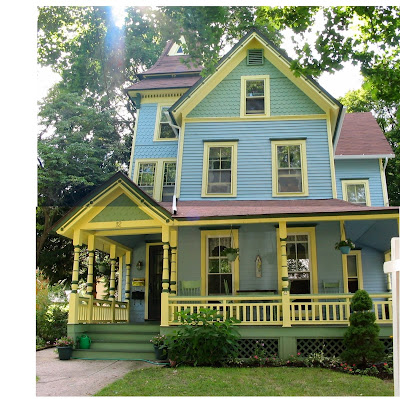 For the first time in my life, I owned a TV and a couch (giving rise to this epiphany). I traveled a bit. I ate well - and without pressure or note-taking. Food as food.
So when, exactly, did I recover? When did I feel truly "myself" again? "Tan, rested and ready," per Nixon's phrase?
Never! No one ever resets to baseline. There is no rebooting in the human world. It doesn't work like that! That's fake, and you can - and many of us do - make yourself crazy feeling around for that unattainable result. And you can believe me, because I've pushed the extremes of both "stress" and "resting" much further than anyone you know. I'm Mr. Edge Case, here to report my findings!
I once had occasion to view a live sonogram of my heart, which, I was fascinated and repulsed to observe, looks like a clock made out of meat. My meat clock is no winsome valentine. It is John Deere agricultural machinery. Gettin' it done.
Kah-CHING-kluh! Kah-CHING-kluh! Kah-CHING-kluh! Kah-CHING-kluh! Kah-CHING-kluh! Kah-CHING-kluh! Kah-CHING-kluh! Kah-CHING-kluh! Kah-CHING-kluh! Kah-CHING-kluh! Kah-CHING-kluh! Kah-CHING-kluh! Kah-CHING-kluh! Kah-CHING-kluh! Kah-CHING-kluh! Kah-CHING-kluh! Kah-CHING-kluh! Kah-CHING-kluh!
Endlessly and mindlessly, for decades whence and decades hence. Pure unfettered perseverence!
The heart is stupid-obsessive. Smart-obsessive is a problem, because there's self-awareness. Sisyphus, for example, grimly registered each and every re-slide down the mountain with his boulder. Tragedy! But I once wrote about chickens in Skinner Boxes, trained to push the yellow button delivering a corn kernel, and to avoid pushing the red button delivering an electric shock. I noted that the chicken will literally never stop pushing that yellow button:
Kah-CHING-kluh! Kah-CHING-kluh! Kah-CHING-kluh! Kah-CHING-kluh! Kah-CHING-kluh! Kah-CHING-kluh!
That's us. That's what we are. That's our baseline. The human baseline isn't cool and composed. Not tan, rested, and ready. Baseline is a hunk o' meat gettin' it done. Baseline is a John Deere tractor. We're here to do stuff - or to act too paralyzed to do stuff, which is another way of doing stuff (far less enjoyably). Resting isn't real. Even if you try to force it.
Remember, I'm an advanced yogi. I can relax, like, all the way. I can make lovely loveliness gush out of my chest, expanding my heart until the universe is felt to tenderly cradle within its perimeter. I have, for decades, practiced the Metta Sutta:
Resting is a silly attempt to stop a process that doesn't want to stop, wasn't built to stop, and, if it actually stopped, would not be a result you'd enjoy.
That said, there are certainly times when a strategic, highly-focused bout of rest is necessary. If you stayed up two nights in a row, you need sleep. But that's not a choice you'll need to make. Your body will effectively shove you into snoozeland, ready or not. The necessary rest happens and you have no say about it. That kind of rest is real!
Similarly, if you've been overexerting, you need to not exert for a while...and it just happens. The biology arranges it. If you're sick, well, that's a whole other scenario, beyond the scope of this posting. But for those who are more or less physically healthy, a few days of rest is sufficient. Imagining that more rest will help even more is fallacious, like vitamin faddists concluding that since Vitamin A deficiency is bad for the eyes, a ton of Vitamin A must be super-good for them. Pure ditzery.
But let's talk about stress.
If you've been stressed (genuinely stressed, not trumped-up-rich-people-stressed, like Mrs. Howell tormented by a lack of available manicure appointments), what you need is not rest. That's a common misconception. No, you need to put yourself in a situation where you're not stressed - or, at least, not stressed in the exact same way - for a few days. Two weeks, tops.
There's a reason we conceive of vacations in two-week chunks. Two weeks is the outer limit. Even if you just bicycled from São Paolo to Montreal. Even if you just served months in a war zone. Even if you’re post-traumatic, malnourished, and/or sobbing a lot. Same for break-ups and other forms of grief. After two weeks of change-up, you’re just willfully stoking the drama. Volitional depression is not rest, though history and literature are full of theatrically ennervated people (invariably wealthy) endeavoring to deem it so.
Stress is a real thing, but we don't need to de-stress, e.g. via spa treatments or martinis. The notion that we must reverse engines and go "the other way" into some static state for a while is aristocratic delusion. No, if you're stressed, you need to either find a way to more gracefully bear it (heh, sorry, I forgot where I was for a moment; obviously, FUCK THAT), or, ideally, remove the stressor for a while. No need for hydrotherapy or mudpacks or oatmeal colonics. We don't need to "recover".
Resting is not real. We don't recover. Ever. We keep going, like tractors. Can't help it, either. The relentless meat clock in my chest has never recovered once in 59 years. Kah-CHING-kluh! Kah-CHING-kluh! Kah-CHING-kluh! Kah-CHING-kluh! In fact, it appreciates and thrives from exercise; from being forced to work even HARDER! Consider that!
If your battery doesn’t feel quite recharged, if you’re feeling lingering pain, walk it off. Rest - the fake kind where you choose recreational-ish activities and eschew upsetting experience like a piqued aristocrat - is a fantasy. Don't get me wrong, I’m a big fan of hot tubs, hammocks, and sofas. Huge fan! But a nice grueling workout works better. A bicycle trip, or a jog, or a swim, or helping a friend move. A new project. Even something grueling! Just don't be grueled the usual way (i.e. remove the stressor). Walk it off!
As with most deep insights, there's a glib cliché to be yanked from the shelf:
So how did we develop the mistaken notion that we need to actively de-stress - reverse motors and do absolutely nothing, rather than simply remove the stressor for a while (or else take the unAmerican path of learning to bear stress more gracefully)? Because removing a stressor is a subtle surgical move. It's easier to dream up a gigantic and theatrical sprawl into a smiley realm of fluffy downy cushions, even if all we needed was to avoid the stressful thing - the aggravating project; the angry boss; the ne'er do well brother - for a few days. But we don't need to go anywhere, or put on our Special Relaxing Clothes. We don't need to pose in static repose. In fact, we can simply re-frame! Right where you are!
Postscript here.
One condition of the sale was that I'd spend a year in indentured servitude to a raging sadistic corporate manager, and the final portion of my, er, tenure was spent solitarily roaming endlessly on an ill-defined assignment, forced to overeat like a foie gras goose. The saga - told less drearily than I just did here - can be read starting here. When my 12 months were up, I silently walked away like Keyser Söze emerging from the police station:
My mission was to rest. Relax. Rejuvenate. I did tons of yoga and meditation. I hit the beach. I learned to cook healthy. I moved into a Victorian house in a charming New England small town for a while.

So when, exactly, did I recover? When did I feel truly "myself" again? "Tan, rested and ready," per Nixon's phrase?
Never! No one ever resets to baseline. There is no rebooting in the human world. It doesn't work like that! That's fake, and you can - and many of us do - make yourself crazy feeling around for that unattainable result. And you can believe me, because I've pushed the extremes of both "stress" and "resting" much further than anyone you know. I'm Mr. Edge Case, here to report my findings!
I once had occasion to view a live sonogram of my heart, which, I was fascinated and repulsed to observe, looks like a clock made out of meat. My meat clock is no winsome valentine. It is John Deere agricultural machinery. Gettin' it done.
Kah-CHING-kluh! Kah-CHING-kluh! Kah-CHING-kluh! Kah-CHING-kluh! Kah-CHING-kluh! Kah-CHING-kluh! Kah-CHING-kluh! Kah-CHING-kluh! Kah-CHING-kluh! Kah-CHING-kluh! Kah-CHING-kluh! Kah-CHING-kluh! Kah-CHING-kluh! Kah-CHING-kluh! Kah-CHING-kluh! Kah-CHING-kluh! Kah-CHING-kluh! Kah-CHING-kluh!
Endlessly and mindlessly, for decades whence and decades hence. Pure unfettered perseverence!
The heart is stupid-obsessive. Smart-obsessive is a problem, because there's self-awareness. Sisyphus, for example, grimly registered each and every re-slide down the mountain with his boulder. Tragedy! But I once wrote about chickens in Skinner Boxes, trained to push the yellow button delivering a corn kernel, and to avoid pushing the red button delivering an electric shock. I noted that the chicken will literally never stop pushing that yellow button:
It never "gets wise". Blessed with the result it most seeks, there's no reason to ask deeper questions. The chicken thinks it's just killin' it.The heart is an idiot exactly like that chicken. So its stupidly obsessive circumstance is not tragic. The heart is like a drunken co-ed hollering "Whoooooh!" endlessly from the same inane prompt. The heart is like The Simpsons' Sideshow Bob stepping on rakes:
Kah-CHING-kluh! Kah-CHING-kluh! Kah-CHING-kluh! Kah-CHING-kluh! Kah-CHING-kluh! Kah-CHING-kluh!
That's us. That's what we are. That's our baseline. The human baseline isn't cool and composed. Not tan, rested, and ready. Baseline is a hunk o' meat gettin' it done. Baseline is a John Deere tractor. We're here to do stuff - or to act too paralyzed to do stuff, which is another way of doing stuff (far less enjoyably). Resting isn't real. Even if you try to force it.
Remember, I'm an advanced yogi. I can relax, like, all the way. I can make lovely loveliness gush out of my chest, expanding my heart until the universe is felt to tenderly cradle within its perimeter. I have, for decades, practiced the Metta Sutta:
With a boundless heartBut I tried it with the sonogram hooked up, and Stupid Meat Clock remained visibly oblivious. Kah-CHING-kluh! Kah-CHING-kluh! Kah-CHING-kluh! Kah-CHING-kluh!
Should one cherish all beings:
Radiating love over the entire world
Spreading upwards to the skies,
And downwards to the depths.
Resting is a silly attempt to stop a process that doesn't want to stop, wasn't built to stop, and, if it actually stopped, would not be a result you'd enjoy.
"Kah-CHI...................."Your body is a goer. Your mind is a goer. The meat wants to move. Must move. Won't not move. This isn't a bug. It's a feature.
That said, there are certainly times when a strategic, highly-focused bout of rest is necessary. If you stayed up two nights in a row, you need sleep. But that's not a choice you'll need to make. Your body will effectively shove you into snoozeland, ready or not. The necessary rest happens and you have no say about it. That kind of rest is real!
Similarly, if you've been overexerting, you need to not exert for a while...and it just happens. The biology arranges it. If you're sick, well, that's a whole other scenario, beyond the scope of this posting. But for those who are more or less physically healthy, a few days of rest is sufficient. Imagining that more rest will help even more is fallacious, like vitamin faddists concluding that since Vitamin A deficiency is bad for the eyes, a ton of Vitamin A must be super-good for them. Pure ditzery.
But let's talk about stress.
If you've been stressed (genuinely stressed, not trumped-up-rich-people-stressed, like Mrs. Howell tormented by a lack of available manicure appointments), what you need is not rest. That's a common misconception. No, you need to put yourself in a situation where you're not stressed - or, at least, not stressed in the exact same way - for a few days. Two weeks, tops.
There's a reason we conceive of vacations in two-week chunks. Two weeks is the outer limit. Even if you just bicycled from São Paolo to Montreal. Even if you just served months in a war zone. Even if you’re post-traumatic, malnourished, and/or sobbing a lot. Same for break-ups and other forms of grief. After two weeks of change-up, you’re just willfully stoking the drama. Volitional depression is not rest, though history and literature are full of theatrically ennervated people (invariably wealthy) endeavoring to deem it so.
Stress is a real thing, but we don't need to de-stress, e.g. via spa treatments or martinis. The notion that we must reverse engines and go "the other way" into some static state for a while is aristocratic delusion. No, if you're stressed, you need to either find a way to more gracefully bear it (heh, sorry, I forgot where I was for a moment; obviously, FUCK THAT), or, ideally, remove the stressor for a while. No need for hydrotherapy or mudpacks or oatmeal colonics. We don't need to "recover".
Resting is not real. We don't recover. Ever. We keep going, like tractors. Can't help it, either. The relentless meat clock in my chest has never recovered once in 59 years. Kah-CHING-kluh! Kah-CHING-kluh! Kah-CHING-kluh! Kah-CHING-kluh! In fact, it appreciates and thrives from exercise; from being forced to work even HARDER! Consider that!
Life is a process of thriving in the resistence of repose.That was a flowery way of saying "resting is not real."
If your battery doesn’t feel quite recharged, if you’re feeling lingering pain, walk it off. Rest - the fake kind where you choose recreational-ish activities and eschew upsetting experience like a piqued aristocrat - is a fantasy. Don't get me wrong, I’m a big fan of hot tubs, hammocks, and sofas. Huge fan! But a nice grueling workout works better. A bicycle trip, or a jog, or a swim, or helping a friend move. A new project. Even something grueling! Just don't be grueled the usual way (i.e. remove the stressor). Walk it off!
As with most deep insights, there's a glib cliché to be yanked from the shelf:
"A change is as good as a rest."
So how did we develop the mistaken notion that we need to actively de-stress - reverse motors and do absolutely nothing, rather than simply remove the stressor for a while (or else take the unAmerican path of learning to bear stress more gracefully)? Because removing a stressor is a subtle surgical move. It's easier to dream up a gigantic and theatrical sprawl into a smiley realm of fluffy downy cushions, even if all we needed was to avoid the stressful thing - the aggravating project; the angry boss; the ne'er do well brother - for a few days. But we don't need to go anywhere, or put on our Special Relaxing Clothes. We don't need to pose in static repose. In fact, we can simply re-frame! Right where you are!
Postscript here.
Saturday, July 2, 2022
Seemers Always Win: Posing as Someone Like You
I have pondered the following several times here on the Slog. This time, maybe I'll cough up a novel insight. Or, at least express it more vividly, so you can ponder it, yourself.
Wait, YOU founded that website????
Whenever I meet someone new who recognizes "Chowhound" if it comes up in discussion, I always get the same disbelieving reaction:
To me, I'm a shmuck who's done cool things. I'm "crew", not "talent". I'm the shlubby and put-upon director juggling a thousand plates, not the composed and preened movie star oozing charisma. I'm busy doing stuff. I create pizazz, I don't exude it.
Most singers become singers because they want to be singers, not because they want to sing. And I really care deeply about the singing (so to speak). So much so that I don't waste a nano-speck of energy trying to seem like it. Or to seem like anything, really. If you're doing, with all your heart, who's got time to seem?
I never receive a satisfactory answer. It's not that they expected me to travel with a security team, or to address them with smug condescension. They don't have any particular image in mind. Just certainly not that.
Instead of putting 6000% of myself into making Chowhound good, I suppose I should have reserved some energy for making myself look the part. Maybe coif yourself better. Jaunty blazers and expensive Italian loafers. Don't move your head animatedly. Act your age, and your "station" - snidely complacent and redolent of cologne and gravitas. Most of all, never give others your full attention. In the wolf pack, this signals beta status, making you smell needy and subservient. Weakly reactive. It's the antithesis of the manly man plotting bold courses and kicking ass. That guy hardly has time to devote to the likes of you. Sorry, bud, but I got people to fry!
Being and Seeming
So here's the question. Having been successful in a half dozen unrelated fields, with my name on a bunch of books and records and media stuff, having inspired a generation of Spanish and Portuguese jazz musicians and had some minor rippling effect on how folks think and write about food and use the Internet, is it also incumbent on me to seem like that person? Have I ignored a critical chunk along the way? Am I going around obliviously without my pants on? Do I need to fix this?
I can't imagine anything more foolish than posing as the sort of person I actually am. Isn't that backwards? One dons an aloof "That Guy" persona - too busy with important importance to do whatever - if one is a bluffer who hasn't done much but wants to seem like he has. I get why people strike that pose, but why would we expect the genuine to match the pose; to imitate the imitators?
Why would I pose as me? The question makes my head explode. None of my insight re: human psychology helps. And the awful and dopey truth is that even if I put effort into posing as someone like me - to look the part, whatever that even means - I'd surely wind up in the lower 20th percentile of me-posers. I'd be terrible at it!
I'm quite good at doing things, but horrendously bad at posing as a thing-doer. There are specialists for that! Thousands of them! And they're good! They can do something I can't, and I truly admire them! Me, I could never fool anyone into imagining I could do something notable. Even if I actually have.
Seemers always win!
Nice Guy
The same applies in many other realms. For example, I don't seem like a nice guy.
I'm not diffidently soft-spoken. I don't massage your shoulders while telling you how awesome you are. I don't bend over backwards to never contradict you. I don't do any of the standard things Nice Guys do, and am therefore widely considered ornery and irascible.
Yet I'll do nearly anything to help almost anyone. If you call me at 3:30 am needing to be picked up on the Jersey Turnpike, I'll be there with delicious chocolate I'd desperately hoped to hog for myself. I'll mull stranger's problems with the same determination I devote to my own (I don't even make a distinction). I am very far from being "Mr. Wonderful", but you'd think I'd earned, at least, "nice".
It's even worse than that. Friends who've been on the receiving end of my helpfulness, and spent years watching me extend myself, still don't think of me as a particularly nice guy. Because Nice Guy status is earned not by being nice but by seeming nice. A nice guy rubs your shoulders, modulates his voice, never contradicts anything, and tells you you're awesome (note: that guy will never, ever come get you at 3am, though he’ll leave you feeling fantastic about yourself as he hangs up the phone and rolls back to sleep). I could sell all my belongings and live naked in the woods to give some random taxi driver a better life for his family and still never earn that sobriquet. Because it's 100% about the seeming. Again, seemers always win.
Paramours and Potheads
So many other examples. For example, I'm a funny-looking dude - the anti-Brad Pitt, if you will - and yet I've recruited, in my time, a succession of quite glamorous girlfriends, all oddly enamored. Yet no one - including those who witnessed that procession - would ever imagine that I might have boyfriending skills. We know what desirable boyfriends are like. Leather pants and coiled abs. Steely gazes and strong jawlines. It ought to be a clue that guys with those womanizing attributes often turn out to be gay. But even the other side of that coin - geez, that shlubby trombonist seems awfully popular! - never moves the needle.
"Him?!? That guy???"
Seemers always win.
One more. I was recently standing with a gaggle of acquaintances passing around a joint. One of them - who actually knew that I'd spent decades as a funky horn player for great jazz, blues, funk, ska, and Latin bands...
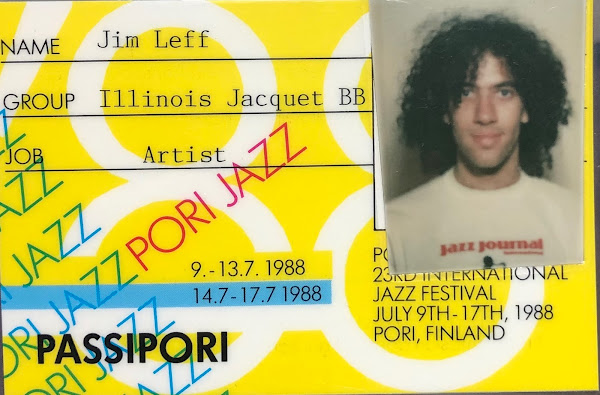
Me in 1988
....passed the joint not to me, but past me to the next guy. "What gives?" I asked. "Sorry...I assumed you wouldn't be interested". He knew who and what I was. But he couldn't help acting on how I seem.
Empathy Theater
I once proposed a radical new view of autism, suggesting it's not a dysfunction but an evolutionary improvement (like all improvements, bringing along certain drawbacks, particularly marked in severe "cases").
In that article, I recalled discussing this with a school psychologist. I'd asked her to consider that just because someone isn't acting empathic - engaging in "empathy theater", i.e. spouting empathic-sounding platitudes and composing facial features in empathic-seeming configurations - doesn't mean there's no empathy. In my experience, autistics are more empathic, not less. They just don't engage in (or even understand) empathy theater. They're not seemers.
She asked the salient question: If they don't externalize their feelings - say the words and make the gestures and act the part - how could we possibly know how they feel?
To me, it's abundantly clear. Ye shall know them by their fruits. Their actions. Because platitudes, as we all know, can easily be faked.
Fake Jim Leff didn't build a cool web site.
Fake Nice Guy won't come get you at 3am.
Fake Don Juan shares her Brad Pitt fascination.
Empathy theatrics are as significant as a shot of Botox.
Why would anyone pay credence to empty cliché and stock gesture? How could such tropes parse as genuine, when they're so easily faked? Time and again, we see empty posing and manipulation. Yet "Seeming" remains the sine non qua of genuineness, while "Actuality" barely budges most people's spidey sense. Are we really so certain that autistics are the dysfunctional ones?
Read my autism post, and ask yourself this: isn't it smarter, deeper, better - and way less dishonest, manipulative and shallowly craptastic - to Do than to Seem? To be The Person Who Does The Thing than rather than to pose as a Thing-Doer? Who would you rather listen to: a singer who became a singer because she wanted to be a singer, or one who became a singer because she wanted to sing?
Alas, no fresh insight to offer. Well, wait. That's not true. The giving-others-full-attention-makes-you-look-subservient is a fresh chunk. Anyway, I'll try again.
Whenever I meet someone new who recognizes "Chowhound" if it comes up in discussion, I always get the same disbelieving reaction:
Huh? Hold on. That was you? YOU?!?At this point, I stop the conversation and beg the bewildered, skeptical person to explain what, exactly, they expected. It's not that I'm being defensive or confrontational. It's that I genuinely don't know how a Jim Leff is supposed to look or act! No one ever taught me how to act like someone like me!
To me, I'm a shmuck who's done cool things. I'm "crew", not "talent". I'm the shlubby and put-upon director juggling a thousand plates, not the composed and preened movie star oozing charisma. I'm busy doing stuff. I create pizazz, I don't exude it.
Most singers become singers because they want to be singers, not because they want to sing. And I really care deeply about the singing (so to speak). So much so that I don't waste a nano-speck of energy trying to seem like it. Or to seem like anything, really. If you're doing, with all your heart, who's got time to seem?
I never receive a satisfactory answer. It's not that they expected me to travel with a security team, or to address them with smug condescension. They don't have any particular image in mind. Just certainly not that.
Instead of putting 6000% of myself into making Chowhound good, I suppose I should have reserved some energy for making myself look the part. Maybe coif yourself better. Jaunty blazers and expensive Italian loafers. Don't move your head animatedly. Act your age, and your "station" - snidely complacent and redolent of cologne and gravitas. Most of all, never give others your full attention. In the wolf pack, this signals beta status, making you smell needy and subservient. Weakly reactive. It's the antithesis of the manly man plotting bold courses and kicking ass. That guy hardly has time to devote to the likes of you. Sorry, bud, but I got people to fry!
So here's the question. Having been successful in a half dozen unrelated fields, with my name on a bunch of books and records and media stuff, having inspired a generation of Spanish and Portuguese jazz musicians and had some minor rippling effect on how folks think and write about food and use the Internet, is it also incumbent on me to seem like that person? Have I ignored a critical chunk along the way? Am I going around obliviously without my pants on? Do I need to fix this?
I can't imagine anything more foolish than posing as the sort of person I actually am. Isn't that backwards? One dons an aloof "That Guy" persona - too busy with important importance to do whatever - if one is a bluffer who hasn't done much but wants to seem like he has. I get why people strike that pose, but why would we expect the genuine to match the pose; to imitate the imitators?
Why would I pose as me? The question makes my head explode. None of my insight re: human psychology helps. And the awful and dopey truth is that even if I put effort into posing as someone like me - to look the part, whatever that even means - I'd surely wind up in the lower 20th percentile of me-posers. I'd be terrible at it!
I'm quite good at doing things, but horrendously bad at posing as a thing-doer. There are specialists for that! Thousands of them! And they're good! They can do something I can't, and I truly admire them! Me, I could never fool anyone into imagining I could do something notable. Even if I actually have.
Seemers always win!
The same applies in many other realms. For example, I don't seem like a nice guy.
I'm not diffidently soft-spoken. I don't massage your shoulders while telling you how awesome you are. I don't bend over backwards to never contradict you. I don't do any of the standard things Nice Guys do, and am therefore widely considered ornery and irascible.
Yet I'll do nearly anything to help almost anyone. If you call me at 3:30 am needing to be picked up on the Jersey Turnpike, I'll be there with delicious chocolate I'd desperately hoped to hog for myself. I'll mull stranger's problems with the same determination I devote to my own (I don't even make a distinction). I am very far from being "Mr. Wonderful", but you'd think I'd earned, at least, "nice".
It's even worse than that. Friends who've been on the receiving end of my helpfulness, and spent years watching me extend myself, still don't think of me as a particularly nice guy. Because Nice Guy status is earned not by being nice but by seeming nice. A nice guy rubs your shoulders, modulates his voice, never contradicts anything, and tells you you're awesome (note: that guy will never, ever come get you at 3am, though he’ll leave you feeling fantastic about yourself as he hangs up the phone and rolls back to sleep). I could sell all my belongings and live naked in the woods to give some random taxi driver a better life for his family and still never earn that sobriquet. Because it's 100% about the seeming. Again, seemers always win.
Most singers become singers because they want to be singers, not because they want to sing.
So many other examples. For example, I'm a funny-looking dude - the anti-Brad Pitt, if you will - and yet I've recruited, in my time, a succession of quite glamorous girlfriends, all oddly enamored. Yet no one - including those who witnessed that procession - would ever imagine that I might have boyfriending skills. We know what desirable boyfriends are like. Leather pants and coiled abs. Steely gazes and strong jawlines. It ought to be a clue that guys with those womanizing attributes often turn out to be gay. But even the other side of that coin - geez, that shlubby trombonist seems awfully popular! - never moves the needle.
"Him?!? That guy???"
Seemers always win.
One more. I was recently standing with a gaggle of acquaintances passing around a joint. One of them - who actually knew that I'd spent decades as a funky horn player for great jazz, blues, funk, ska, and Latin bands...

....passed the joint not to me, but past me to the next guy. "What gives?" I asked. "Sorry...I assumed you wouldn't be interested". He knew who and what I was. But he couldn't help acting on how I seem.
I once proposed a radical new view of autism, suggesting it's not a dysfunction but an evolutionary improvement (like all improvements, bringing along certain drawbacks, particularly marked in severe "cases").
In that article, I recalled discussing this with a school psychologist. I'd asked her to consider that just because someone isn't acting empathic - engaging in "empathy theater", i.e. spouting empathic-sounding platitudes and composing facial features in empathic-seeming configurations - doesn't mean there's no empathy. In my experience, autistics are more empathic, not less. They just don't engage in (or even understand) empathy theater. They're not seemers.
She asked the salient question: If they don't externalize their feelings - say the words and make the gestures and act the part - how could we possibly know how they feel?
To me, it's abundantly clear. Ye shall know them by their fruits. Their actions. Because platitudes, as we all know, can easily be faked.
Fake Jim Leff didn't build a cool web site.
Fake Nice Guy won't come get you at 3am.
Fake Don Juan shares her Brad Pitt fascination.
Empathy theatrics are as significant as a shot of Botox.
Why would anyone pay credence to empty cliché and stock gesture? How could such tropes parse as genuine, when they're so easily faked? Time and again, we see empty posing and manipulation. Yet "Seeming" remains the sine non qua of genuineness, while "Actuality" barely budges most people's spidey sense. Are we really so certain that autistics are the dysfunctional ones?
Read my autism post, and ask yourself this: isn't it smarter, deeper, better - and way less dishonest, manipulative and shallowly craptastic - to Do than to Seem? To be The Person Who Does The Thing than rather than to pose as a Thing-Doer? Who would you rather listen to: a singer who became a singer because she wanted to be a singer, or one who became a singer because she wanted to sing?
Alas, no fresh insight to offer. Well, wait. That's not true. The giving-others-full-attention-makes-you-look-subservient is a fresh chunk. Anyway, I'll try again.
Saturday, June 4, 2022
Making eBay Efficient and Fun
I was once eBay-phobic, but have made the process so efficient that it's now a delight. Here are tips.
Between eBay fees, credit card fees, packaging, postage and handling, you won't make much even on a $20 sale. But if you can learn to create tidy listings (eBay, Craig, NextDoor, FB Market) quickly, and streamline your fulfillment, it becomes an absolute breeze; worth it even for a few bucks here and there; or even just to escape the shame of throwing away useful stuff. eBaying is the new "donating". It's like this cool thriving circle of regeneration.
First, get a free account at Pirate Ship, a beautifully sleek web app that imports order data from ebay and offers you shipping choices (all discounted). Great service, too (they communicate in pirate-speak). Note that options like Priority Mail flat-rate and media mail (which you must ALWAYS use for books/audio/video) are available; you just need to dig around a bit as you plug in the particulars for a given shipment. And remember that padded envelopes ship way more cheaply than boxes.
For shipping, weigh with a good digital kitchen scale (don't buy a postage scale, they all suck). Weight limit is usually 10 lbs, but you won't be shipping heavier items much. Get this tape (don't use a tape gun for small packages; they're too unwieldy) and this handy little tape measure. Print labels out (Pirate Ship makes it easy) and stick them on with tape (see below).
If you don't already have an enormous collection of small and odd-shaped cardboard boxes (which are expensive and annoying to buy one-by-one), treat yourself to Amazon Prime for a while and order every damned thing you ever need to buy (toilet paper, tissues, toothpaste, eyedrops...everything!) that way and save the boxes. Just do it for the boxes. Also buy (e.g. from Staples) some 8x10 and 9x12 clasp envelopes and some 5x9 and #3 (8.5 x 14.5) poly bubble mailers. EBay seller TheBoxery has the best prices. Remember you can "shrink" large padded envelopes by folding them over on themselves and taping, and shrink clasp envelopes by cutting from the opening side and taping shut.
Buy all that stuff and set aside a dedicated space for eBay activity so you're not constantly reinventing the wheel ad hoc for each sale and shipment. Keep dedicated tape and tape measure and scale handy there even if you have similar items scattered elsewhere around your house. I also keep dedicated scissors, box cutter, and sharpie. Set up a folding table to serve as Sales Central. Dedicate a closet shelf to storing listed items awaiting sale/shipping. This is how you make eBay fun rather than hassle. Respect the hustle!
Always thoroughly scrape off or cover up or black-sharpie over old shipping labels. I've heard horror stories of a sticker code meaning "hazardous item", so your shipment gets pulled aside and you need to drive hundreds of miles to go pick it up because they won't restore it to shipping channels.
If the fussy scraping and taping and weighing and all the rest start to feel oppressive and/or "beneath you", here's a framing trick. You're sending personal items which have served you well off to nice people who eagerly await them. Pack and process like you're dispatching holiday presents - or even pets/babies for adoption. Call it corny if you want, but that's actually what eBay is at its heart (though plenty of buyers and sellers might not get it). I sometimes throw in minor treats, too, as a disciple of Walter the Bus Driver. The world insidiously improves, despite the evident shmuckery.
If you're on deadline, every couple weeks, reduce prices on anything unsold by 20%. But bear in mind that more obscure items can take a while to connect at any price.
For pricing, don't just search eBay. Check the "Completed Items" box in the left margin as you search to discover what stuff's actually selling for. Remember that good feedback, coherent and thorough description (talk like a real person; don’t feign brusque impersonality), and quality photos all help earn a premium.
It's way better to lose money than to anger a buyer, even if it's someone awful/stupid/crazy (they mostly are very nice!). I have 100% feedback, and it serves me way better than 99.8% feedback. So maybe let them keep the item even though you've refunded. Etc etc. Your goal is to serve people as quickly and effortlessly as possible, even if sometimes it costs you extra. Delight them if possible, but marginal satisfaction works fine, too. Don't get drawn into spats or negotiations. Who's got time? If you're the contentious and/or penny-pinching type, eBay will drive you slowly mad. Everyone else: enjoy the release and surrender of low-stakes caving-in to imperious consumers. Retail satori!
Between eBay fees, credit card fees, packaging, postage and handling, you won't make much even on a $20 sale. But if you can learn to create tidy listings (eBay, Craig, NextDoor, FB Market) quickly, and streamline your fulfillment, it becomes an absolute breeze; worth it even for a few bucks here and there; or even just to escape the shame of throwing away useful stuff. eBaying is the new "donating". It's like this cool thriving circle of regeneration.
First, get a free account at Pirate Ship, a beautifully sleek web app that imports order data from ebay and offers you shipping choices (all discounted). Great service, too (they communicate in pirate-speak). Note that options like Priority Mail flat-rate and media mail (which you must ALWAYS use for books/audio/video) are available; you just need to dig around a bit as you plug in the particulars for a given shipment. And remember that padded envelopes ship way more cheaply than boxes.
For shipping, weigh with a good digital kitchen scale (don't buy a postage scale, they all suck). Weight limit is usually 10 lbs, but you won't be shipping heavier items much. Get this tape (don't use a tape gun for small packages; they're too unwieldy) and this handy little tape measure. Print labels out (Pirate Ship makes it easy) and stick them on with tape (see below).
If you don't already have an enormous collection of small and odd-shaped cardboard boxes (which are expensive and annoying to buy one-by-one), treat yourself to Amazon Prime for a while and order every damned thing you ever need to buy (toilet paper, tissues, toothpaste, eyedrops...everything!) that way and save the boxes. Just do it for the boxes. Also buy (e.g. from Staples) some 8x10 and 9x12 clasp envelopes and some 5x9 and #3 (8.5 x 14.5) poly bubble mailers. EBay seller TheBoxery has the best prices. Remember you can "shrink" large padded envelopes by folding them over on themselves and taping, and shrink clasp envelopes by cutting from the opening side and taping shut.
Buy all that stuff and set aside a dedicated space for eBay activity so you're not constantly reinventing the wheel ad hoc for each sale and shipment. Keep dedicated tape and tape measure and scale handy there even if you have similar items scattered elsewhere around your house. I also keep dedicated scissors, box cutter, and sharpie. Set up a folding table to serve as Sales Central. Dedicate a closet shelf to storing listed items awaiting sale/shipping. This is how you make eBay fun rather than hassle. Respect the hustle!
Always thoroughly scrape off or cover up or black-sharpie over old shipping labels. I've heard horror stories of a sticker code meaning "hazardous item", so your shipment gets pulled aside and you need to drive hundreds of miles to go pick it up because they won't restore it to shipping channels.
If the fussy scraping and taping and weighing and all the rest start to feel oppressive and/or "beneath you", here's a framing trick. You're sending personal items which have served you well off to nice people who eagerly await them. Pack and process like you're dispatching holiday presents - or even pets/babies for adoption. Call it corny if you want, but that's actually what eBay is at its heart (though plenty of buyers and sellers might not get it). I sometimes throw in minor treats, too, as a disciple of Walter the Bus Driver. The world insidiously improves, despite the evident shmuckery.
If you're on deadline, every couple weeks, reduce prices on anything unsold by 20%. But bear in mind that more obscure items can take a while to connect at any price.
For pricing, don't just search eBay. Check the "Completed Items" box in the left margin as you search to discover what stuff's actually selling for. Remember that good feedback, coherent and thorough description (talk like a real person; don’t feign brusque impersonality), and quality photos all help earn a premium.
It's way better to lose money than to anger a buyer, even if it's someone awful/stupid/crazy (they mostly are very nice!). I have 100% feedback, and it serves me way better than 99.8% feedback. So maybe let them keep the item even though you've refunded. Etc etc. Your goal is to serve people as quickly and effortlessly as possible, even if sometimes it costs you extra. Delight them if possible, but marginal satisfaction works fine, too. Don't get drawn into spats or negotiations. Who's got time? If you're the contentious and/or penny-pinching type, eBay will drive you slowly mad. Everyone else: enjoy the release and surrender of low-stakes caving-in to imperious consumers. Retail satori!
Tuesday, May 10, 2022
Process
I've managed to tie together a few loose strands of thought and reduced them to something more succinct. One simple sentence, in fact.
There is risk to synopsis, however. Over-compress and the point might diminish into seeming-banality. Even the most transformational insight can be pounded thin into dry cliché. It’s just a question of how much juice you’re willing to drain in the interest of brevity.
Ideally, readers will rehydrate it via their own rumination. Aphorisms are the ancient version of compressing data for efficient storage and transfer. Processing power applied on the receiving end restores the intended nuance and vitality. So consider giving the opening sentence more than a nano-second of attention, despite its seeming easy banality!
If you get (really) good results, don't question your process.
Parables:Oscillococcinum
Homeopathy is a crock. There's no evidence for its (ridiculous) underlying "theory", and there have been no proper scientific trials, to my knowledge, of any homeopathic drugs. It's a scam and a fraud. But Oscillococcinum, the popular homeopathic flu remedy, works for me.
It's effectiveness is just as likely due to some little girl in Utica having prayed for it to be so, or the pills containing alien entities, or the letters of Oscillococcinum adding up to "Jehovah", as the homeopathic explanation. "Insert nonsense here." I don't care. It works, and that's enough for me. If you get (really) good results, I don't question your process.
The Acupuncturist
I once knew an acupuncturist who got very good therapeutic results, and who was shockingly good at diagnosis. She'd know if your tumor had gotten worse. She could predict your blood test results. Stuff like that.
When I asked about her process, she demurred. Do I really want to know? I insisted, and she started telling me about how the earth spirits sing to her when she spins the....etc. etc. The audio mutes at that point, when I stopped paying attention.
It's not that I'd marked her as crazy, or a quack. Why would I do that? I'd most likely never believe in what she believed in, but I respected her results, regardless of how she got them. If you get (really) good results, I don't question your process.
The Car Detailer
I once wrote about a friend who details cars. His results, I swear to Jehovah, make your car look better than in the showroom. Better than the brochure. Not in some vulgar way. The finish isn't made extra shiny or sparkly. It's that your car gains an unmistakable classiness; a stateliness; a presence. It's eerie.
He's a genius who found a way. But for the yo-yos in the neighborhood (who'd readily concur re: his results), he's an "eccentric", because he doesn't do things the usual way (also: he's exuberant). In my profile of the guy, I wrote:
Me
I talk to myself. A lot. Always have. My writing is just another channel in that outgoing stream.
At age 59 (and I've been everywhere, man), I've observed a large number of people talking to themselves. Some appear to be anxious, or to lack proper self-awareness. Many slide into reveries so readily that they lose touch with worldly experience. They're not here. In many/most cases, I'd use terms like "kooky" or "deranged" because insanity, as I once wrote, is the inability to reframe despite clear environmental cues. If you can't "read the room" - if you can't even perceive the room you're in - that's a problem. You will get poor life results until you manage to implant yourself in some semblance of a here-and-now.
Yet it goes without saying that reverie (deliberately light fixture in - or even temporary disconnection from - the here-and-now) does have its creative uses. I guess it's a matter of whether you can control it or not.
In my case, I verbalize thoughts and impulses to capture my intuitive flow. Unless I verbalize that stuff, it remains intuitive, steering "gut" and "heart", but entirely unavailable to my rational mind.
And the stuffy Victorian professor in my cranium needs to examine and make a ruling. It must all be crisply explained in nice clear words, dammit. Arranged into neatly digestible verbal cutlets. While the professor feels brilliantly robust, he's secretly quite feeble and needy. He easily grows upset and flustered if not properly fed. Hence the verbalized self-explanation.
I lacked this under-the-hood view for most of my life. All I knew was that I felt a mysterious compulsion to explain stuff to myself. I chalked it up to neurosis, and worried about myself....until years later, when it dawned on me that my process had worked tremendously well. This surprise came quite late in the game. Astonished, I gasped once I finally let myself see that I'd gotten really good results. It came as a surprise, and I realized that I didn't need to keep questioning my process.
The Stuffy Professor
If you don't understand the respiratory system, you might suspect that breathing itself is a neurotic compulsion. The stuffy Victorian Professor, in his boundless curiosity, might declare skepticism regarding this ridiculous huffing and puffing in which we endlessly engage.
Of course, that bodily function need not be thought about or declared upon. One might simply breathe, unexamined, as lamas and gerbils do. Let it be and go with the flow, baby. But a stuffy Victorian professor, in his staunch frosty rigor, won't shrug off doubts so easily. Skepticism compels examination. In time, the professor-in-your-head recognizes a proper basis for breathing and lets go. One can finally enjoy gerbil/lama breathing with no curious overseer injecting himself into the process. You got the stamp!
One might easily conclude that it's always better to go with the flow, baby. But, Jesus, imagine the potential disaster of an unexamined existence. Unchecked, I'd never cease chomping potato chips or chugging beer. I'd drive the wrong way down one-way roads (it's faster!), carry a gun and shoot awful people right in the head (I dislike them!), burn down my local Pizza Hut (eradicate lousy pizza!!), and randily hit on every attractive woman I ever encountered (ooh, shiny!!!).
Unchecked, id is horrendous. And it's checked not just by superego - conscience, shame, and moral compass - but also by knowledge and rationality. So we need to scrutinize gut feelings and apparently natural processes for bona-fide utility.
Back to Me Again
The intuition that's laboriously been verbalized for my brain - logged via an outflow of words, both written and vocalized - has, to my utter shock, produced good results. And if you get good results, don't question your process!
Thanks for your suspicions, professor, but this process has proven beneficial. Scrutinize other stuff!
Youthful Processes
Young people don't know if their process works. They lack sufficient evidence. Without a track record of success to consider, who knows; your process might be wrong-headed! At very least, skeptical scrutiny is called for.
Ceaseless self-narration, for example, might represent disruptive anxiety rather than a mental logbook of insight and epiphany. There's no single recipe; no master list distinguishing fruitful, proper processes from ditzy, anxious, backfiring ones. We're all unique.
On the other hand, self-kindness obviously isn't the best course for all people in all scenarios. That's why I also sent along a caveat:
There is risk to synopsis, however. Over-compress and the point might diminish into seeming-banality. Even the most transformational insight can be pounded thin into dry cliché. It’s just a question of how much juice you’re willing to drain in the interest of brevity.
Ideally, readers will rehydrate it via their own rumination. Aphorisms are the ancient version of compressing data for efficient storage and transfer. Processing power applied on the receiving end restores the intended nuance and vitality. So consider giving the opening sentence more than a nano-second of attention, despite its seeming easy banality!
Parables:
Homeopathy is a crock. There's no evidence for its (ridiculous) underlying "theory", and there have been no proper scientific trials, to my knowledge, of any homeopathic drugs. It's a scam and a fraud. But Oscillococcinum, the popular homeopathic flu remedy, works for me.
It's effectiveness is just as likely due to some little girl in Utica having prayed for it to be so, or the pills containing alien entities, or the letters of Oscillococcinum adding up to "Jehovah", as the homeopathic explanation. "Insert nonsense here." I don't care. It works, and that's enough for me. If you get (really) good results, I don't question your process.
Note: good results don't prove the validity of the process. It takes more than a few data points to prove something. But proof is a far higher standard than practicality requires. Your success might be due to unknown factors, and your process might be a complete red herring. Fine! If it's working, don't look under the hood. It's not necessary to both succeed and explain how/why. Just keep going, and don't sweat naysayers - if, that is, you get (really) good results!
I once knew an acupuncturist who got very good therapeutic results, and who was shockingly good at diagnosis. She'd know if your tumor had gotten worse. She could predict your blood test results. Stuff like that.
When I asked about her process, she demurred. Do I really want to know? I insisted, and she started telling me about how the earth spirits sing to her when she spins the....etc. etc. The audio mutes at that point, when I stopped paying attention.
It's not that I'd marked her as crazy, or a quack. Why would I do that? I'd most likely never believe in what she believed in, but I respected her results, regardless of how she got them. If you get (really) good results, I don't question your process.
I once wrote about a friend who details cars. His results, I swear to Jehovah, make your car look better than in the showroom. Better than the brochure. Not in some vulgar way. The finish isn't made extra shiny or sparkly. It's that your car gains an unmistakable classiness; a stateliness; a presence. It's eerie.
He's a genius who found a way. But for the yo-yos in the neighborhood (who'd readily concur re: his results), he's an "eccentric", because he doesn't do things the usual way (also: he's exuberant). In my profile of the guy, I wrote:
"Eccentric" means "odd and wrong". "Eccentric" people build perpetual motion machines, or believe they've found a way to communicate with the dead. They're absorbed in cranky, flaky quests which will never amount to much, but at least they're entertaining. It's a term of condescension; this is how we condescend to non-conformists. But is that an appropriate way to describe bona fide miracle workers?You're not "eccentric" if you do better. Success should innoculate you from snark. If you get (really) good results, don't question your process.
I talk to myself. A lot. Always have. My writing is just another channel in that outgoing stream.
At age 59 (and I've been everywhere, man), I've observed a large number of people talking to themselves. Some appear to be anxious, or to lack proper self-awareness. Many slide into reveries so readily that they lose touch with worldly experience. They're not here. In many/most cases, I'd use terms like "kooky" or "deranged" because insanity, as I once wrote, is the inability to reframe despite clear environmental cues. If you can't "read the room" - if you can't even perceive the room you're in - that's a problem. You will get poor life results until you manage to implant yourself in some semblance of a here-and-now.
Yet it goes without saying that reverie (deliberately light fixture in - or even temporary disconnection from - the here-and-now) does have its creative uses. I guess it's a matter of whether you can control it or not.
In my case, I verbalize thoughts and impulses to capture my intuitive flow. Unless I verbalize that stuff, it remains intuitive, steering "gut" and "heart", but entirely unavailable to my rational mind.
And the stuffy Victorian professor in my cranium needs to examine and make a ruling. It must all be crisply explained in nice clear words, dammit. Arranged into neatly digestible verbal cutlets. While the professor feels brilliantly robust, he's secretly quite feeble and needy. He easily grows upset and flustered if not properly fed. Hence the verbalized self-explanation.
I lacked this under-the-hood view for most of my life. All I knew was that I felt a mysterious compulsion to explain stuff to myself. I chalked it up to neurosis, and worried about myself....until years later, when it dawned on me that my process had worked tremendously well. This surprise came quite late in the game. Astonished, I gasped once I finally let myself see that I'd gotten really good results. It came as a surprise, and I realized that I didn't need to keep questioning my process.
If you don't understand the respiratory system, you might suspect that breathing itself is a neurotic compulsion. The stuffy Victorian Professor, in his boundless curiosity, might declare skepticism regarding this ridiculous huffing and puffing in which we endlessly engage.
Of course, that bodily function need not be thought about or declared upon. One might simply breathe, unexamined, as lamas and gerbils do. Let it be and go with the flow, baby. But a stuffy Victorian professor, in his staunch frosty rigor, won't shrug off doubts so easily. Skepticism compels examination. In time, the professor-in-your-head recognizes a proper basis for breathing and lets go. One can finally enjoy gerbil/lama breathing with no curious overseer injecting himself into the process. You got the stamp!
One might easily conclude that it's always better to go with the flow, baby. But, Jesus, imagine the potential disaster of an unexamined existence. Unchecked, I'd never cease chomping potato chips or chugging beer. I'd drive the wrong way down one-way roads (it's faster!), carry a gun and shoot awful people right in the head (I dislike them!), burn down my local Pizza Hut (eradicate lousy pizza!!), and randily hit on every attractive woman I ever encountered (ooh, shiny!!!).
Unchecked, id is horrendous. And it's checked not just by superego - conscience, shame, and moral compass - but also by knowledge and rationality. So we need to scrutinize gut feelings and apparently natural processes for bona-fide utility.
The intuition that's laboriously been verbalized for my brain - logged via an outflow of words, both written and vocalized - has, to my utter shock, produced good results. And if you get good results, don't question your process!
Thanks for your suspicions, professor, but this process has proven beneficial. Scrutinize other stuff!
Young people don't know if their process works. They lack sufficient evidence. Without a track record of success to consider, who knows; your process might be wrong-headed! At very least, skeptical scrutiny is called for.
Ceaseless self-narration, for example, might represent disruptive anxiety rather than a mental logbook of insight and epiphany. There's no single recipe; no master list distinguishing fruitful, proper processes from ditzy, anxious, backfiring ones. We're all unique.
And that's precisely why you must never question someone's process - or your own - if it gets (really) good results!So I don't know what to tell people under 40, aside from the postcard I sent forward, as a child, to my adult self, reminding me
The proof's in the pudding! By their deeds you will know them!
Be kinder to yourself.Keep self-assessing - stay skeptical! - but maybe don't be the very harshest of hard-asses.
On the other hand, self-kindness obviously isn't the best course for all people in all scenarios. That's why I also sent along a caveat:
...but don't make a crutch out of it.
Wednesday, May 4, 2022
Empathizing With Pro-Gun People
A compromise on abortion would be possible if both sides would be more honest about their actual feelings. The problem is that in bipoloar societies, both sides crouch into unnaturally extreme positions to avoid giving ground to the other side...even though they're often far closer to each other than they'd ever imagined. Same with guns. Same with loads of things. One might almost get the impression that forces are at work to artificially divide the population, provoking anger and fear.
Here's my posting from 2012. It starts with guns and analogizes to abortion, but the argument would work equally well the other way.
Over the past few weeks, I've noticed a lot of people saying stuff like this:
This tack is helpful. Because for people whose culture does involve the responsible ownership and use of firearms, whenever they hear people from other cultures talking about gun control, they sense a trap - an attempt to engage a process leading to no more guns for anyone anywhere ever. And, of course, that's not paranoia. There is a core of extreme anti-gun sentiment, and, like the anti-smoking movement, and many other "anti-" movements, the favored strategy is gradual erosion. If gun owners don't aggressively oppose all regulation, they fear they'll eventually need to kiss goodbye yet another aspect of their traditional way of life, upended by sanctimonious people in faraway places with different values and customs.
I believe many - though certainly not all - gun owners agree with the rest of us about assault weapons, background checks, and crazy arsenals. So why aren't they saying so? They're silent because they've been backed into a defensive posture. Any concession might aid those hoping to completely revoke their right.
If you're a liberal who has trouble relating to this, consider your position on abortion (assuming you're pro-choice). You would likely acknowledge, privately, that abortion is much more than a mere run-of-the-mill medical procedure. But you'd never concede that publicly, because you consider the right of access to abortions critical, and there are sanctimonious people in faraway places with different values and customs who want to revoke that right.
All things being equal, you might be open to sane regulation discouraging irresponsible folks from blithely considering abortion to be just another tool in their contraception arsenal, and to ensure it's used only as a last resort, and with responsibility, thoughtfulness, and respect. That's the sort of responsible behavior most pro-choice advocates work to protect.
But all things aren't equal. If abortion proponents conceded any of that, they'd be aiding those hoping to completely revoke their right. As with gun rights proponents, political pressure makes public posturing more extreme than private perspective, and makes reasonable people appear to support appalling behavior. And so the many sensible people on both sides, who actually share common ground, choose an extremist line. Such is life in a starkly binary political climate.
I'm not saying it's a perfect analogy. But it doesn't need to be. There's enough symmetry there to feel empathy with the other side, and to understand why they - and we - seem crazy.
Of course, there are also gun advocates who favor arming society to the teeth. Rather than restricting guns, they'd allow them to flow like candy, and we'll fix school violence by arming teachers (read some wittily pragmatic thoughts from a teacher friend of mine). I've not yet found a way to empathize with that perspective.
Here's my posting from 2012. It starts with guns and analogizes to abortion, but the argument would work equally well the other way.
Over the past few weeks, I've noticed a lot of people saying stuff like this:
I don't like guns, and I would never own one. It's not my culture. But I have nothing against hunters and others who use firearms responsibly, and I don't want to see their guns taken away. I respect the second amendment, but I want sanity. I don't want weapons sold without background checks, I don't want assault weaponry available, and I don't want to see private citizens building huge arsenals.I've written something similar, myself (check out, by the way, the story of how the Australians accomplished all these things).
This tack is helpful. Because for people whose culture does involve the responsible ownership and use of firearms, whenever they hear people from other cultures talking about gun control, they sense a trap - an attempt to engage a process leading to no more guns for anyone anywhere ever. And, of course, that's not paranoia. There is a core of extreme anti-gun sentiment, and, like the anti-smoking movement, and many other "anti-" movements, the favored strategy is gradual erosion. If gun owners don't aggressively oppose all regulation, they fear they'll eventually need to kiss goodbye yet another aspect of their traditional way of life, upended by sanctimonious people in faraway places with different values and customs.
I believe many - though certainly not all - gun owners agree with the rest of us about assault weapons, background checks, and crazy arsenals. So why aren't they saying so? They're silent because they've been backed into a defensive posture. Any concession might aid those hoping to completely revoke their right.
If you're a liberal who has trouble relating to this, consider your position on abortion (assuming you're pro-choice). You would likely acknowledge, privately, that abortion is much more than a mere run-of-the-mill medical procedure. But you'd never concede that publicly, because you consider the right of access to abortions critical, and there are sanctimonious people in faraway places with different values and customs who want to revoke that right.
All things being equal, you might be open to sane regulation discouraging irresponsible folks from blithely considering abortion to be just another tool in their contraception arsenal, and to ensure it's used only as a last resort, and with responsibility, thoughtfulness, and respect. That's the sort of responsible behavior most pro-choice advocates work to protect.
But all things aren't equal. If abortion proponents conceded any of that, they'd be aiding those hoping to completely revoke their right. As with gun rights proponents, political pressure makes public posturing more extreme than private perspective, and makes reasonable people appear to support appalling behavior. And so the many sensible people on both sides, who actually share common ground, choose an extremist line. Such is life in a starkly binary political climate.
I'm not saying it's a perfect analogy. But it doesn't need to be. There's enough symmetry there to feel empathy with the other side, and to understand why they - and we - seem crazy.
Of course, there are also gun advocates who favor arming society to the teeth. Rather than restricting guns, they'd allow them to flow like candy, and we'll fix school violence by arming teachers (read some wittily pragmatic thoughts from a teacher friend of mine). I've not yet found a way to empathize with that perspective.
Thursday, April 14, 2022
The Burden of Exuberance
A friend writes, in response to my recent posting "Early Work: Redux"
The Diagnosis
As I wrote, nearly everyone's depressed (“normality” at this point means merely semi-curdled), and depression isn't a deficiency of joie de vivre, but a deliberate rejection of it. People resist it in their world and in themselves (that's why they're depressed!), so it's only natural that they'd resist it in you, as well!The Prognosis
First and foremost, don't expect damaged people to self-repair to accommodate you. They're not treating you any worse than they treat themselves. They're sour, bored, and irritated. They can't extricate themselves from the mud, so don't expect them to offer you sunbeams. Keep stoking your modest commitment to be who and what you are, just...because (more on that at the very end).
The world is not set up to validate you. We are 6,989,500,000 humans doing nothing but desperately seeking validation 24/7, and 10,000,000 who should know better, and 500,000 who are blithely enjoying their existence without expecting much. If you want to dive into the madness, then validate others. But in any case, step down into the 500,000 by being complete within yourself.
Here's one of the 500,000. Meet Zack. Zack's the guy who noticed the subway bomber and called it in, singlehandedly rescuing New York City yesterday:
I get the feeling Zack's not a billionaire. Yet Zack says "the life is nice" (so what the hell is everybody else's problem??). If you're even partially alive, hearing him pronounce this will send a small jolt of exhilaration through you. That's what exuberance can do. That's what you're here to provide. And note that Zack won't get a parade. He's lucky he got a clip on Twitter. But that's ok! Zack lives a nice life! And it's 100% a product of his framing!
Take Your Victory
To anyone viewing with clear perspective, you're doing it right. Seizing the day and living with joie de vivre. The people you're irritating are doing it all wrong, squandering precious alive time by engineering tedium, boredom and numbness for themselves.
This is not a world where the Mistaken appreciate the Correct, but know that just by being here, steadfastly embracing the world, you are 1. living an incomparably better life, and 2. raising the average, brightening it all just a bit, which has an effect. Every action ripples forever into the future. You are The Ancestor of everything that follows. You and Zack and a few others push the train. Bored numb people just trudge behind it, complaining.
Don't be greedy! It's enough to live well in a mental space that's non-horrible and torture-free! Why would you also expect appreciation and good vibes from people who hate their lives and world? It's unrealistic to expect positive vibes from negative people…and most are negative.
To get an idea of just how negative they are, listen carefully on New Years’ Eve, and try to find someone describing the previous year as anything but completely awful. Me, I've never heard a positive word in 59 years of New Year’s Eves. Every year SUCKED for nearly everyone, as they luxuriated in delicious free oxygen and life-giving sunlight here on the only colorful, comfortable speck of life in an infinite cold and deadly void (now further upgraded - as if antibiotics weren’t enough! - with magic glass rectangles containing the totality of human knowledge, entertainment, and communications in our pocket).
That's how bad it is out there, and how bad it is in their heads. Don't expect much from them! You've won! Enjoy your victory!
Expunge Your Neediness
All that said, there's one thing to work on. Meditate or do Tai Chi or yoga or just lots of exercise to expunge any pushy neediness. If your exuberance is stress-based, you're like a stiff wind containing sand grains. That would explain why people feel sandblasted by your presence.
Everyone's situation is different. Different sand quantities borne by their wind; different degrees of fretful clench. But, spoiler alert, if you relax all the way (I've been meditating for 50 years, and I was a prodigy at it as a child), it still won't fix the problem you describe. You’ll find that it’s no more welcome to blind people with clear bright light than to blast them with sand. Again: the problem's on their end, not your's. They're not here to appreciate you or even fully see you. They're here to seek appreciation while staring in the mirror. Which is fine! To each their own!
But meditation, etc., isn’t wasted. It's helpful in all sorts of ways. For one thing, it increases equanimity, which is the antidote to your predicament. Be aware, however, that the clarity and bliss of meditation can further stoke your exuberance and joie de vivre. But, at this point (as they emerge even more peevish from their COVID ordeal) you know what? Screw 'em!
People don't collapse into glum dullness if they have the least appetite for life and gusto. Grown-ups reach that point by actively repelling gusto (kids - at least most of them - haven't learned that trick yet). If you represent life and gusto, how could you not be rejected by people who define themselves by this very rejection?
Charisma
Exuberant people are nice people. Earnest people. They don't like to manipulate. And charisma - persuading people to like you - feels manipulative.
I realized, after a few years of very bizarre social reactions, that, in my eagerness to swear off manipulation, I'd completely dropped my charisma. "Naturalness" seemed like a more appropriate approach than crafty enchantment. I'm not a con man; not a schemer; not a "player", you know?
Don't do this! The world runs on charisma! People need it! Without it, you're making them uncomfortable; creating stressful ripples in the world. You owe it to them to force yourself to make them like you - to sell yourself, baby! - even though you'd prefer a more organic appoach. So turn the faculty back on...a little. A minor correction!
I figured this out when I found myself at an airport counter needing to do some fast talking and create rapport with a stranger who had the power to either help me or absolutely ruin my week. My charisma powered itself on, all by itself, and I suddenly remembered how good at it I actually am.
I have an aversion to using this faculty, so it turns on only rarely, in critical moments. But I hadn't left the other person any the worse. I hadn't "taken advantage". She was glad to have met me! I seemed to have given her a lift - not something easily achieved with raw exuberance!
Charisma makes your intensity feel personal; tuned specifically for them. It seems, from their perspective, less like a random spray. Charisma is a precise nozzle for a gushing flow of exuberance. Use your nozzle!
Artsy Talk
Here's choreographer Martha Graham's advice to younger choreographer Agnes De Mille. They're discussing art and creativity, but those things are closely related to the topic at hand. Creativity flows out of exuberance!
Related Postings:
Filtering the Zombie Army
Taking Notes
Note to newcomers: Strewn above you'll find many links to previous Slog postings. Each explains, in greater depth, a concept or idea I didn't have space to fully flesh out here. I don't want to write 150 page treatises reexplaining everything every time!
Are those links a lot to read? You bet! It was also a lot to write! But I try to offer a breadcrumb trail in case you want to follow up on ideas, especially the more counterintuitive ones.
It's up to you, of course, whether to launch into a clicking frenzy. I don't expect everyone to be super-into every posting. If you suspect I'm full of crap on something, but want to give me a chance...click! If something whets your appetite, and you'd like to hear more...click! If something has the ring of truth but you don't quite grok it...click! But if a posting strikes you as eye-rolling yadda yadda, I highly recommend Spelling Bee for a more pleasant time waster!
I honestly believe the insights are insightful and the conclusions solid, so it's worth taking time to follow the breadcrumb trail. That's why I took the (immense) trouble to build it for you! But I certainly won't be insulted if you disagree!
However, I want you to understand that I'm not linking pro forma - i.e. because my teacher in Blogging 101 said to sprinkle them liberally. I add them thoughtfully, in places where I recognize that I haven't fully explained or supported my point.
Hey! I also have that exuberance in my personality. I get my energy from playing with kids. But the kids who love me as little kids get weirded out by an grandma who just wants to play. Then they sadly avoid me and won’t give me a smile or a hug. The people who are around me the most get really tired of me or begin to really dislike me. Where does this come from I wonder?
As I wrote, nearly everyone's depressed (“normality” at this point means merely semi-curdled), and depression isn't a deficiency of joie de vivre, but a deliberate rejection of it. People resist it in their world and in themselves (that's why they're depressed!), so it's only natural that they'd resist it in you, as well!
More on depression here (including further links).
First and foremost, don't expect damaged people to self-repair to accommodate you. They're not treating you any worse than they treat themselves. They're sour, bored, and irritated. They can't extricate themselves from the mud, so don't expect them to offer you sunbeams. Keep stoking your modest commitment to be who and what you are, just...because (more on that at the very end).
The world is not set up to validate you. We are 6,989,500,000 humans doing nothing but desperately seeking validation 24/7, and 10,000,000 who should know better, and 500,000 who are blithely enjoying their existence without expecting much. If you want to dive into the madness, then validate others. But in any case, step down into the 500,000 by being complete within yourself.
Here's one of the 500,000. Meet Zack. Zack's the guy who noticed the subway bomber and called it in, singlehandedly rescuing New York City yesterday:
— Samantha Zirkin (@SamanthaZirkin) April 13, 2022
To anyone viewing with clear perspective, you're doing it right. Seizing the day and living with joie de vivre. The people you're irritating are doing it all wrong, squandering precious alive time by engineering tedium, boredom and numbness for themselves.
This is not a world where the Mistaken appreciate the Correct, but know that just by being here, steadfastly embracing the world, you are 1. living an incomparably better life, and 2. raising the average, brightening it all just a bit, which has an effect. Every action ripples forever into the future. You are The Ancestor of everything that follows. You and Zack and a few others push the train. Bored numb people just trudge behind it, complaining.
Don't be greedy! It's enough to live well in a mental space that's non-horrible and torture-free! Why would you also expect appreciation and good vibes from people who hate their lives and world? It's unrealistic to expect positive vibes from negative people…and most are negative.
To get an idea of just how negative they are, listen carefully on New Years’ Eve, and try to find someone describing the previous year as anything but completely awful. Me, I've never heard a positive word in 59 years of New Year’s Eves. Every year SUCKED for nearly everyone, as they luxuriated in delicious free oxygen and life-giving sunlight here on the only colorful, comfortable speck of life in an infinite cold and deadly void (now further upgraded - as if antibiotics weren’t enough! - with magic glass rectangles containing the totality of human knowledge, entertainment, and communications in our pocket).
That's how bad it is out there, and how bad it is in their heads. Don't expect much from them! You've won! Enjoy your victory!
All that said, there's one thing to work on. Meditate or do Tai Chi or yoga or just lots of exercise to expunge any pushy neediness. If your exuberance is stress-based, you're like a stiff wind containing sand grains. That would explain why people feel sandblasted by your presence.
This is the meditation practice I do (ignore the rest of the web site). It's the simplest, most stripped down, non-dogmatic practice I've ever found.I've always recognized an anxiety at my core driving me to try too hard (plus residual pain from how things have gone). It's one reason I keep returning to spiritual practice. I need to periodically unclench that core and sweep the pain. I worry that my intensity might otherwise propel anxiety and pain outward. I’m not here to make things worse for people!
Everyone's situation is different. Different sand quantities borne by their wind; different degrees of fretful clench. But, spoiler alert, if you relax all the way (I've been meditating for 50 years, and I was a prodigy at it as a child), it still won't fix the problem you describe. You’ll find that it’s no more welcome to blind people with clear bright light than to blast them with sand. Again: the problem's on their end, not your's. They're not here to appreciate you or even fully see you. They're here to seek appreciation while staring in the mirror. Which is fine! To each their own!
But meditation, etc., isn’t wasted. It's helpful in all sorts of ways. For one thing, it increases equanimity, which is the antidote to your predicament. Be aware, however, that the clarity and bliss of meditation can further stoke your exuberance and joie de vivre. But, at this point (as they emerge even more peevish from their COVID ordeal) you know what? Screw 'em!
People don't collapse into glum dullness if they have the least appetite for life and gusto. Grown-ups reach that point by actively repelling gusto (kids - at least most of them - haven't learned that trick yet). If you represent life and gusto, how could you not be rejected by people who define themselves by this very rejection?
Exuberant people are nice people. Earnest people. They don't like to manipulate. And charisma - persuading people to like you - feels manipulative.
I realized, after a few years of very bizarre social reactions, that, in my eagerness to swear off manipulation, I'd completely dropped my charisma. "Naturalness" seemed like a more appropriate approach than crafty enchantment. I'm not a con man; not a schemer; not a "player", you know?
Don't do this! The world runs on charisma! People need it! Without it, you're making them uncomfortable; creating stressful ripples in the world. You owe it to them to force yourself to make them like you - to sell yourself, baby! - even though you'd prefer a more organic appoach. So turn the faculty back on...a little. A minor correction!
I figured this out when I found myself at an airport counter needing to do some fast talking and create rapport with a stranger who had the power to either help me or absolutely ruin my week. My charisma powered itself on, all by itself, and I suddenly remembered how good at it I actually am.
I have an aversion to using this faculty, so it turns on only rarely, in critical moments. But I hadn't left the other person any the worse. I hadn't "taken advantage". She was glad to have met me! I seemed to have given her a lift - not something easily achieved with raw exuberance!
Charisma makes your intensity feel personal; tuned specifically for them. It seems, from their perspective, less like a random spray. Charisma is a precise nozzle for a gushing flow of exuberance. Use your nozzle!
Here's choreographer Martha Graham's advice to younger choreographer Agnes De Mille. They're discussing art and creativity, but those things are closely related to the topic at hand. Creativity flows out of exuberance!
The greatest thing she ever said to me was in 1943 after the opening of Oklahoma!, when I suddenly had unexpected, flamboyant success for a work I thought was only fairly good, after years of neglect for work I thought was fine. I was bewildered and worried that my entire scale of values was untrustworthy. I talked to Martha. I remember the conversation well. It was in a Schrafft’s restaurant over a soda. I confessed that I had a burning desire to be excellent, but no faith that I could be.
Martha said to me, very quietly: “There is a vitality, a life force, an energy, a quickening that is translated through you into action, and because there is only one of you in all of time, this expression is unique. And if you block it, it will never exist through any other medium and it will be lost. The world will not have it. It is not your business to determine how good it is nor how valuable nor how it compares with other expressions. It is your business to keep it yours clearly and directly, to keep the channel open. You do not even have to believe in yourself or your work. You have to keep yourself open and aware to the urges that motivate you. Keep the channel open. As for you, Agnes, you have so far used about one-third of your talent.”
“But,” I said, “when I see my work I take for granted what other people value in it. I see only its ineptitude, inorganic flaws, and crudities. I am not pleased or satisfied.”
“No artist is pleased.”
“But then there is no satisfaction?”
“No satisfaction whatever at any time,” she cried out passionately. “There is only a queer divine dissatisfaction, a blessed unrest that keeps us marching and makes us more alive than the others.”
Related Postings:
Filtering the Zombie Army
Taking Notes
Note to newcomers: Strewn above you'll find many links to previous Slog postings. Each explains, in greater depth, a concept or idea I didn't have space to fully flesh out here. I don't want to write 150 page treatises reexplaining everything every time!
Are those links a lot to read? You bet! It was also a lot to write! But I try to offer a breadcrumb trail in case you want to follow up on ideas, especially the more counterintuitive ones.
It's up to you, of course, whether to launch into a clicking frenzy. I don't expect everyone to be super-into every posting. If you suspect I'm full of crap on something, but want to give me a chance...click! If something whets your appetite, and you'd like to hear more...click! If something has the ring of truth but you don't quite grok it...click! But if a posting strikes you as eye-rolling yadda yadda, I highly recommend Spelling Bee for a more pleasant time waster!
I honestly believe the insights are insightful and the conclusions solid, so it's worth taking time to follow the breadcrumb trail. That's why I took the (immense) trouble to build it for you! But I certainly won't be insulted if you disagree!
However, I want you to understand that I'm not linking pro forma - i.e. because my teacher in Blogging 101 said to sprinkle them liberally. I add them thoughtfully, in places where I recognize that I haven't fully explained or supported my point.
The beauty of the web is the ability to create deeper structures and map it all magically together. So, unlike reading a book, relief is only a click away. And unlike writing a book, I have limitless ability to digress, parenthesize, and recount stories pertaining to a given point, all without interrupting the flow.
It's a deep rabbit hole, I know. But I tried my very best to make it worth your attention. Happy diving!
It's a deep rabbit hole, I know. But I tried my very best to make it worth your attention. Happy diving!
Wednesday, January 26, 2022
The Narcissism Trap
We underestimate how narcissistic everyone is because we’re too narcissistic to notice.
Saturday, January 1, 2022
Unifying Framing, Learning, Creativity, Depression, and Narcissism
This edges closer to a grand unification of the ideas that occupy me. For newcomers, I’m insatiably curious and trying to work through insight as it errantly arrives (see the Slog's subtitle at stage left). Fitting pieces together. I’m like Columbo, only more foggy and with a slightly shabbier raincoat.
I've often noted that children learn easily and adults learn painfully. Adults obviously ought to emulate the learning style of children, and it's insane that we have, since the Victorian era, forced young people to learn in the most adult way. Hey, kids! Learn more like a grown-up! 'Cuz we do it super-badly!
I've explored the reason children learn faster/better (check out postings tagged "education"), attributing it to their uninhibited playfulness and adaptability. They haven't yet frozen into the pose of someone too distinguished to pilot a unicycle. They haven't yet decided they're the sort of person who doesn't speak French. It's all about pliancy of perspective.
I've also previously noted that I've been eleven ever since I was eleven. Looking around me at that age, I observed that teenagers appeared to have lost their minds, and grown-ups were stiff, stodgy, growly, boring, plodding ogres. Powerful but dim and blinkered, they were classic examples of strong drunks.
Most kids can't wait to advance to the next level, but I realized I'd never be more pliant, exuberant, curious, and receptive than I was at that moment, and saw no reason to level up - to graduate into some new persona, discarding my current perch. I’d found a good perch! Why unperch???
At that stage, I hadn't framed framing. I recognized, intuitively, that I had great fluidity of perspective, and that it was helpful, but I couldn't explain it all to myself (perspective on perspective arrived only a few years ago....epiphany chronicled here in this Slog). But the thing about me that seemed usefully pliant and quick and magical - and which teenagers appeared to half-lose (becoming dumb and dramatic and heavy) and which adults had lost entirely (becoming stiff and slow and dull) - was my faculty for reframing, aka shifting perspective.
I didn't clearly understand it, but I knew I needed to retain it at all costs. When I say I'm still eleven, I don't mean this weirdly tall and hairy body, and I don't mean that I chew bubblegum and play Pong all day. It's not the outward eleven year-old, it's the lithe inner perspective. The pliancy. That’s what I inarticulately meant. We are our pattern of framing; of attention-paying. We are subject, not object.
This also explains why some people (never women, oddly) mistake me for gay. The palpably light core of this grizzled 59 year old, who you’d expect to be gruffly sluggish, suggests that I'm hiding something. If gayness is a preoccupation for you, it makes sense to assume I'm that. I also get other odd projections. I'm a human Rorschach. But it's natural. I bought the ticket, so I've taken the ride. I really can't complain. It was the correct move to stay eleven, despite the drawbacks.
Grown-ups, super occupied with playing a character, congeal and lose pliancy. "Maturity"! This role-play requires obsessive upkeep, expending enormous energy (explaining why adults are so sluggish), and it's tremendously counterproductive. It's all about freezing perspective, which is what depression is. Even non-depressed grown-ups seem pretty depressed to an eleven year old. The less-depressed ones are a bit more carefree in portraying the character they've made themselves forget they’ve chosen to play. Just a bit.
At eleven, I wasn't playing a character. And while I've lightly dabbled over the years with role-playing, I never really bought in (I plied my eager/daffy Chowhound persona entirely as broad comedy). At a certain point, I dropped all pretense (and charisma with it, which led to weirdly troubling social encounters, which I used to call my "curse").
Despite the drawbacks, this "letting go" returned all my childhood energy, and I'm more eleven (i.e. pliant) than ever. I learn like an 11 year old. Long time readers surely have noticed my eager all-embracing curiosity...and this explains it. They say people don't change, yet I'm unrecognizable from previous iterations....and this explains it. I'm a moderately talented, reasonably intelligent guy who's managed to excel far beyond his potential in seven different fields....and this explains it (I'm not here to boast, I'm here to share my tricks so you can do way better than I did).
You can't learn if you're fully occupied with playing a character, with the exhaustingly self-referential perspective of starring in some movie. First, it ties up all your attention. Second, it inhibits the playful curiosity necessary for learning. And, third (this is the subtle one), learning is change, and adults are notoriously phobic of change. Why? Obsessively maintaining your role as This Person inherently means avoiding becoming Some Other Person.
Learning means changing from the type of person who doesn't speak French to a person who pretentiously trills "No no no no no!" through pursed lips. You go from someone who's bad with computers to a nerd preoccupied with his disk cache. Learning turns you into another character.
And that's not just unpleasant, it's downright existential. The highest possible stakes! We fiercely defend ourselves from losing the character we've convinced ourselves we are. I don't want to play a Francophone or computer nerd because I'm playing this guy!
That's the x-factor. That's why adults tenaciously resist change, growth, learning, and pliancy. It's not that we sadly lose some crucial cognitive faculty. It's that we inhibit it with all our might, hooking it in to our very survival instinct.
I observed here that "Creativity is the ability to generate and wisely choose among a complex set of options." That requires pliancy of perspective which allows creative people to make art. Creative people work a bit less hard to deliberately inhibit their pliancy.
I've often noted that children learn easily and adults learn painfully. Adults obviously ought to emulate the learning style of children, and it's insane that we have, since the Victorian era, forced young people to learn in the most adult way. Hey, kids! Learn more like a grown-up! 'Cuz we do it super-badly!
I've explored the reason children learn faster/better (check out postings tagged "education"), attributing it to their uninhibited playfulness and adaptability. They haven't yet frozen into the pose of someone too distinguished to pilot a unicycle. They haven't yet decided they're the sort of person who doesn't speak French. It's all about pliancy of perspective.
I've also previously noted that I've been eleven ever since I was eleven. Looking around me at that age, I observed that teenagers appeared to have lost their minds, and grown-ups were stiff, stodgy, growly, boring, plodding ogres. Powerful but dim and blinkered, they were classic examples of strong drunks.
Most kids can't wait to advance to the next level, but I realized I'd never be more pliant, exuberant, curious, and receptive than I was at that moment, and saw no reason to level up - to graduate into some new persona, discarding my current perch. I’d found a good perch! Why unperch???
At that stage, I hadn't framed framing. I recognized, intuitively, that I had great fluidity of perspective, and that it was helpful, but I couldn't explain it all to myself (perspective on perspective arrived only a few years ago....epiphany chronicled here in this Slog). But the thing about me that seemed usefully pliant and quick and magical - and which teenagers appeared to half-lose (becoming dumb and dramatic and heavy) and which adults had lost entirely (becoming stiff and slow and dull) - was my faculty for reframing, aka shifting perspective.
I didn't clearly understand it, but I knew I needed to retain it at all costs. When I say I'm still eleven, I don't mean this weirdly tall and hairy body, and I don't mean that I chew bubblegum and play Pong all day. It's not the outward eleven year-old, it's the lithe inner perspective. The pliancy. That’s what I inarticulately meant. We are our pattern of framing; of attention-paying. We are subject, not object.
This also explains why some people (never women, oddly) mistake me for gay. The palpably light core of this grizzled 59 year old, who you’d expect to be gruffly sluggish, suggests that I'm hiding something. If gayness is a preoccupation for you, it makes sense to assume I'm that. I also get other odd projections. I'm a human Rorschach. But it's natural. I bought the ticket, so I've taken the ride. I really can't complain. It was the correct move to stay eleven, despite the drawbacks.
Grown-ups, super occupied with playing a character, congeal and lose pliancy. "Maturity"! This role-play requires obsessive upkeep, expending enormous energy (explaining why adults are so sluggish), and it's tremendously counterproductive. It's all about freezing perspective, which is what depression is. Even non-depressed grown-ups seem pretty depressed to an eleven year old. The less-depressed ones are a bit more carefree in portraying the character they've made themselves forget they’ve chosen to play. Just a bit.
At eleven, I wasn't playing a character. And while I've lightly dabbled over the years with role-playing, I never really bought in (I plied my eager/daffy Chowhound persona entirely as broad comedy). At a certain point, I dropped all pretense (and charisma with it, which led to weirdly troubling social encounters, which I used to call my "curse").
Despite the drawbacks, this "letting go" returned all my childhood energy, and I'm more eleven (i.e. pliant) than ever. I learn like an 11 year old. Long time readers surely have noticed my eager all-embracing curiosity...and this explains it. They say people don't change, yet I'm unrecognizable from previous iterations....and this explains it. I'm a moderately talented, reasonably intelligent guy who's managed to excel far beyond his potential in seven different fields....and this explains it (I'm not here to boast, I'm here to share my tricks so you can do way better than I did).
You can't learn if you're fully occupied with playing a character, with the exhaustingly self-referential perspective of starring in some movie. First, it ties up all your attention. Second, it inhibits the playful curiosity necessary for learning. And, third (this is the subtle one), learning is change, and adults are notoriously phobic of change. Why? Obsessively maintaining your role as This Person inherently means avoiding becoming Some Other Person.
Learning means changing from the type of person who doesn't speak French to a person who pretentiously trills "No no no no no!" through pursed lips. You go from someone who's bad with computers to a nerd preoccupied with his disk cache. Learning turns you into another character.
And that's not just unpleasant, it's downright existential. The highest possible stakes! We fiercely defend ourselves from losing the character we've convinced ourselves we are. I don't want to play a Francophone or computer nerd because I'm playing this guy!
That's the x-factor. That's why adults tenaciously resist change, growth, learning, and pliancy. It's not that we sadly lose some crucial cognitive faculty. It's that we inhibit it with all our might, hooking it in to our very survival instinct.
I observed here that "Creativity is the ability to generate and wisely choose among a complex set of options." That requires pliancy of perspective which allows creative people to make art. Creative people work a bit less hard to deliberately inhibit their pliancy.
Subscribe to:
Posts (Atom)